Quick answer
Carrier oils for essential oils are mild plant oils, like jojoba, sweet almond or fractionated coconut, that dilute strong essential oils before they touch skin. Use about 1% for the face and 2% for the body, roughly 6 and 12 drops per 30 ml, and always patch test a new blend first.
Key facts
- Jojoba, sweet almond and fractionated coconut are the easiest carrier oils for most adults.
- A common guide is about 1% for the face and 2% for the body: roughly 6 and 12 drops per 30 ml.
- Water, vinegar and milk are not carriers: oil and water do not mix.
- Olive oil may not suit the skin barrier, so it is a poor pick for daily face blends.
- Patch test any new blend on a small spot for 7 to 10 days, as the AAD suggests.
- Sweet almond oil comes from a tree nut; skip it if you have a nut allergy.
Carrier oils for essential oils are plain plant oils, such as jojoba, sweet almond or fractionated coconut, that thin out a strong essential oil so it can touch your skin more gently. In short, the carrier does the spreading, and the essential oil brings the scent. In this guide, we compare the most useful carriers, show you how to dilute step by step, and explain which oil suits which skin.
What are carrier oils for essential oils?
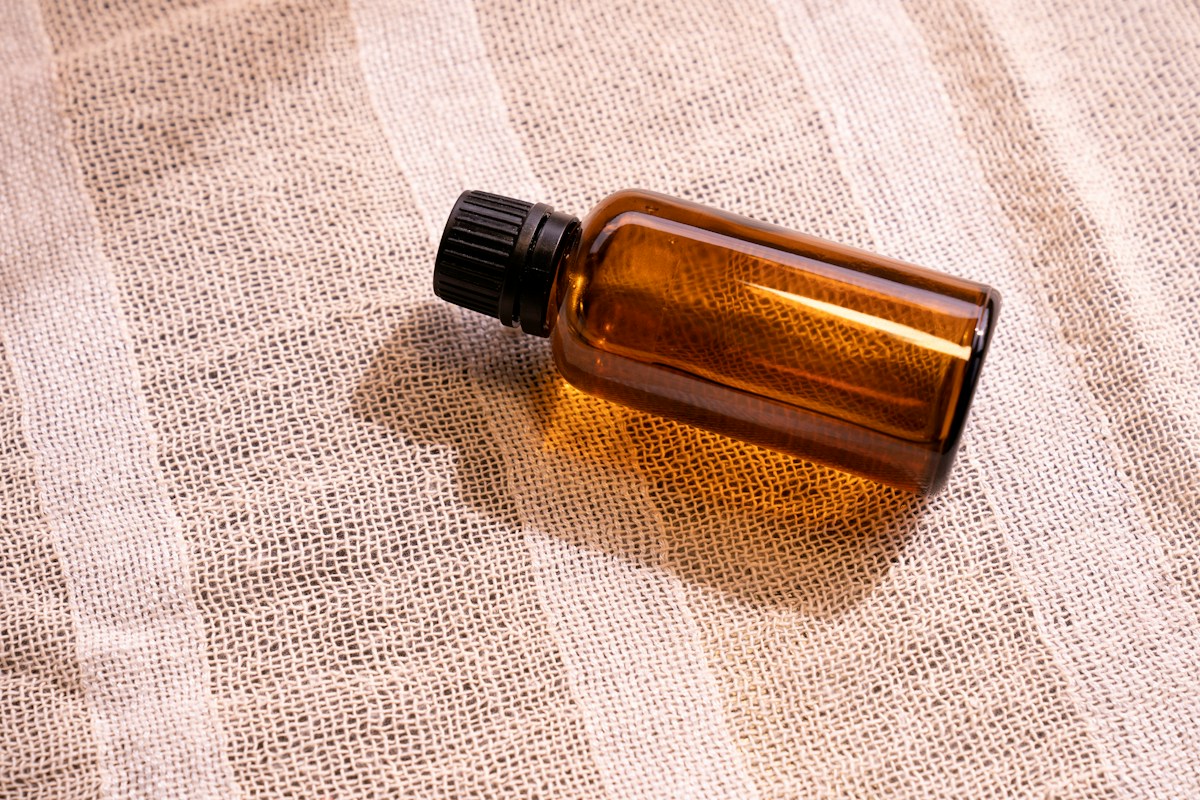
A carrier oil is a fatty, mild oil pressed from seeds, nuts or fruit that you mix with an essential oil before it goes on the skin. Essential oils are concentrated aromatic extracts, while carrier oils are gentle and barely scented.
Because of that difference, the two work as a team. The essential oil gives the aroma, and the carrier oils for essential oils give volume, glide and a softer feel. Most carriers are cold pressed, and many are the same oils people have used on skin and hair for generations.
Carriers also have one more job. They help you measure. A single drop of essential oil is hard to spread over a whole arm, yet mixed into a teaspoon of carrier it covers the area evenly. For the exact numbers, our drops of essential oil per ml guide gives a full conversion chart.
The Essential Oils Bundle
How many drops in a 10 ml roller? 2 at 1 %, 4 at 2 %. The Essential Oils Bundle has the chart, the blends and the safety rules.
- EbookEssential Oils Without the Hype
- Ebook100 Diffuser Blends
- EbookEssential Oils Room by Room
- PrintableEssential Oil Dilution Chart
- SpreadsheetOil Inventory & Blend Log
- PrintableBlend Recipe Cards


Why do essential oils need a carrier oil?
Essential oils need a carrier because, used neat, they are strong enough to irritate skin or trigger an allergic reaction in some people. Dilution lowers the amount that touches the skin at one time.
For example, the US National Center for Complementary and Integrative Health notes that some people get redness or irritation from tea tree oil, and that old products or products exposed to heat, light or air may be more likely to cause it (NCCIH: Tea Tree Oil). It also warns that tea tree oil should never be swallowed. Diluting in a carrier is one simple way to reduce skin contact. However, it does not make an oil safe to eat.
In addition, a carrier slows evaporation. Essential oils fly off quickly, so the carrier keeps the blend on the skin long enough for a massage or a body oil. Finally, the carrier itself adds softness. Our essential oil safety guide covers the wider rules, from storage to which oils need extra care.
Which carrier oils for essential oils work best?
The best carrier oils for essential oils for most people are jojoba, sweet almond and fractionated coconut, because they are mild, easy to find and pleasant on skin. The right pick depends on your skin, the job and how long you want the bottle to last.
Here is how the most common choices compare. The texture and shelf life notes are general guides, so always check the label and the smell of your own bottle.
| Carrier oil | Texture | Best for | Shelf life (rough guide) | Good to know |
|---|---|---|---|---|
| Jojoba | Light, silky | Face, all skin types, roll-ons | Long (it is a liquid wax) | Very stable; a top pick for beginners |
| Sweet almond | Medium, smooth | Body oil, massage | Medium | Comes from a tree nut; skip it with a nut allergy |
| Fractionated coconut | Very light, non-greasy | Roll-ons, body, hair ends | Long | Stays liquid; not the same as solid coconut oil |
| Grapeseed | Thin, fast-absorbing | Body oil, massage on oily skin | Short | Goes rancid quickly; buy small bottles |
| Sunflower seed | Light to medium | Body, dry or rough skin | Short to medium | Cheap and easy to find in the kitchen |
| Apricot kernel | Light, soft | Face and body, sensitive skin | Medium | Similar feel to almond oil |
| Argan | Medium, dry finish | Face, hair, dry skin | Medium | Pricier; great in small face blends |
| Olive | Heavy, rich | Occasional body use | Medium | May not suit skin barrier; see below |
As a rule, start with one gentle carrier and learn how your skin likes it before you mix several. A small bottle of jojoba is a calm, safe base for most first blends.
Which carrier oil is best for your skin type?
The best carrier oil for your skin type is usually a light one for oily skin, a richer one for dry skin, and a simple, stable one for sensitive skin. Below, we match the carriers to the most common needs.
Oily or blemish-prone skin
Light carriers such as jojoba and grapeseed feel less heavy on oily skin. Jojoba is a liquid wax that sits close to the skin’s own oils, so many people find it comfortable on the face. A review of plant oils on skin also lists jojoba among the oils that may support the skin barrier (Lin et al., NIH National Library of Medicine). In contrast, solid coconut oil can feel heavy on the face for some people.
Dry or rough skin
Dry skin often likes sunflower seed, argan or sweet almond oil. The same review describes sunflower seed oil as helping keep the outer skin layer intact and hydrated, and links argan oil with better skin hydration. Even so, most of that research is small or early, so treat it as a helpful hint rather than a promise.
Sensitive skin
For sensitive skin, keep it simple: one plain carrier, a very low dilution, and a patch test first. Jojoba or apricot kernel are gentle starting points. If you are moving your whole routine to natural products, our guide on how to switch to natural skincare without breaking out shows how to change one product at a time.
Body, massage and hair
For larger areas, cost matters, so sweet almond, sunflower or fractionated coconut make good body carriers. Meanwhile, for hair ends, a few drops of argan or fractionated coconut go a long way.
How do you dilute essential oils in a carrier oil?
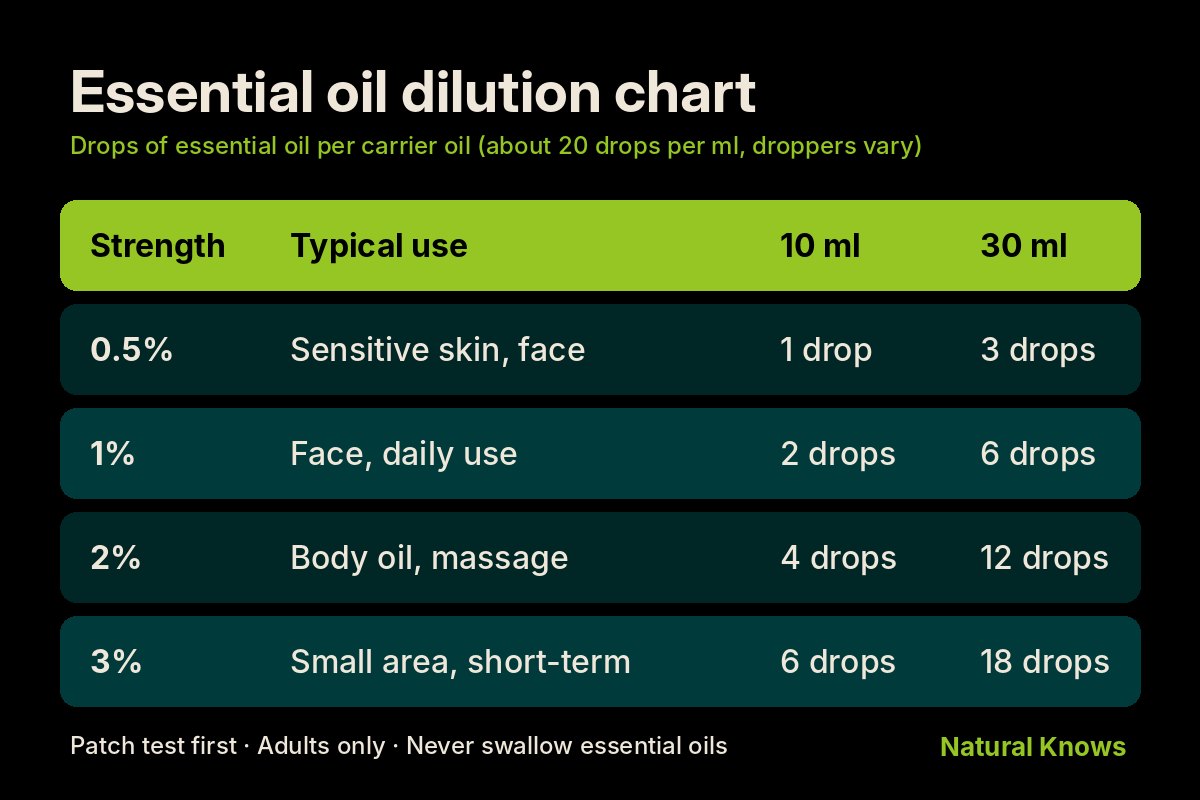
To dilute essential oils in a carrier oil, measure the carrier first, add the right number of essential oil drops for your chosen strength, then mix and label the bottle. A common aromatherapy guideline is about 1% for the face and 2% for the body, which works out to roughly 6 and 12 drops per 30 ml.
Follow these steps for a clean, repeatable blend.
- Pick the job. Decide where the blend will go: face, body, a small spot, or a massage. The area sets the strength.
- Choose one carrier. Use the table above. For a first blend, jojoba or fractionated coconut is an easy pick.
- Measure the carrier. Pour it into a clean, dry, dark glass bottle. A 10 ml roller or a 30 ml dropper bottle is handy.
- Count the drops. Add the essential oil drop by drop, using the chart below. When in doubt, use fewer drops.
- Close and roll. Cap the bottle and roll it gently between your palms to mix. Shaking hard is not needed.
- Label it. Write the oils, the strength and the date you made it. This helps you spot old blends later.
- Patch test. Test the finished blend on a small area before using it widely (see the safety section).
Here is a quick drop chart. It assumes roughly 20 drops per ml of essential oil, which is a common estimate; droppers vary, so treat the numbers as a guide.
| Strength | Typical use | 10 ml carrier | 30 ml carrier |
|---|---|---|---|
| 0.5% | Sensitive skin, face, first try | 1 drop | 3 drops |
| 1% | Face, daily use | 2 drops | 6 drops |
| 2% | Body oil, massage | 4 drops | 12 drops |
| 3% | Small area, short-term use | 6 drops | 18 drops |
Our free Essential Oil Dilution Card puts this chart on one printable page, so you can keep it next to your bottles. For more detail on dropper sizes and conversions, see the drops per ml guide.
Can you use olive oil or coconut oil as a carrier?
You can use olive oil or coconut oil as a carrier, but neither is our first choice for the face. Olive oil is heavy, and coconut oil turns solid when it is cool.
Olive oil is easy to find, yet research suggests it may not be kind to the skin barrier. The review of plant oils cited above reports that topical olive oil increased water loss through the skin in adult volunteers, and it links its main fatty acid, oleic acid, with weaker barrier function when used continuously. Therefore, we keep olive oil for an occasional body rub, not for daily face blends.
Regular virgin coconut oil, on the other hand, has some research behind it for dry skin. Still, it is thick, it can feel greasy on the face, and it hardens in a cool room. Fractionated coconut oil fixes the texture problem because it stays liquid, which is why it is common in roll-on bottles.
What about water, vinegar or milk? These are not carriers for essential oils, because oil and water do not mix. The essential oil simply floats on top and touches the skin at full strength.
How long do carrier oils for essential oils last?
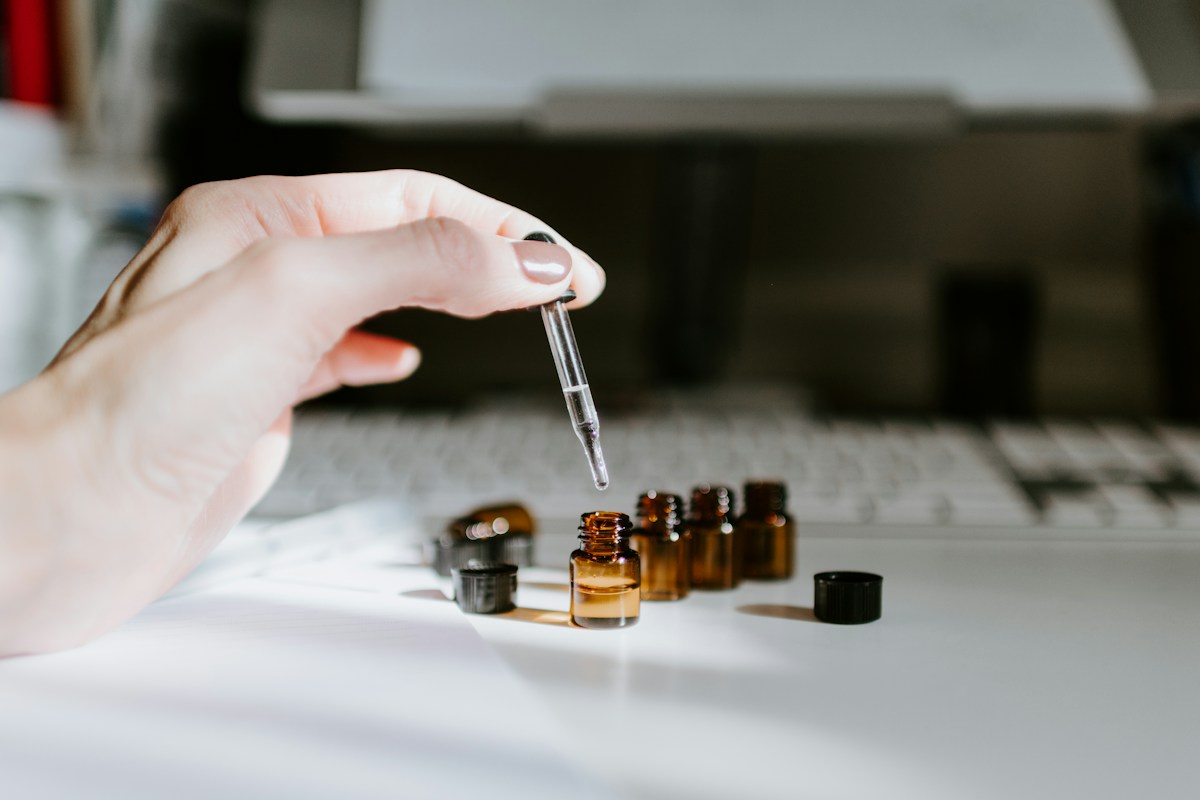
Carrier oils for essential oils last anywhere from a few months to a couple of years, depending on the oil and how you store it. Jojoba and fractionated coconut keep the longest, while grapeseed and sunflower spoil faster.
All plant oils slowly go rancid when air, heat and light reach them. A rancid oil smells sharp, sour or like old crayons. If your oil smells off, throw it out, since old oils, and old essential oils too, are more likely to bother skin.
To keep carrier oils for essential oils fresh, follow a few simple habits:
- Store bottles in a cool, dark cupboard, away from the stove and sunny windows.
- Choose dark amber or cobalt glass rather than clear plastic.
- Close the cap tightly after each use.
- Buy small bottles of short-lived oils such as grapeseed.
- Write the opening date on the label.
- Make small blends you will use within a few weeks.
Safety first: patch test before you use any blend
Safety first. Carrier oils for essential oils make a blend gentler, but they do not make every blend right for every person. Keep these rules in mind every time.
- Patch test. The American Academy of Dermatology suggests applying a new product to a small spot, such as the inside of the elbow, twice a day for 7 to 10 days and watching for redness, itching or swelling (AAD: How to test skin care products). If a reaction appears, wash it off and stop using it.
- Check for nut allergies. Sweet almond oil comes from a tree nut. If you have a nut allergy, choose jojoba, sunflower or fractionated coconut, and ask your doctor if you are unsure.
- Never swallow essential oils. Keep blends out of the mouth, away from the eyes and inside the nose, and out of reach of children and pets.
- Adults only. This guide is for adult skin. We do not give blends for babies, children or during pregnancy or breastfeeding; ask a qualified professional first.
- Ask a professional. Talk to a doctor or pharmacist before use if you have a skin condition, broken skin, or take regular medicines.
- Traditional use only. Carrier oils and essential oils are used for comfort and care. They do not treat, cure or prevent any illness.
What mistakes should you avoid with carrier oils?
The most common mistakes with carrier oils for essential oils are using too many drops, picking a heavy oil for the face, and keeping blends for too long. Fortunately, each one is easy to fix.
- Adding drops by feel instead of counting them.
- Assuming a “natural” oil cannot irritate.
- Using a strong oil, such as tea tree or eucalyptus, at body strength on the face. Our eucalyptus oil vs tea tree oil guide explains how these two differ.
- Mixing essential oils into water and spraying them on skin.
- Storing blends in a hot bathroom or a sunny window.
- Skipping the patch test because a friend used the same oil.
For a simple, oil-free face step you can pair with your blends, take a look at our guide to rosemary water for skin.
You want lemon oil in a body oil before a beach day. Best move?
FAQ
What is the best carrier oil for beginners?
Jojoba is the easiest carrier oil for beginners. It is light, has almost no scent, suits most skin types and keeps well because it is a liquid wax. Start with a small bottle, a 1% blend and a patch test, then try other carriers once you know how your skin responds.
How many drops of essential oil go in 10 ml of carrier oil?
For a 1% blend, use about 2 drops of essential oil in 10 ml of carrier oil. For a 2% body blend, use about 4 drops. These are rough numbers because droppers vary in size, so always count carefully and use fewer drops for the face or for sensitive skin.
Can I use coconut oil as a carrier oil for my face?
You can, but regular coconut oil is thick and can feel heavy or greasy on the face for some people. Fractionated coconut oil is lighter and stays liquid, so it is easier to use in roll-ons. If your skin tends to break out, try jojoba first and patch test any new blend.
Do carrier oils change how an essential oil smells?
Most carrier oils have a mild scent that barely changes the blend. Jojoba, fractionated coconut and grapeseed are almost odourless. In contrast, unrefined argan, olive or sunflower oil can add a nutty or green note. If scent matters, choose a refined or very light carrier for your blend.
Is it safe to put essential oils on skin without a carrier?
We do not recommend putting essential oils on skin without a carrier. Used neat, they are strong enough to irritate skin or cause an allergic reaction in some people. Diluting them in a carrier oil, keeping the strength low and patch testing first are simple habits that make home blends gentler.
How do I know if my carrier oil has gone bad?
A carrier oil has gone bad when it smells sharp, sour, bitter or like old crayons, or when its colour or thickness changes. Rancid oil is more likely to bother skin, so throw it away. Storing oils in dark glass, in a cool cupboard, with the cap closed helps them last longer.
Natural still needs amounts and care. Patch test new skin products, keep oils and herbs away from small children, and ask a doctor or pharmacist first if you are pregnant, breastfeeding, take medicines or have a health condition.