
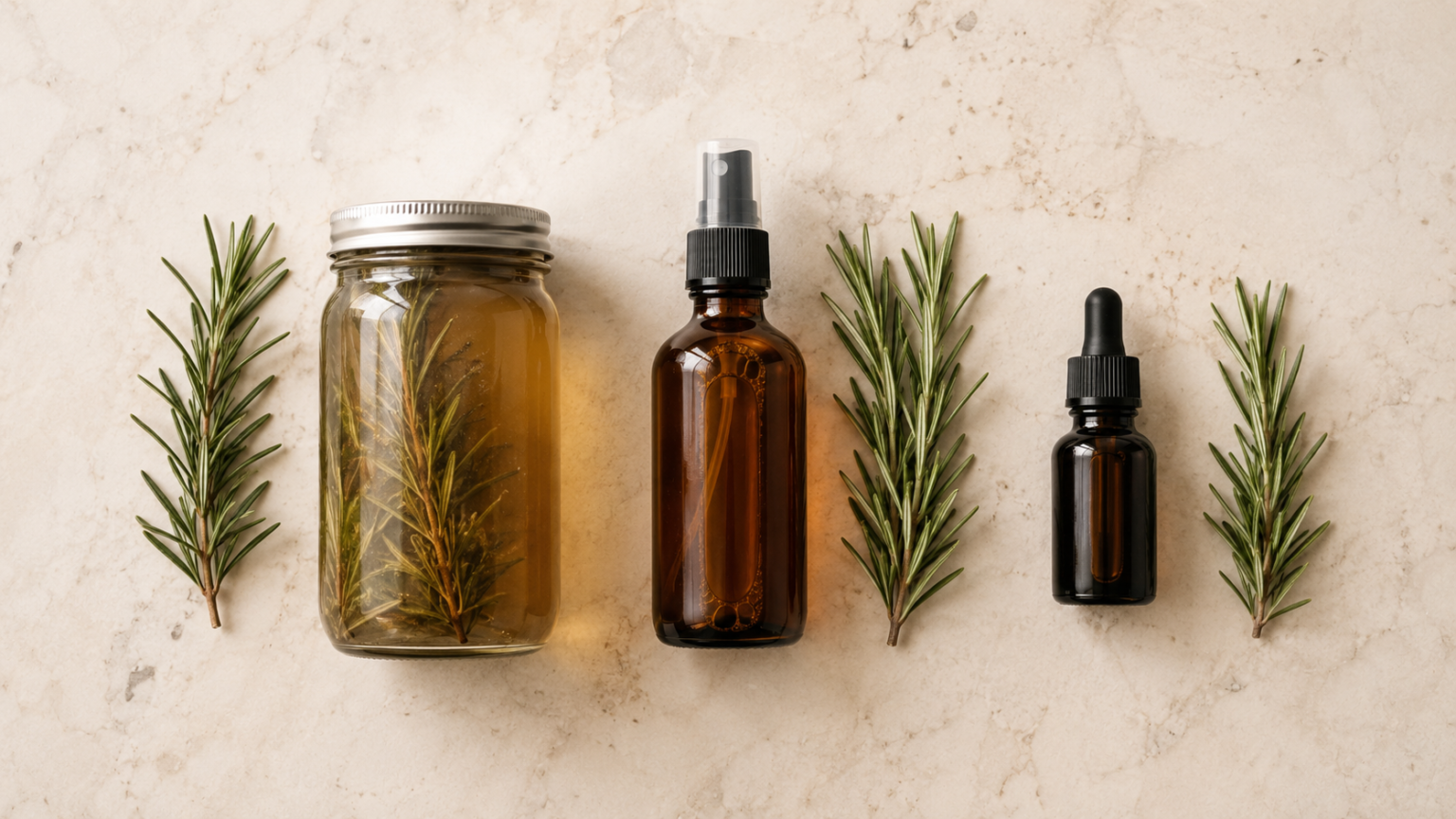
Rosemary water for skin has quietly become one of the most-searched natural skincare rituals online — and most of the tutorials floating around get it half wrong. You’ve seen the before-and-after photos, the amber jars, the promises of clearer, tighter, glowier skin. This guide cuts through the noise: what rosemary water genuinely does, how to brew a batch that actually keeps, how to use it without wrecking your barrier, and the mistakes that quietly turn a good idea into an irritated mess.


Rosemary water is an infusion made by steeping fresh or dried rosemary in hot water, then straining and cooling it. Used as a facial toner or mist, it delivers rosmarinic acid and antioxidants that calm redness, curb excess oil, and shield skin from everyday environmental stress. It won’t replace active treatments like retinoids or a proper acne routine, but it’s a gentle, low-cost addition that suits oily and blemish-prone skin especially well.
Key Takeaways
- Rosemary water is an infused water — not an essential oil and not a distilled hydrosol. The three differ hugely in strength and safe use.
- Its star compound, rosmarinic acid, is a well-studied anti-inflammatory and antioxidant that has shown measurable benefit in conditions like atopic dermatitis.
- A homemade batch lasts only 5–7 days in the fridge. Without preservation, bacteria and mould set in faster than most people expect.
- It performs best as a toner or mist for oily, combination, and breakout-prone skin, applied after cleansing and before moisturiser.
- Never put undiluted rosemary essential oil on your face — that single confusion causes most of the burns and rashes people blame on “rosemary.”
- Always patch-test. Rosemary can trigger contact dermatitis in fragrance-sensitive skin.
What Rosemary Water Actually Is (And What It Isn’t)
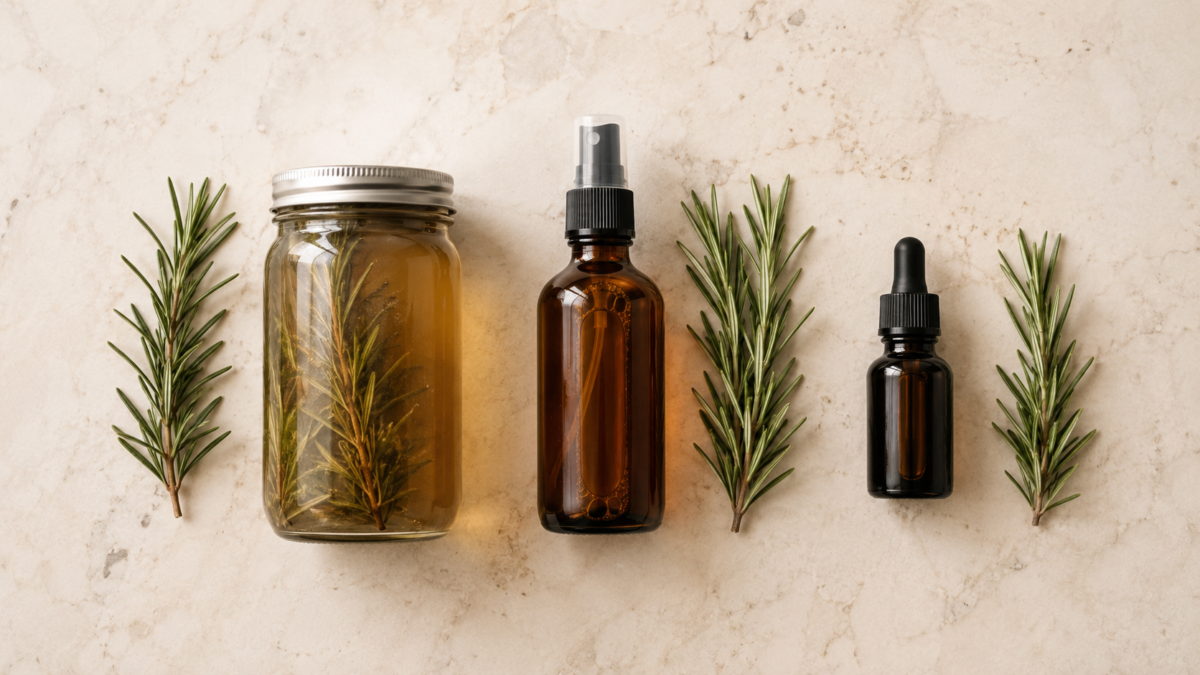
Before you brew anything, you need to know which of three very different products you’re making, because people mix them up constantly. Rosemary shows up in skincare in three forms, and they are not interchangeable.
Rosemary water (infusion) is the gentle one. You steep the herb in hot water, strain, and cool it. It’s mostly water with a modest dose of water-soluble antioxidants — think of it as a herbal tea for your face. This is what nearly every viral tutorial is actually showing you.
Rosemary hydrosol is a step up. A hydrosol (also called a floral water) is the aromatic water left behind after steam-distilling the plant to extract its essential oil. It’s more concentrated and more stable than a kitchen infusion, and it’s what you’ll find sold in glass bottles at skincare shops.
Rosemary essential oil is the potent extract — and the one that lands people in trouble. It’s roughly 75–100 times more concentrated than the plant material it came from. On skin it must be diluted in a carrier oil, and even then it belongs to the scalp and body far more comfortably than the delicate skin of your face.
The reason this distinction matters: the internet blends the impressive research on rosemary oil and isolated rosmarinic acid with photos of homemade infused water, then implies your mason jar will do all of it. It won’t. A homemade brew is the mildest member of the family, and setting that expectation early saves you from disappointment later.
The Science: What Research Says About Rosemary Water for Skin
Here’s what the evidence supports, and where it stops — because the honest version is more useful than the hype. Almost every skin benefit attributed to rosemary traces back to one molecule: rosmarinic acid, a water-soluble polyphenol that’s both a strong antioxidant and an anti-inflammatory.
The most convincing human data comes from inflammatory skin. In one clinical study, a 0.3% rosmarinic acid emulsion applied twice daily to patients with mild atopic dermatitis improved their skin over an eight-week period. That’s a real, measured effect on redness-prone, reactive skin.
Reference: The atopic dermatitis findings are documented here —
Rosmarinic acid and atopic dermatitis (PubMed).
Beyond calming inflammation, laboratory work on human skin cells shows rosmarinic acid protects keratinocytes (the main cells of your outer skin layer) from two everyday aggressors: UVB radiation and fine particulate air pollution, both of which drive oxidative stress and premature ageing. It does this by shoring up the skin’s own antioxidant defences rather than acting like a chemical sunscreen. That’s a supporting, protective role — useful, but not a substitute for SPF.
Reference: A broad review of rosmarinic acid’s anti-inflammatory activity across skin and other tissues —
Anti-inflammatory effects of rosmarinic acid (NCBI/PMC).
Now the caveat that most articles skip. These studies use standardised concentrations of isolated rosmarinic acid or well-characterised extracts — not a handful of herbs steeped in your kitchen. Your homemade infusion contains some rosmarinic acid, but the amount varies with the herb, the water temperature, and how long you steep. Treat the science as evidence that the active compound is legitimate, and your brew as a mild, pleasant way to get a little of it onto your skin. Realistic expectations are what separate people who love rosemary water from people who quietly abandon it after a week.
How to Make Rosemary Water for Skin at Home (Step-by-Step)
This is the part you actually came for, and small details here decide whether your batch is soothing or a petri dish. The method is simple; the hygiene is where most people slip.
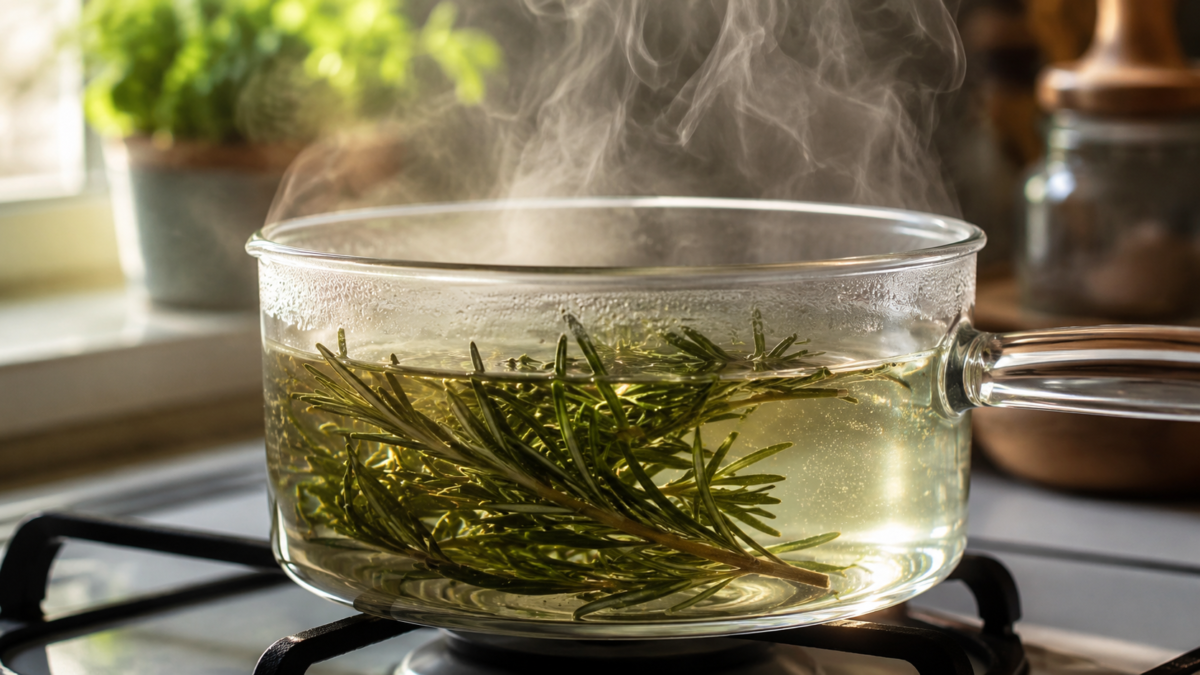
What you need: a large handful of fresh rosemary sprigs (or 2 tablespoons dried), 2 cups (500 ml) of distilled or filtered water, a small saucepan, a fine strainer, and a clean glass bottle or spray jar. Use distilled water if you can — tap water introduces minerals and microbes that shorten shelf life.
- Sterilise your container. Rinse the glass bottle with boiling water and let it air-dry. This one step roughly doubles how long your batch stays usable.
- Heat the water. Bring the 500 ml of water to a gentle simmer, then remove it from the heat. Boiling the rosemary hard can degrade some of the delicate compounds, so you want hot, not violently bubbling.
- Steep. Add the rosemary, cover the pan, and let it sit for 20–30 minutes. Covering keeps the aromatic compounds from escaping as steam.
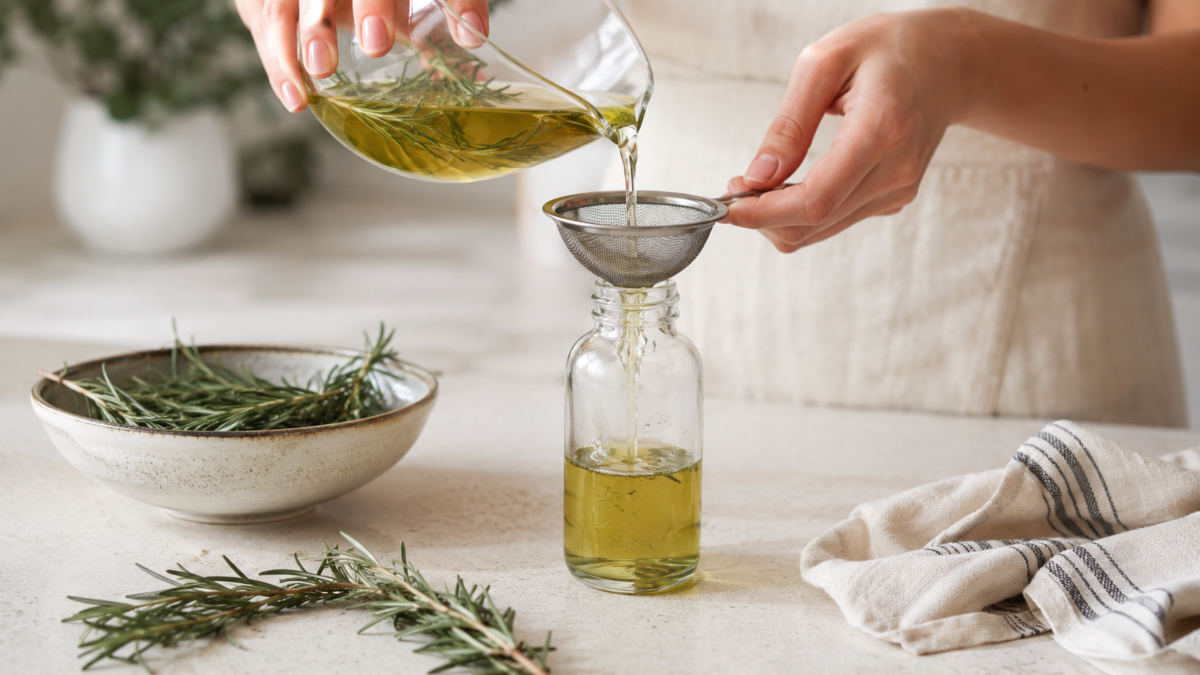
- Strain and cool. Pour through a fine strainer to catch every leaf fragment — stray plant matter is the first thing to spoil. Let the liquid cool fully to room temperature.
- Bottle and refrigerate. Transfer to your sterilised bottle and store it in the fridge. Cold slows bacterial growth and makes the mist feel wonderful on a hot afternoon.
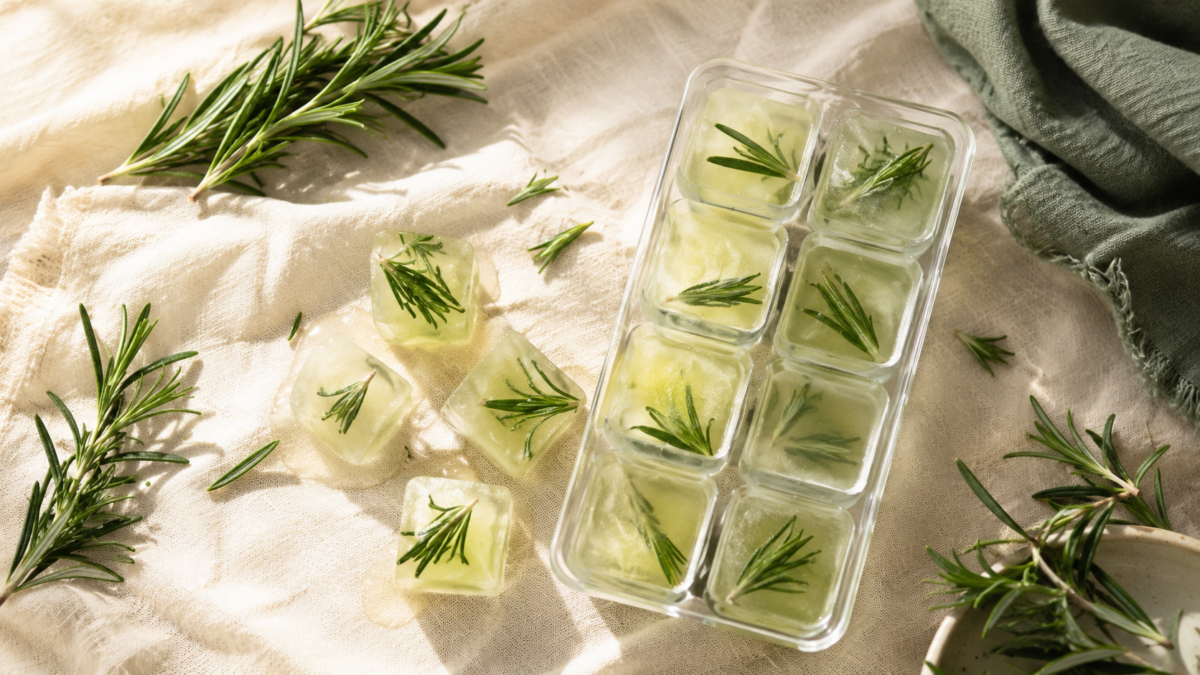
Shelf life: 5–7 days refrigerated, full stop. There are no preservatives here. If it smells off, looks cloudy, or grows anything, bin it without hesitation — a spoiled infusion on your face causes far more trouble than a fresh one ever solves. Want it to last? Pour the cooled water into an ice-cube tray and freeze it; the cubes keep for about a month, and one melted cube is a perfect single-use mist.

How to Use Rosemary Water in Your Routine
Once you have a fresh batch, using it well is mostly about restraint and timing. Rosemary water slots into the toner step — the point in your routine after cleansing and before your serum or moisturiser.
As a toner: Saturate a cotton pad and sweep it across a clean, damp face. Follow immediately with a moisturiser to seal in the hydration.
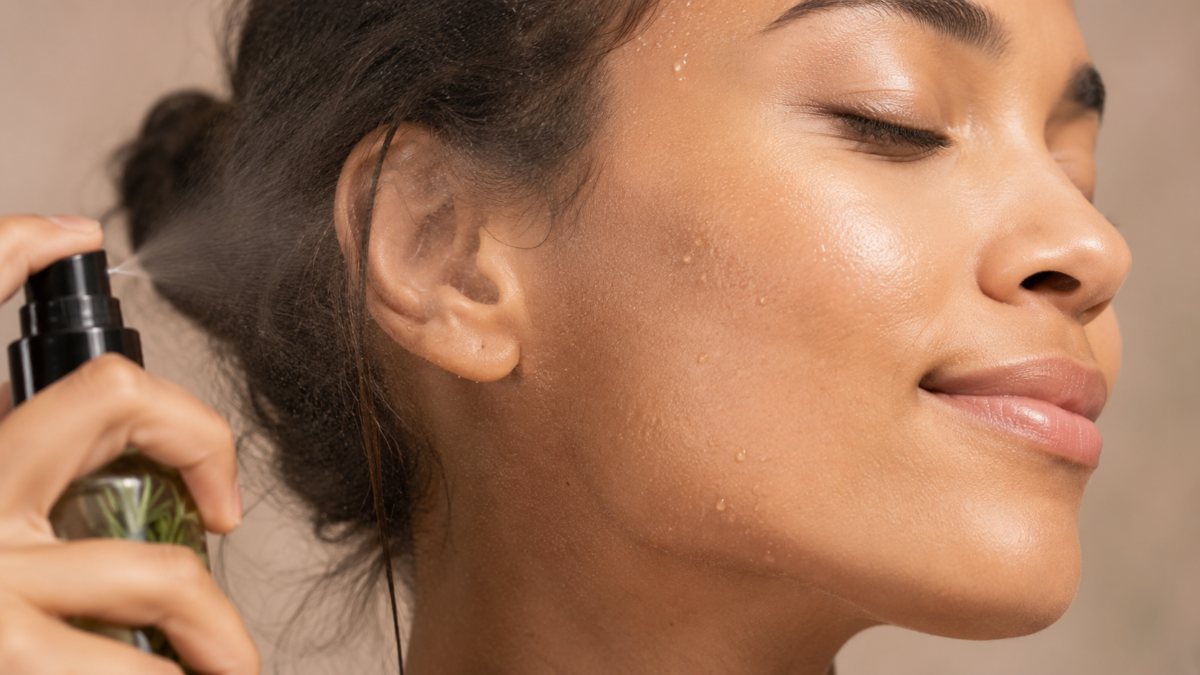
As a mist: Spritz it on after cleansing, or over the day to refresh. The key rule most people miss: mist, then moisturise. Water left to evaporate on the skin actually pulls moisture out with it, so a mist should always be a step before a cream, never a replacement for one.
As a mask base: Mix a tablespoon of rosemary water with a teaspoon of raw honey or a little clay for a quick, calming mask.
Frequency: Once or twice daily is plenty. If your skin is oily or blemish-prone, morning and evening both work; if it’s on the drier or more reactive side, start with once a day and see how it settles.
Patch-test before you commit. Dab a little on your inner forearm, wait 24 hours, and only move to your face if nothing flares. If you enjoy building rituals like this, we walk through a full botanical toner-and-mask system in our natural beauty handbook, BLOOM, which pairs recipes like this one into a complete routine.
How to Boost Your Rosemary Water (Add-Ins That Actually Work)
Once your base recipe feels reliable, a few well-chosen additions genuinely upgrade it — and unlike most “secret ingredient” hacks, these have a real reason behind them. Add small amounts to your cooled infusion, not the hot pot, so you don’t cook off the benefits.
Green tea (brew it together). Steep a green tea bag alongside the rosemary. Green tea is rich in EGCG, a potent antioxidant that pairs naturally with rosmarinic acid to give your toner more anti-inflammatory, oil-calming power. This is the single best upgrade for congested, shiny skin.
Vegetable glycerin (a humectant). Stir half a teaspoon into 250 ml of finished rosemary water. A humectant is an ingredient that pulls moisture from the air into your skin, so this fixes the one weakness of a plain mist — it turns a fleeting spritz into something that actually hydrates. Don’t overdo it; too much glycerin feels sticky.
Alcohol-free witch hazel. A splash adds extra astringency for very oily skin. Insist on the alcohol-free version, because standard witch hazel is loaded with drying alcohol that will irritate over time and push your skin to produce even more oil.
Aloe vera juice. A tablespoon brings soothing, cooling hydration — a smart move if your skin runs sensitive but you still want the rosemary benefits. Keep in mind that adding fresh botanicals like aloe shortens shelf life further, so make smaller batches and use them within three or four days.
One rule holds for all of these: the more you add, the faster the mixture spoils and the higher the chance of irritation. Change one variable at a time, patch-test the new blend, and keep the ingredient list short. A clean, simple infusion beats an over-loaded one every time.
Rosemary Water vs. Hydrosol vs. Essential Oil: A Quick Comparison
If you’re standing in a shop or scrolling a marketplace unsure which to buy, this table settles it. The three forms suit completely different needs and carry completely different risks.
| Form | How it’s made | Strength | Best for the face? | Safety note |
|---|---|---|---|---|
| Rosemary water (infusion) | Herb steeped in hot water at home | Mild | Yes — toner or mist | Very safe; spoils in 5–7 days |
| Rosemary hydrosol | Steam distillation by-product | Moderate | Yes — more stable toner | Usually preserved; longer shelf life |
| Rosemary essential oil | Concentrated distilled extract | Very high (75–100×) | Rarely — scalp/body, always diluted | Never apply neat; can burn or sensitise |
The essential oil deserves a footnote of respect, though, because its research is genuinely strong — just for hair, not face. A well-known 2015 randomized trial found rosemary oil matched 2% minoxidil for hair regrowth in pattern hair loss over six months, with less scalp itching. That’s a scalp result achieved with a diluted oil, and it’s a big part of why rosemary’s reputation is so high today.
Reference: The rosemary-oil-versus-minoxidil hair study —
Panahi et al., 2015 (PubMed).
Who Should Be Cautious With Rosemary Water
Rosemary water is one of the gentler DIY skincare options, but “natural” is not the same as “risk-free.” A few groups should take extra care.
Fragrance-sensitive and reactive skin: Rosemary contains naturally aromatic compounds that can provoke contact dermatitis — an itchy, red allergic reaction — in a minority of people. If botanical or fragranced products usually bother you, patch-test and go slowly.
Pregnancy: A cooled facial infusion is low-concentration and generally considered fine as an occasional toner, but rosemary in concentrated or medicinal amounts (and rosemary essential oil in particular) is best avoided during pregnancy. When in doubt, skip the oil entirely and ask your doctor.
Very dry or compromised skin: If your barrier is already cracked or flaking, lead with rich moisturisers first; a herbal mist is a nice-to-have, not a repair tool.
None of this should scare you off. It should simply keep you in the sensible lane: mild infusion on the face, oil kept off it, patch-test before anything new.
Common Mistakes People Make With Rosemary Water
These are the errors that turn a soothing routine into a frustrating one — and they’re rarely the obvious mistakes.
1. Confusing the essential oil with the water. This is the big one. Someone reads that “rosemary is great for skin,” grabs the essential oil, and dabs it on undiluted. The result is stinging, redness, or a full sensitisation reaction. The infused water and the essential oil are different products at wildly different strengths — treat them that way.
2. Using tap water and skipping sterilisation. Tap water and an unrinsed bottle introduce microbes that turn your batch cloudy and unusable within days. Distilled water plus a boiling-water rinse of the container is the difference between a week of freshness and two days of mould.
3. Keeping a batch far too long. Because it “still smells okay,” people stretch a jar for two or three weeks. Preservative-free infusions grow bacteria you can’t always see or smell. If it’s past a week, make a fresh batch — it costs pennies.
4. Letting the mist replace a moisturiser. Spritzing rosemary water and walking away feels hydrating, but as that water evaporates it draws moisture from the skin’s surface, leaving you tighter than before. Always follow a mist with a cream or oil to lock it in.
5. Expecting it to clear acne like a medication. Rosemary water can help calm and mattify oily, breakout-prone skin, but it is a supportive ritual, not a treatment for moderate or severe acne. If breakouts are persistent, it belongs alongside proven actives and professional advice — not instead of them.
Frequently Asked Questions
Can I use rosemary water on my face every day?
Yes, most people can use rosemary water once or twice a day without issue. Apply it after cleansing and before moisturiser. If your skin is dry or easily irritated, start with once daily and watch how it responds over a week. Always patch-test a new batch first, since freshly brewed infusions vary in strength.
Does rosemary water help with acne?
It can help mildly. Rosmarinic acid has anti-inflammatory and antioxidant properties that calm redness and may reduce surface oil, which suits blemish-prone skin. But rosemary water is a supportive step, not an acne medication. For persistent or cystic breakouts, use it alongside proven treatments rather than expecting it to clear skin on its own.
How long does homemade rosemary water last?
About 5 to 7 days when refrigerated in a sterilised glass bottle. It contains no preservatives, so bacteria and mould grow quickly at room temperature. Freezing the cooled infusion in an ice-cube tray extends it to roughly a month. If a batch ever smells off, looks cloudy, or shows any growth, throw it away immediately.
Can rosemary water lighten dark spots?
Only modestly, and slowly. Rosemary’s antioxidants help protect skin from the oxidative stress that worsens pigmentation, which may support a more even tone over time. It is not a targeted brightening treatment, though. For stubborn dark spots, ingredients like vitamin C, niacinamide, or professional options work far more reliably than a herbal infusion.
Is rosemary water good for oily skin?
It’s one of the better natural options for oily and combination skin. The infusion feels light, leaves no residue, and its astringent, anti-inflammatory qualities can help skin feel fresher and less shiny through the day. Use it as a toner or midday mist, and always follow with a lightweight moisturiser so your skin doesn’t overcompensate with more oil.
Rosemary water or rose water — which is better for skin?
They suit different skin. Rosemary water is more astringent and anti-inflammatory, making it a better fit for oily, combination, or blemish-prone skin. Rose water is gentler and more hydrating, which favours dry or sensitive skin. Neither is objectively “better” — match the one to your skin type, and there’s no harm in using each at different times.
The Bottom Line
Rosemary water for skin earns its place as a gentle, low-cost toner for oily and blemish-prone complexions — as long as you remember it’s a mild infusion, not the potent essential oil the research headlines are really about. Brew it clean, keep it fresh, follow it with moisturiser, and let it be a small, pleasant ritual rather than a miracle. Your next move is simple: make one small batch this week, patch-test it, and pay attention to how your own skin responds over the following seven days.