Ebook + Companion Planner
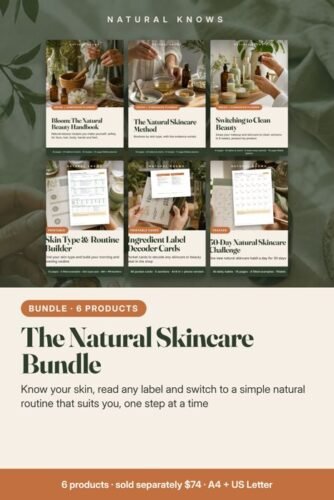
Bloom: The Natural Beauty Handbook
31 natural beauty recipes with exact amounts, shelf life and a safety note on every one. Face, hair,…
$19Buy now

Short ingredient lists, gentle routines and kitchen recipes with exact amounts. Find your skin type, learn to read a label and build a routine with fewer products and no guesswork.
Every play draws new questions from a big bank, so the tools change each time you come back. Each one ends with a clear result, a safety note and the next step.
Dry, oily, combination, sensitive or balanced? Find out in 3 minutes.
12 questions · 38 in the bankStart →Can you read a skincare label like a pro?
10 questions · 25 in the bankStart →Score your routine from cleanse to sun care, and fix the weakest step.
12 questions · 32 in the bankStart →The natural routine that fits your mornings, evenings and patience.
8 questions · 16 in the bankStart →A two-minute natural skin routine that fits your day.
8 questions · 16 in the bankStart →Garden, apothecary, minimalist or ritual lover? Find your beauty style.
6 questions · 8 in the bankStart →Find the everyday habits most likely to be behind your spots.
8 questions · 12 in the bankStart →Switch to clean beauty without blowing your budget.
Instant resultOpen →Can you read a skincare label like a pro? Test yourself.
8 questions · 12 in the bankStart →Eight questions, then a morning and evening routine for your skin.
8 questions · 12 in the bankStart →A morning and evening routine that fits your time and budget.
7 questions · 9 in the bankStart →From 'what is my skin type?' to a simple natural routine: 6 products and a 30-day path that uses them all.


31 natural beauty recipes with exact amounts, shelf life and a safety note on every one. Face, hair,…
Not sure if you're oily, dry or combination? A one-hour tissue test tells you, then a three-step routine…
Every brand says “clean”. Here's how to read the label yourself in 30 seconds — and what to…
Not sure if you are dry, oily or combination? Do the 8-question quiz and the 30-minute bare-skin test,…
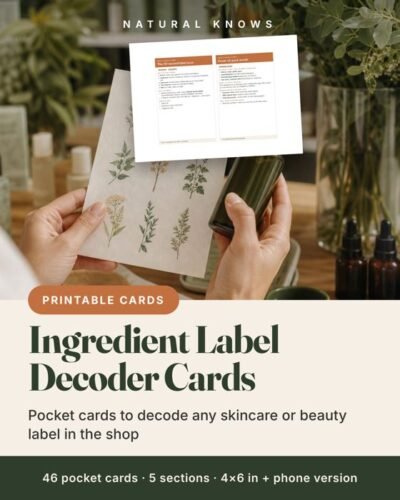
Turn the pack over: the 30-second label scan that tells you what is really in a skincare product.

Day 1: before photos. Day 2: find your skin type. Day 3: lukewarm water. 30 tiny skincare habits,…
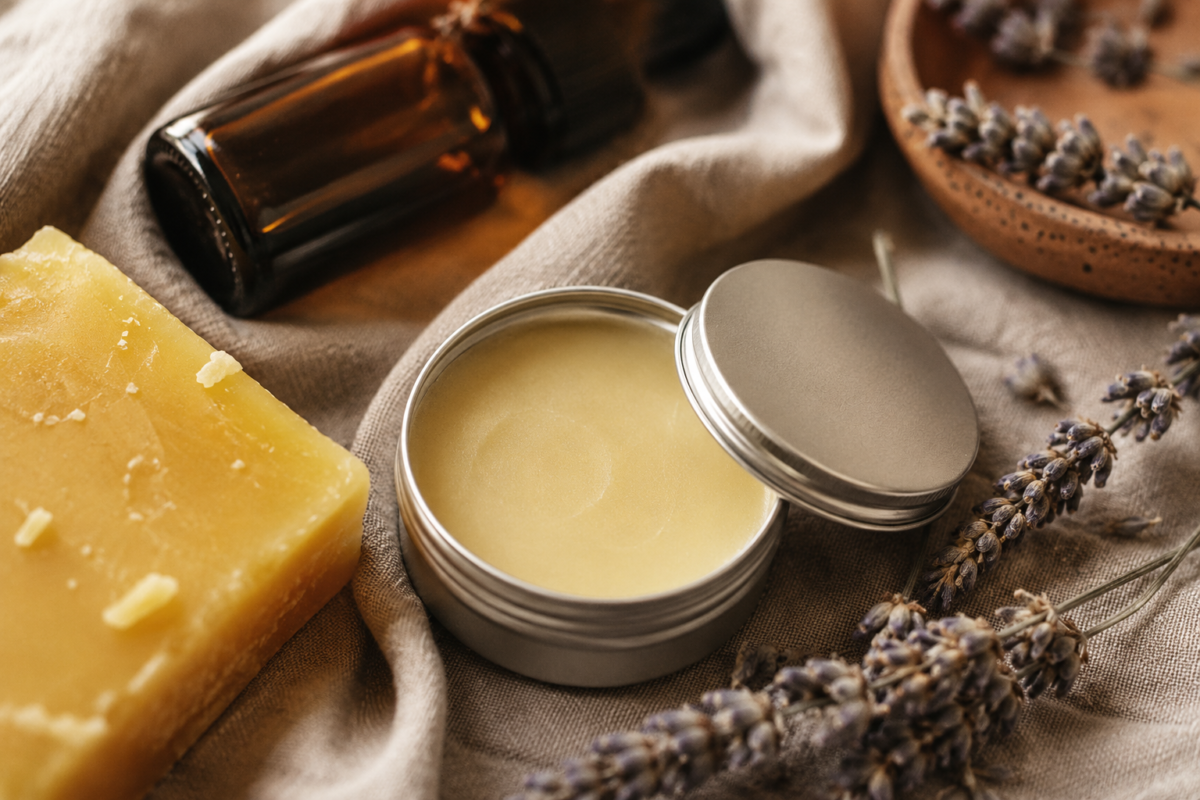
A step-by-step guide to making solid perfume at home with beeswax and essential oils. Get the exact ratio, plus how to build a scent that actually…
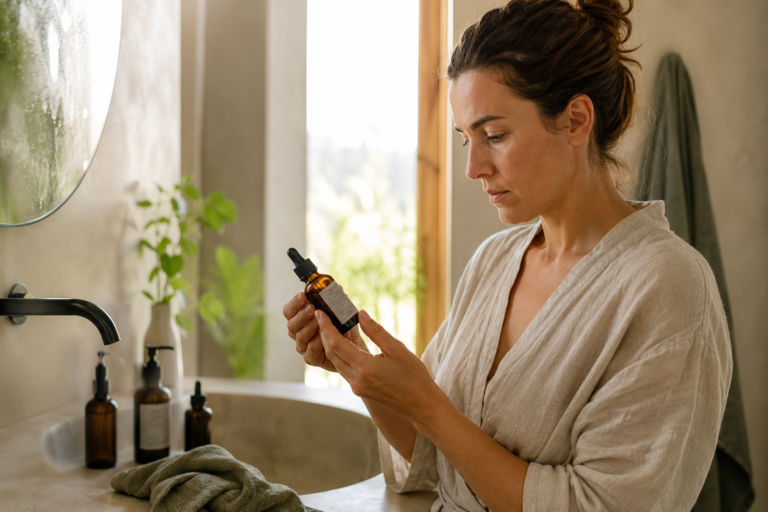

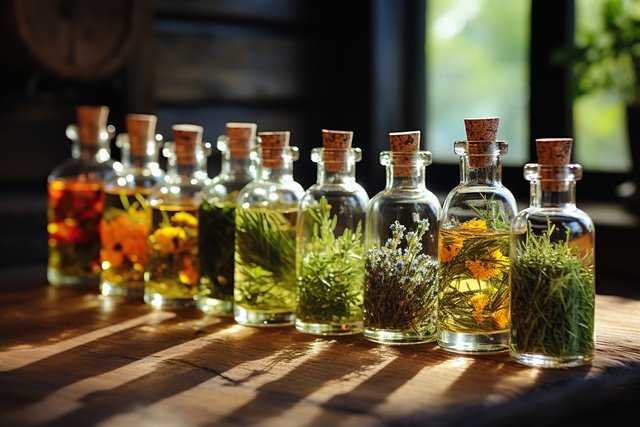


Every good routine starts with one question: how does your skin behave on a normal day? Dry skin feels tight after washing and loves richer textures. Oily skin shines by midday. Combination skin is oily through the forehead, nose and chin and normal on the cheeks. Sensitive skin reacts to new products with redness or stinging. Balanced skin rarely complains.
| Skin type | Cleanse | Moisture | Weekly extra |
|---|---|---|---|
| Dry | Creamy, lukewarm water | Cream + a few drops of plant oil | Honey and oat mask |
| Oily | Gentle gel, twice a day | Light gel or jojoba | Clay mask, rinsed damp |
| Combination | Gentle gel | Richer on cheeks only | Clay on the T-zone |
| Sensitive | Fragrance-free, mild | Short-list, unscented cream | Nothing new for two weeks |
| Balanced | Mild cleanser | Light lotion | One mask you enjoy |
Most skin does well with three steps in the morning and two at night. Morning: rinse or gentle wash, moisturiser, broad-spectrum sunscreen. Night: gentle cleanse to remove sunscreen and the day, then moisture. That is it. Extra serums and actives are optional, and the more you add, the more things can go wrong.
Moisturise within a minute of washing, while the skin is still a little damp. It holds on to more water that way.
Ingredients above 1% are listed from the largest amount down, so the first five tell you what the product mostly is. Names are in Latin: aqua is water, Butyrospermum parkii is shea butter, Simmondsia chinensis is jojoba. "Parfum" or "fragrance" is one word that can stand for many scent ingredients, and it is one of the most common reasons sensitive skin reacts.
Words like natural, clean, non-toxic and hypoallergenic are not regulated in most countries. The ingredient list is the part that is.
Make water-based or fresh recipes in tiny batches, keep them in the fridge and use them within a week. Oil-only balms last longer if you use a dry spoon.
Lemon juice, baking soda, toothpaste on spots and neat essential oils are common "natural" tips that upset skin. And oils, however natural, are not sunscreen: use a tested broad-spectrum SPF every morning.
Morning: rinse or gentle wash, moisturiser, sunscreen. Night: gentle cleanse and moisture. Keep it the same most days.
Wash your face with a gentle cleanser, wait an hour and look: tight means dry, shiny all over means oily, shiny only in the T-zone means combination, red or itchy means sensitive. The free skin type tool asks the rest.
Simple ones like honey and oats are gentle for most people. Patch test first, make small batches and keep fresh recipes in the fridge for no more than a week.
No. No plant oil gives reliable sun protection. Use a tested broad-spectrum sunscreen.
Anything with water can grow bacteria and mould. A preservative keeps a water-based cream safe for months.
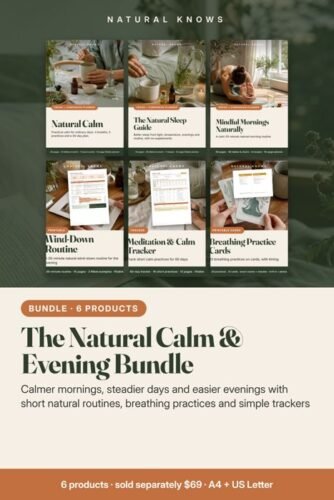
Skincare, home, kitchen, oils, herbs, calm and more: every Natural Knows bundle in one download, with a 12-month path.