Natural remedies for tension headaches are simple, drug-free comforts, such as warmth or cold on the neck, gentle massage, a diluted peppermint rub on the temples, slow breathing, water and better posture, that ease the tight band of pressure most people know too well. They work best for occasional, mild headaches, and best of all when you use them early. In this guide, we give you a 15-minute plan, ten remedies with exact steps, two oil blends, a trigger checklist and the red flags that need a doctor.
Quick answer: at the first sign of a tension headache, drink a large glass of water, put a warm pack on the back of your neck for 10 minutes, massage the temples and the base of the skull for 2 minutes, and breathe slowly for 5 minutes. A drop of peppermint oil diluted in a teaspoon of carrier oil, rubbed on the temples, adds a cooling feel.
What a tension headache feels like
A tension headache is the most common type of headache. It feels like a dull, even pressure or a tight band around the forehead, the temples or the back of the head. In addition, the neck and shoulders often feel stiff.
| Tension headache | Migraine |
|---|---|
| Pressing or tight, like a band | Often throbbing, often one side |
| Mild to moderate | Moderate to severe |
| Usually no nausea | Nausea is common |
| Normal activity is possible | Activity makes it worse |
| Light and sound mostly fine | Light and sound often hurt |
If your pattern looks more like the right column, read our guide on lavender oil for migraines and talk to a doctor. The rest of this guide is about the left column.
The 15-minute plan with natural remedies for tension headaches
Most tension headaches respond to a short, calm routine. So here is the order we follow, step by step.
- Minute 0: stop what you are doing, and drink a large glass of water.
- Minutes 1 to 10: place a warm pack on the back of the neck, or a cool cloth on the forehead, whichever feels better.
- Minutes 1 to 3: at the same time, massage the temples and the base of the skull in small circles.
- Minutes 3 to 8: breathe slowly: in through the nose for 4 counts, out through the mouth for 6 counts.
- Minute 8: roll your shoulders back 10 times, and tilt your head gently to each side.
- Minutes 10 to 15: rub a diluted peppermint blend on the temples, dim the screen, and rest your eyes.
Afterwards, eat something small if you skipped a meal. Moreover, take a short walk outside if you can.
Ten natural remedies for tension headaches, with exact steps
Each remedy below is cheap, simple and safe for most adults. Pick two or three that suit you, and use them early.
| Remedy | How | Time |
|---|---|---|
| Water | One large glass, then sip | Right away |
| Warm pack | On the neck and shoulders | 10 to 15 minutes |
| Cold cloth | On the forehead or temples | 10 minutes |
| Temple massage | Small circles with two fingers | 2 minutes |
| Neck release | Thumbs at the base of the skull | 1 to 2 minutes |
| Peppermint rub | 1 drop oil in 1 teaspoon carrier oil | Once or twice |
| Slow breathing | In 4, out 6 | 5 minutes |
| Posture reset | Shoulders back, screen at eye level | Every hour |
| Fresh air walk | Easy pace, outdoors | 10 minutes |
| Rest in a dim room | Eyes closed, quiet | 15 to 20 minutes |
Warmth or cold
Warmth relaxes tight neck and shoulder muscles, while cold numbs a pounding forehead. Try both, and keep the one that helps. However, always wrap ice in a cloth, and never sleep on a heating pad.
Massage of the temples, neck and shoulders
Place two fingers on each temple and make small, slow circles for one minute. Then move your thumbs to the soft hollows at the base of the skull, and press gently while you breathe out. Finally, squeeze the top of each shoulder for 30 seconds.
A diluted peppermint oil rub
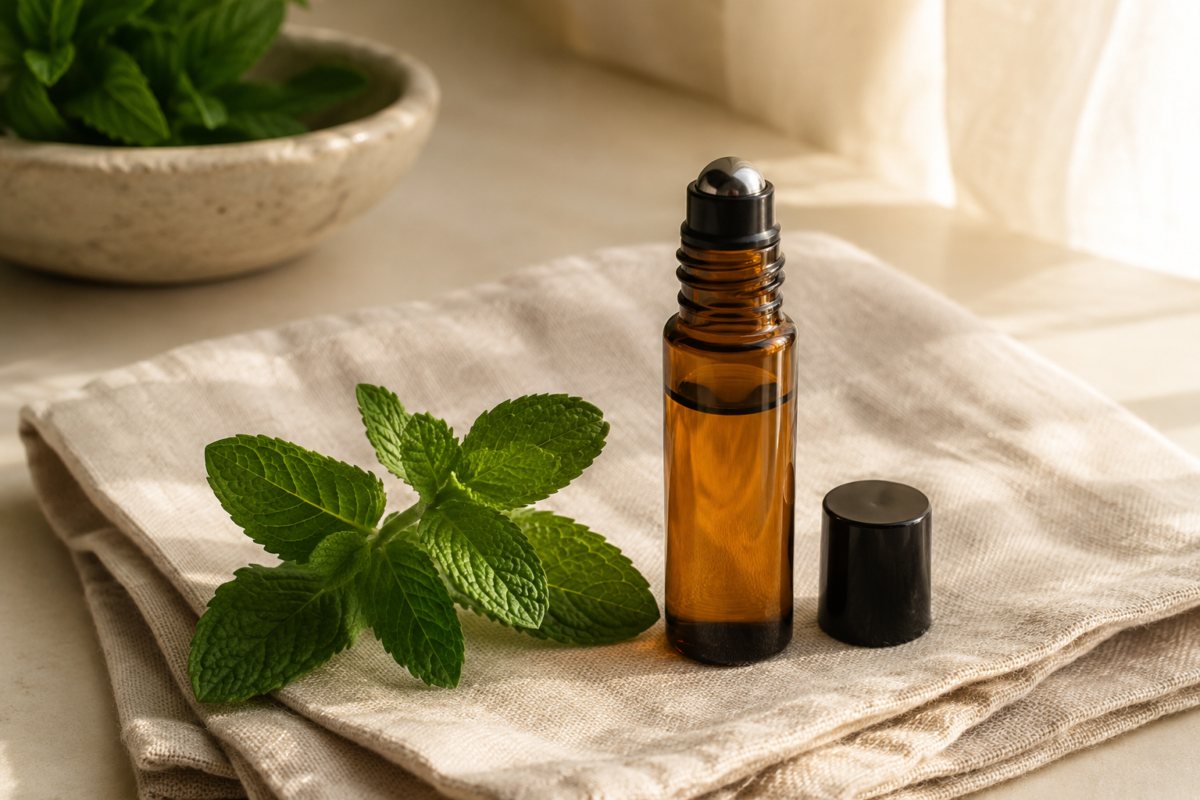
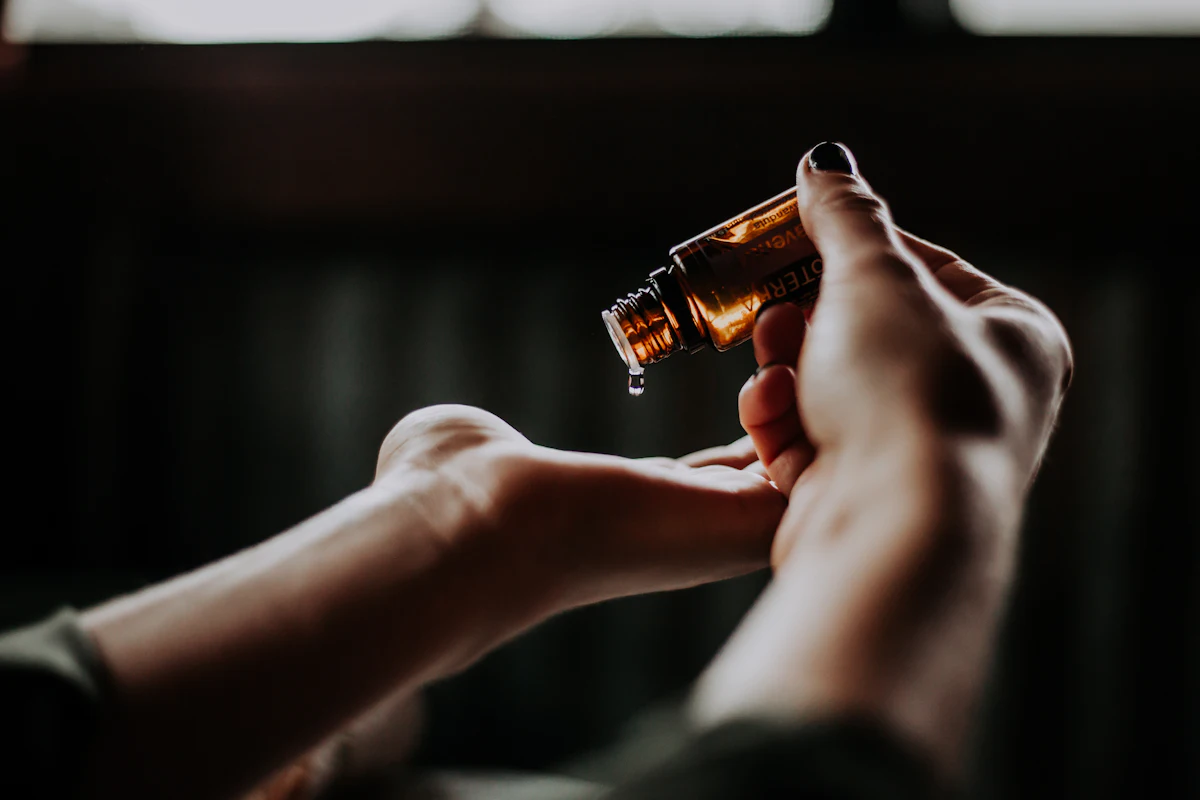
Peppermint oil gives a cool, tingling feel that many people find soothing on the temples. The rule is dilution: 1 drop of peppermint oil in 1 teaspoon (5 ml) of a carrier oil such as jojoba or sweet almond. Our guide on where to apply peppermint oil for headaches shows the exact points. Keep it away from the eyes, and wash your hands after.
Slow breathing
Stress tightens the shoulders and jaw, and that tension climbs into the head. So slow your breath: in through the nose for 4 counts, out through the mouth for 6 counts, for 5 minutes. Our free breathing pick tool suggests a technique for how you feel right now. In addition, see our breathing exercises for stress.
Water, food and caffeine
Thirst and skipped meals are common triggers. Therefore, drink water first and eat a small snack if you have not eaten. Caffeine is tricky: a small cup of coffee helps some people, but daily heavy use can bring rebound headaches.
Two oil blends: natural remedies for tension headaches to make
These two roller blends are for adults, for occasional use on the temples, the back of the neck and the shoulders. Each makes one 10 ml roller bottle at about 2% dilution.
1. Cooling temple roller
- 2 drops peppermint essential oil
- 2 drops lavender essential oil
- 10 ml jojoba or fractionated coconut oil
2. Neck and shoulder roller
- 2 drops lavender essential oil
- 1 drop rosemary essential oil
- 1 drop peppermint essential oil
- 10 ml sweet almond oil
Add the oils to the bottle, top up with carrier oil, cap and roll to mix. Label it with the date.
Shelf life: about 6 months in a cool, dark place. Safety note: patch test on the inner arm for 24 hours, keep oils away from the eyes and from children, and do not use peppermint oil on or near the face of babies or young children. Our oil dilution calculator works out drops for any bottle size.
Common triggers of tension headaches, and the natural swap
Finding your triggers is the most useful long-term step. Keep a simple headache diary for two weeks: time, sleep, food, water, screen hours and stress.
| Trigger | The natural swap |
|---|---|
| Long hours at a screen | 20-20-20 rule: every 20 minutes, look 20 feet away for 20 seconds |
| Hunched posture | Screen at eye level, feet flat, shoulders back |
| Skipped meals | Regular meals and a small snack in the bag |
| Too little water | A glass with every meal and a bottle on the desk |
| Short or broken sleep | A fixed bedtime and a 30-minute wind-down |
| Jaw clenching | Notice it, drop the jaw, rest the tongue |
| Stress | 5 minutes of slow breathing, twice a day |

A daily routine with natural remedies for tension headaches
Small habits, done every day, matter more than any single remedy. Here is a routine that fits a working day.
| Time | Habit |
|---|---|
| Morning | Water, breakfast, 2 minutes of neck stretches |
| Every hour | Stand up, roll shoulders, look into the distance |
| Lunch | A real meal away from the screen, and a short walk |
| Afternoon | Water, a small snack, 5 minutes of slow breathing |
| Evening | Screens dimmed, warm shower on the neck |
| Bedtime | Same time each night, pillow at the right height |
The MedlinePlus page on tension headache gives the same advice: keep a diary, manage stress, use heat or cold, and mind your posture. In addition, the National Center for Complementary and Integrative Health explains relaxation techniques in plain words.
Checklist: natural remedies for tension headaches
Save this checklist for the next time a headache starts.
- Drink a large glass of water.
- Warm pack on the neck, or cool cloth on the forehead.
- Massage temples and the base of the skull.
- Five minutes of slow breathing.
- Diluted peppermint rub on the temples.
- Screen off, eyes closed, dim light.
- Eat something if you skipped a meal.
- Write it in your headache diary.
If evenings are your hardest time, our Natural Calm and Evening Bundle gathers wind-down routines, breathing cards and a calm tracker. For safe oil blends, see the Essential Oils Bundle.
Who should be careful with natural remedies for tension headaches
Natural comforts are gentle, yet a few cases need advice first.
- Pregnant or breastfeeding women: ask a professional before using essential oils.
- Epilepsy or asthma: ask before using rosemary or peppermint oil.
- Sensitive skin: patch test first, and use 1% dilution.
- Children: this guide is for adults; follow a pediatrician.
- Frequent painkiller use: using painkillers on many days a month can cause rebound headaches, so talk to a doctor.
Red flags: when to see a doctor
Seek urgent care for a sudden, very severe headache (“the worst ever”), a headache after a head injury, or a headache with fever and stiff neck, confusion, weakness, numbness, trouble speaking or changes in vision. In addition, see a doctor if headaches become more frequent, change pattern, start after age 50 or wake you from sleep.
Keep going
For more oil-based comfort, read our guide to essential oils for headaches. In addition, you can browse every guide in sleep and calm.
FAQ: natural remedies for tension headaches
What is the fastest natural remedy for a tension headache?
Water, a warm pack on the neck and two minutes of temple massage, used early, bring the quickest comfort for most people.
Does peppermint oil help tension headaches?
Many people find a diluted peppermint rub on the temples soothing and cooling. Always dilute it, and keep it away from the eyes.
You want lemon oil in a body oil before a beach day. Best move?
Is heat or ice better for a tension headache?
Heat on the neck relaxes tight muscles, while cold on the forehead numbs. Try both, and keep the one that helps you.
Can dehydration cause tension headaches?
Yes, thirst is a common trigger. A large glass of water is always the first step.
How long does a tension headache last?
Usually from 30 minutes to a few hours, and sometimes longer. See a doctor if headaches last for days or keep coming back.
Can posture cause tension headaches?
Yes. A forward head and rounded shoulders strain the neck, so set your screen at eye level and move every hour.
When should I worry about a headache?
See urgent care for a sudden, severe headache, a headache after injury, or one with fever, stiff neck, weakness or vision changes.
Natural still needs amounts and care. Patch test new skin products, keep oils and herbs away from small children, and ask a doctor or pharmacist first if you are pregnant, breastfeeding, take medicines or have a health condition.