Beginner-Friendly · Ready in About 20 Minutes
How to make solid perfume with essential oils comes down to one number nobody explains clearly: the wax-to-oil ratio. Get it wrong and every recipe you’ve found online turns out either greasy and useless or hard as a candle. Get it right, and it melts beautifully on your skin instead of just sitting there. Here’s the exact ratio, plus how to build a scent that doesn’t fade in twenty minutes.
To make solid perfume with essential oils, melt beeswax and a carrier oil like jojoba together at roughly a 1-to-3 ratio by weight, stir in your essential oil blend once the mixture is off the heat, then pour it into a small tin to set. A basic batch needs only three ingredients and takes about 20 minutes. The wax controls texture (more wax, firmer balm), while your essential oil choice — built across top, middle, and base notes — controls how long the scent actually lasts on skin.
Key Takeaways
- ✓A basic solid perfume is just three ingredients — wax, carrier oil, and essential oil — in roughly a 1-to-3 wax-to-oil ratio by weight.
- ✓Build your scent in layers — top, middle, and base notes — or it will smell flat and disappear within the hour.
- ✓Solid perfume sits close to the skin instead of projecting outward — expect 4 to 6 hours of wear with reapplication, not an all-day spray-and-forget scent.
- ✓Skip bright citrus oils like bergamot or lemon as your lead note — they fade within minutes in a wax base. Save them for support, not the star.
- ✓Let a fresh batch cure for at least 24 hours before judging the scent — hot wax smells nothing like cured, skin-temperature wax.
- ✓You can make a fully vegan version with candelilla wax, using the exact same ratio as beeswax.
❗ Cosmetic use only. This recipe is for personal fragrance use, not a treatment for any skin or health condition. Essential oils are potent — patch test any new blend on your inner arm and wait 24 hours before wearing it on pulse points, and check with a healthcare professional first if you’re pregnant, nursing, or have sensitive or reactive skin.
What You Actually Need Before You Melt Anything
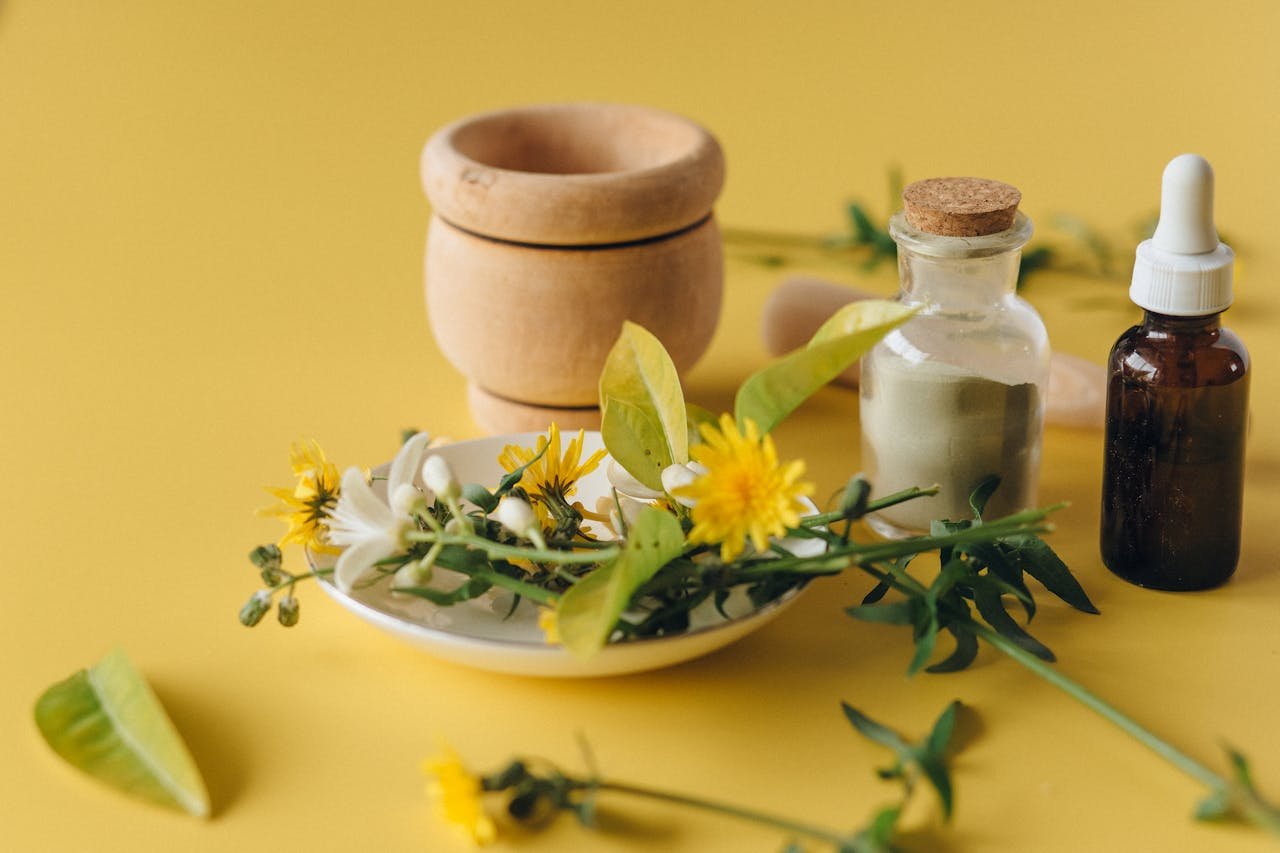
Three ingredient categories make up every solid perfume: a hardening wax, a carrier oil, and your fragrance. That’s the whole ingredient list. No alcohol, no fixative chemicals, no lab equipment. What trips people up isn’t the number of ingredients — it’s picking the right ones for how the balm will actually behave on skin.
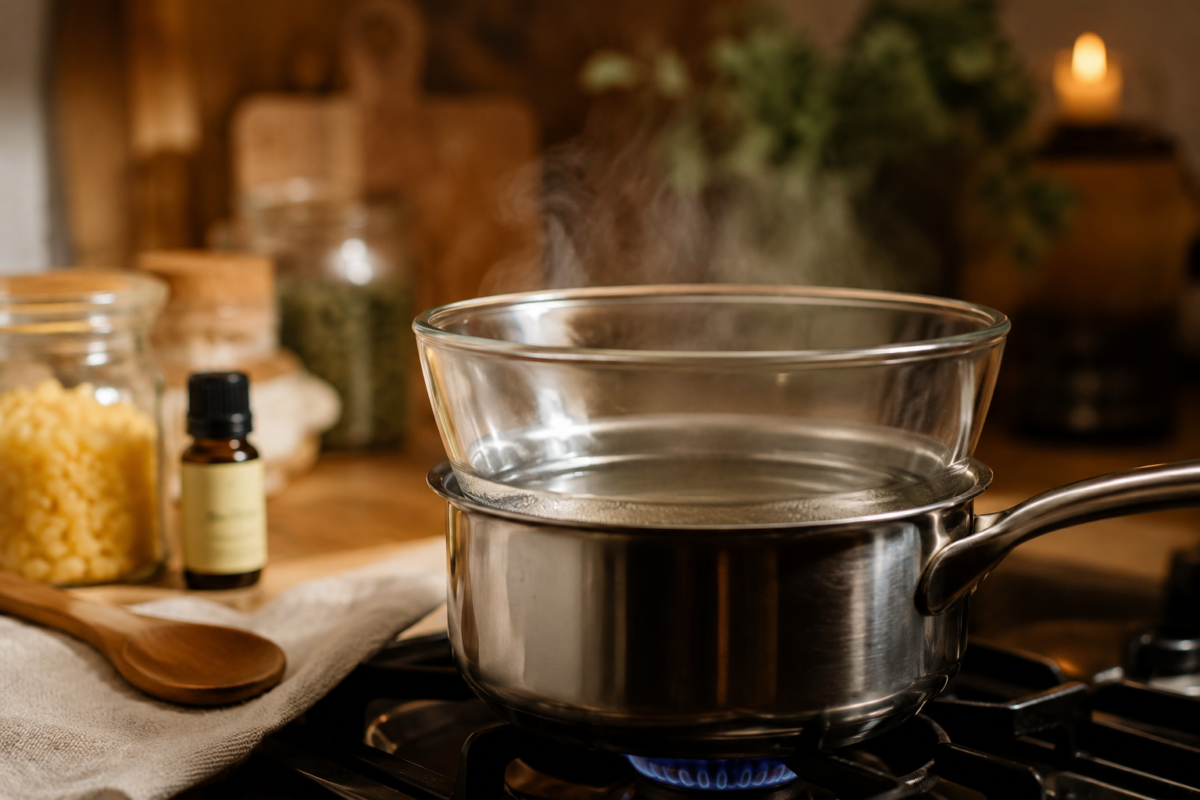
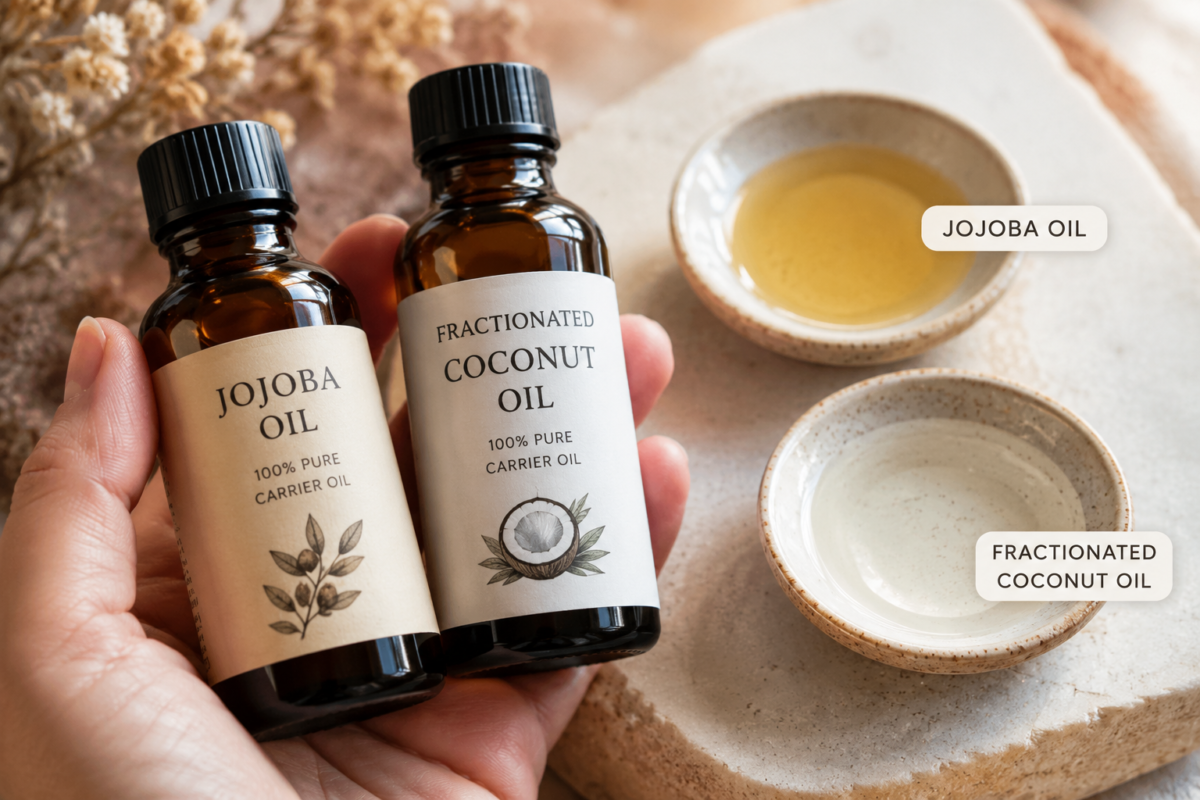
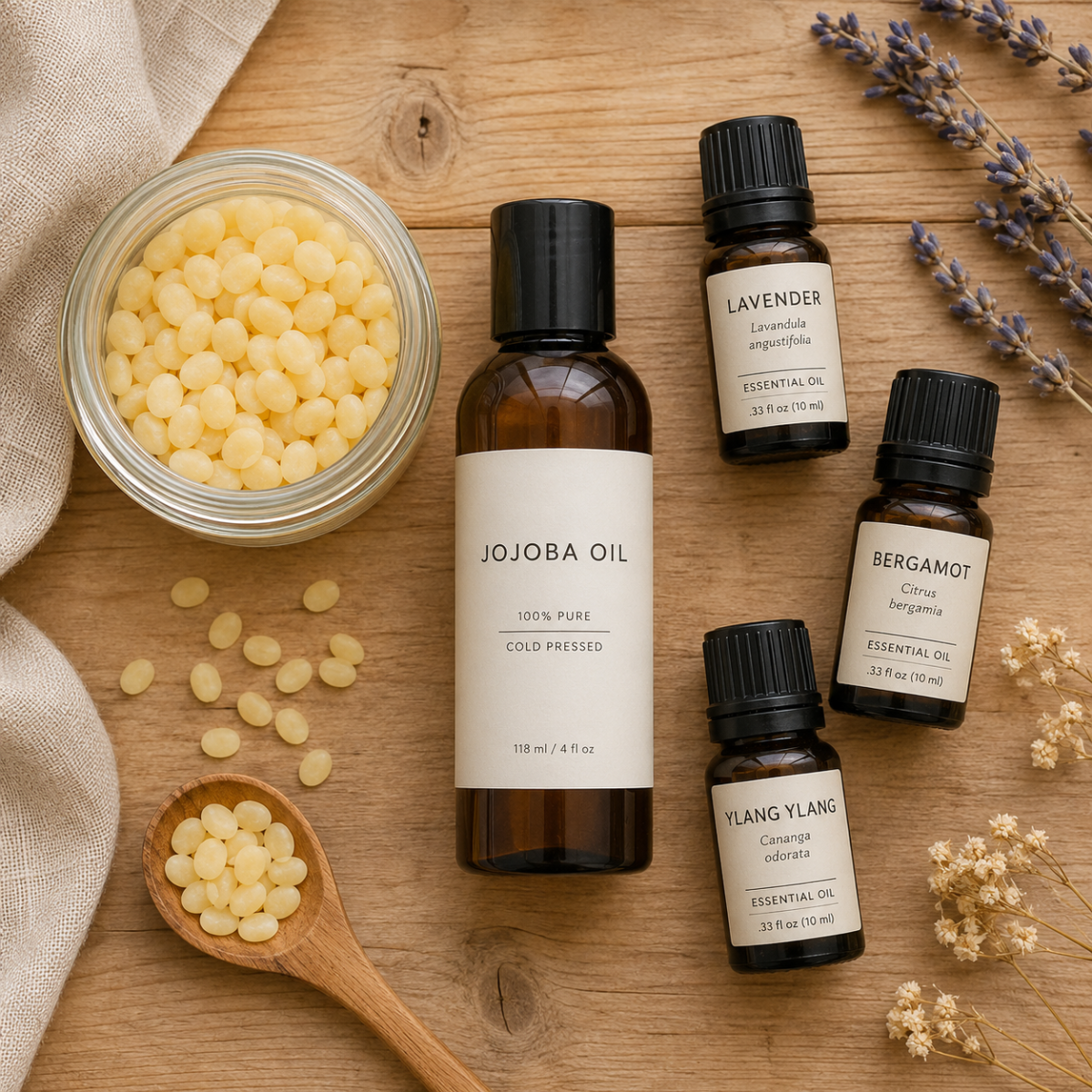
Cosmetic-grade beeswax pellets are the standard choice because they melt evenly and measure easily by weight. For your carrier oil, jojoba is the most stable option — it barely smells like anything on its own, so it won’t compete with your fragrance, and it keeps well over time without turning rancid. Fractionated coconut oil works too, though it can feel slightly greasier on skin and sets a touch faster than jojoba, which matters if you’re pouring several tins at once. If you already keep coconut oil in your skincare routine, you likely have everything you need for the carrier already on hand.
| Ingredient | Role | Good For |
|---|---|---|
| Beeswax (cosmetic-grade pellets) | Hardens the balm, melts on skin contact | The classic, most predictable texture |
| Candelilla wax | Vegan hardening agent | Same ratio as beeswax, plant-based |
| Jojoba oil | Carrier oil, nearly scent-free | Best all-around stability and shelf life |
| Fractionated coconut oil | Carrier oil | Budget option, slightly softer finish |
| Essential oils (top/mid/base blend) | The fragrance itself | Building a scent that actually lasts |
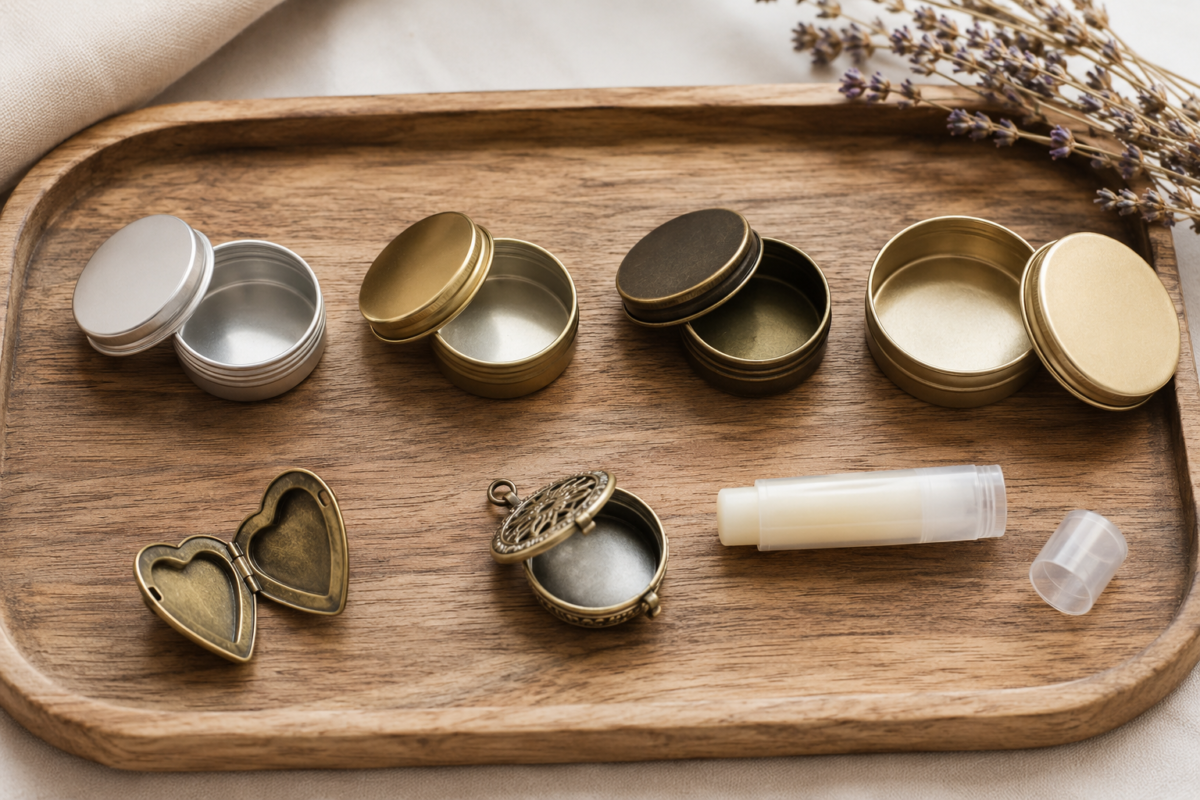
You’ll also want a small heatproof bowl, a double-boiler setup (a bowl set over a pan of simmering water works fine), a shot glass or small measuring cup for the oil, and containers to pour into — tins, small jars, or even a repurposed lip balm tube all work. If you enjoy this kind of small-batch, ritual-style project, you might also like our eucalyptus shower bomb recipe or our guide to making rosemary water for skin — both use the same “melt, mix, set” logic in a different format. For deeper dives into individual oils before you commit a bottle to a blend, our full Essential Oils library is worth browsing first.
How to Make Solid Perfume with Essential Oils: The Ratio That Actually Sets
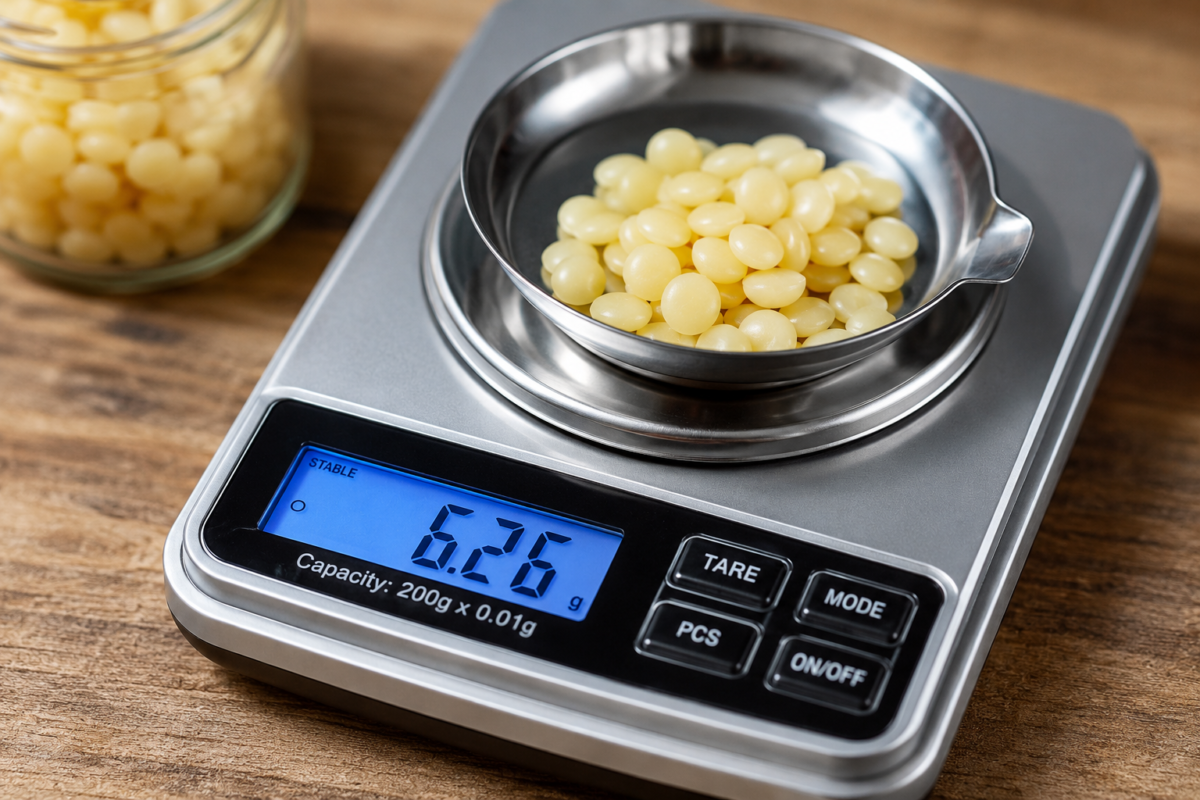
Here’s the number most recipes skip: a good working ratio is roughly 1 part wax to 3 parts carrier oil, by weight. That’s the baseline for a balm that’s firm enough to hold its shape in a tin but soft enough to melt the moment it hits warm skin. Push the wax higher and you get something closer to a lip balm that never quite releases its scent. Drop the wax lower and you get a batch that turns to soup in a warm bag.
5g : 15g
Standard batch
(1 part wax : 3 parts oil)
6–7g wax
For a firmer, more
solid finish
4g wax
For a softer,
balm-like texture
Once you’ve settled on your ratio, the process itself is short. Here’s the full method (professional perfumer Karen Gilbert’s breakdown of solid perfume ratios is a great next stop if you want to go deeper into the craft side of this):
Measure 15g (about a tablespoon) of jojoba or fractionated coconut oil into a shot glass or small cup.
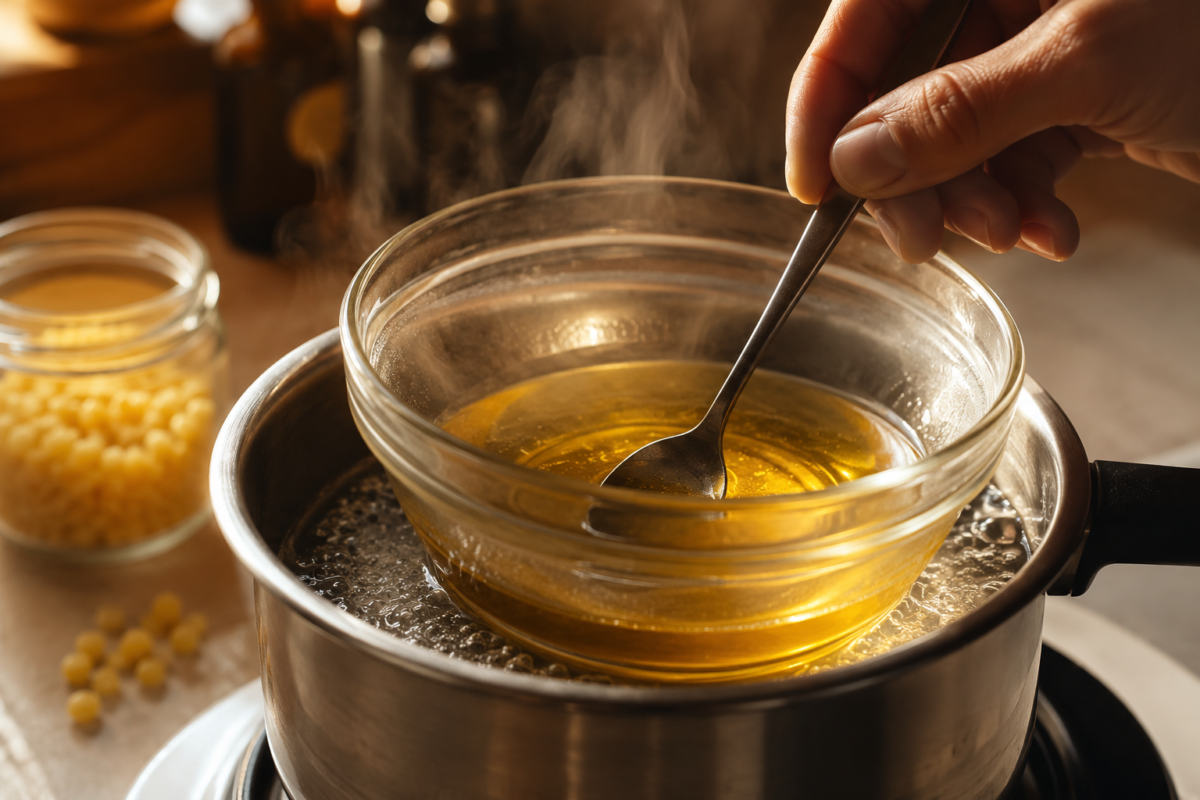
Weigh 5g of beeswax pellets (or candelilla wax for a vegan version) into a heatproof bowl.
Set the bowl over a small pan with an inch of simmering water and let the wax melt fully over low heat.
Pour in your carrier oil and stir until fully combined and liquid. Keep the heat low — too much time over heat and your essential oils will start evaporating before you even add them.
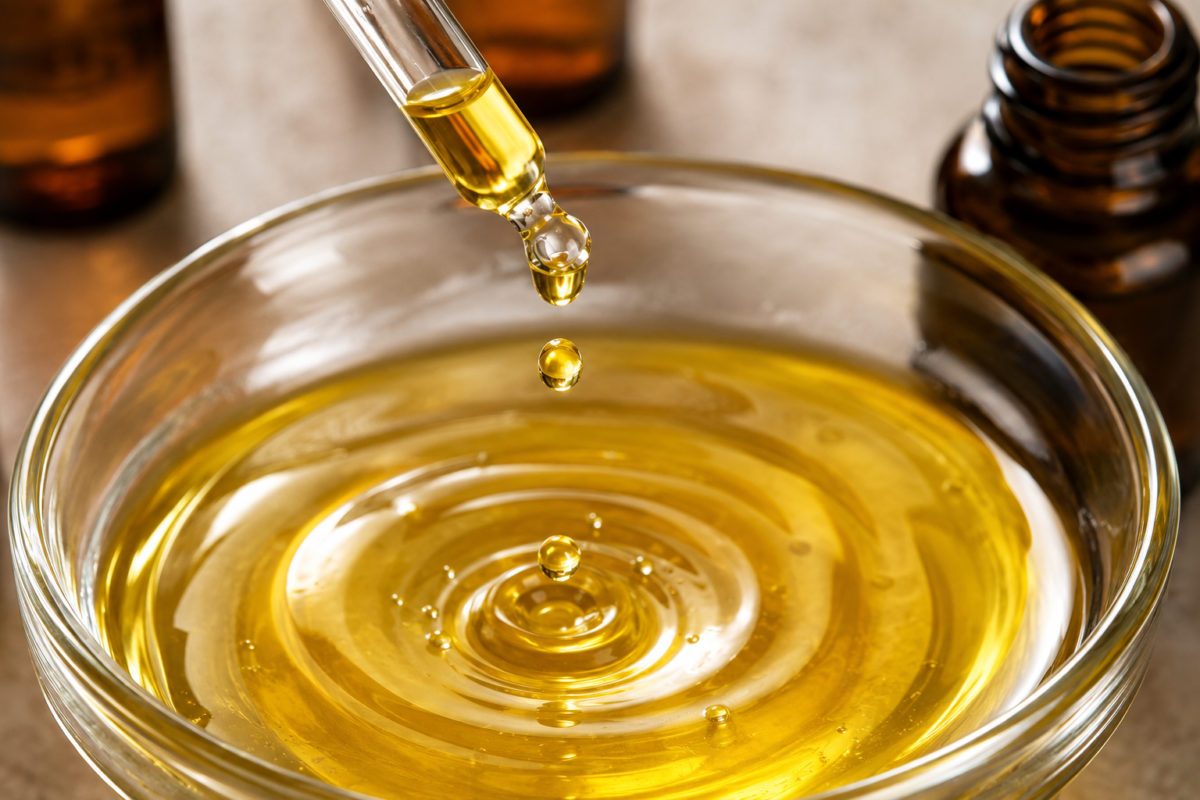
Remove from heat and stir in 20–40 drops of your essential oil blend (see the note-building section below before you pick your oils). Stir gently rather than briskly — you’re trying to combine the oils evenly, not whip air into the mixture.
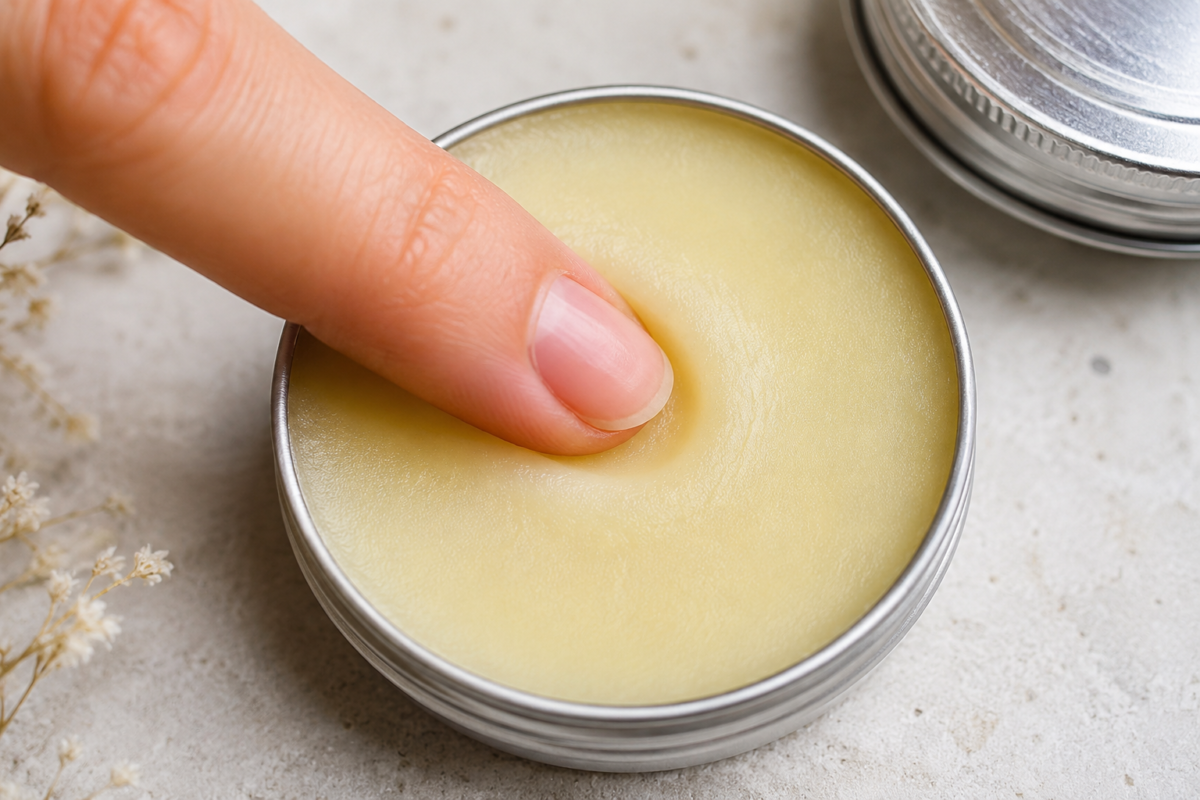
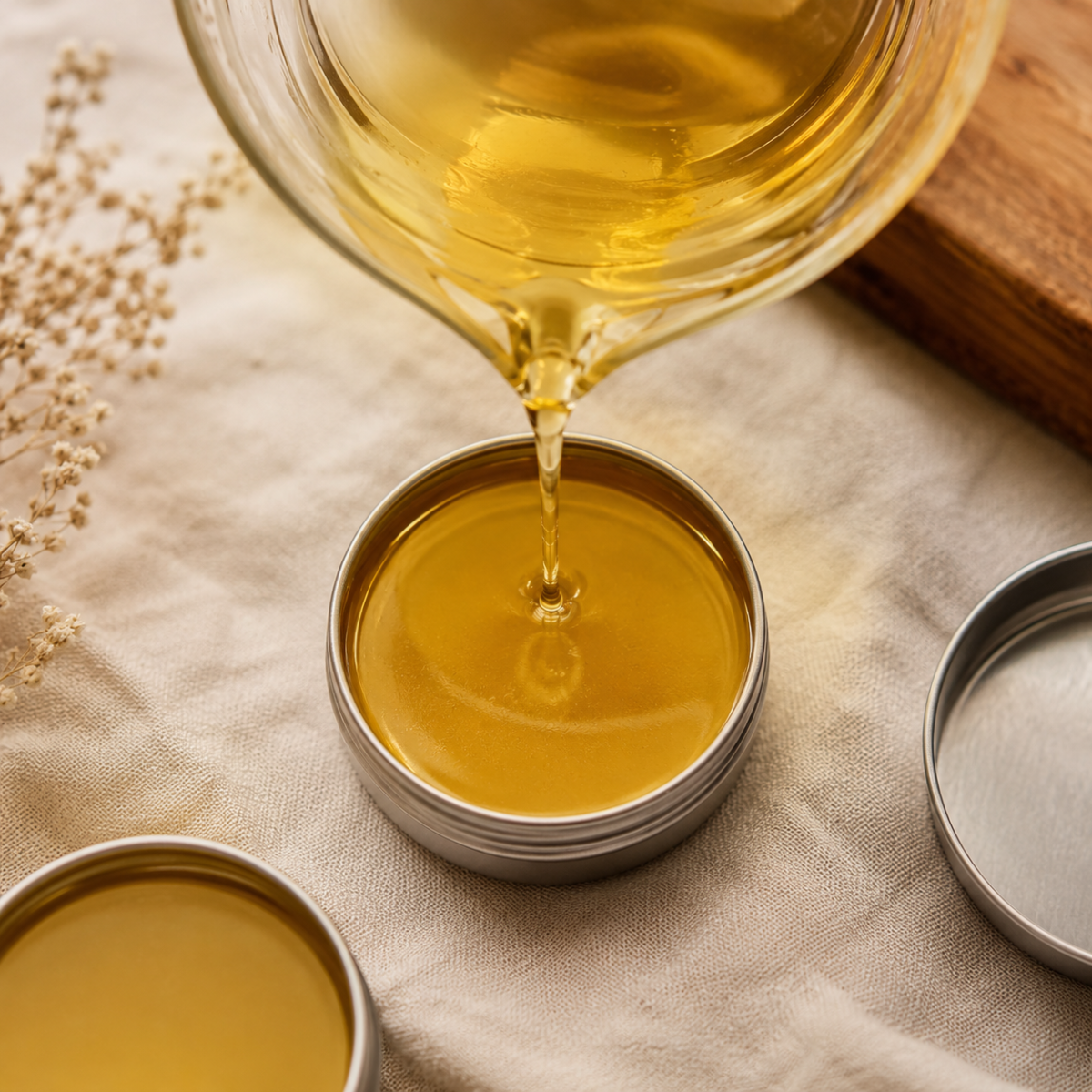
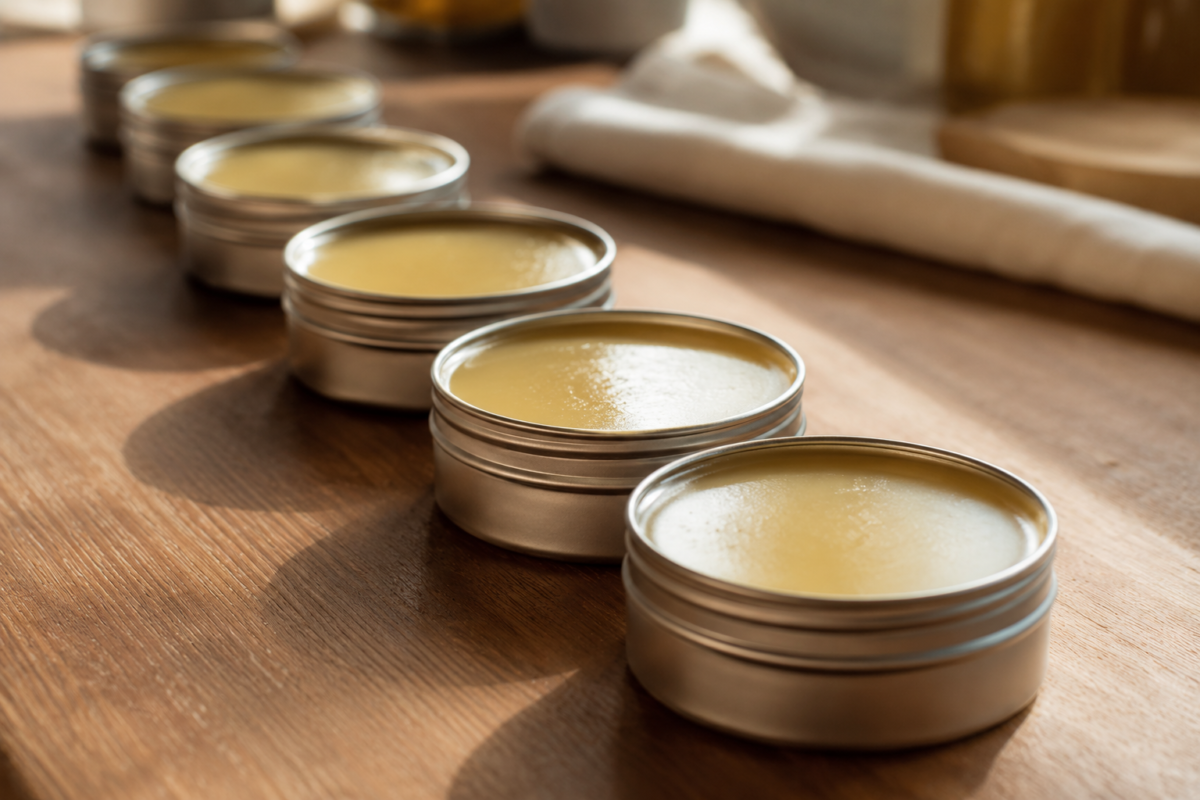
Pour immediately into your tin or jar and let it set undisturbed at room temperature for a few hours before capping it.
💡 Tip: Drops are fine for a casual batch, but drop size varies with viscosity and dropper shape. If you plan on making this more than once, a small jewelry scale accurate to 0.01g (under $15 online) makes your ratios genuinely repeatable instead of a guess.
Build Your Scent Like a Perfumer, Not Like a Guessing Game
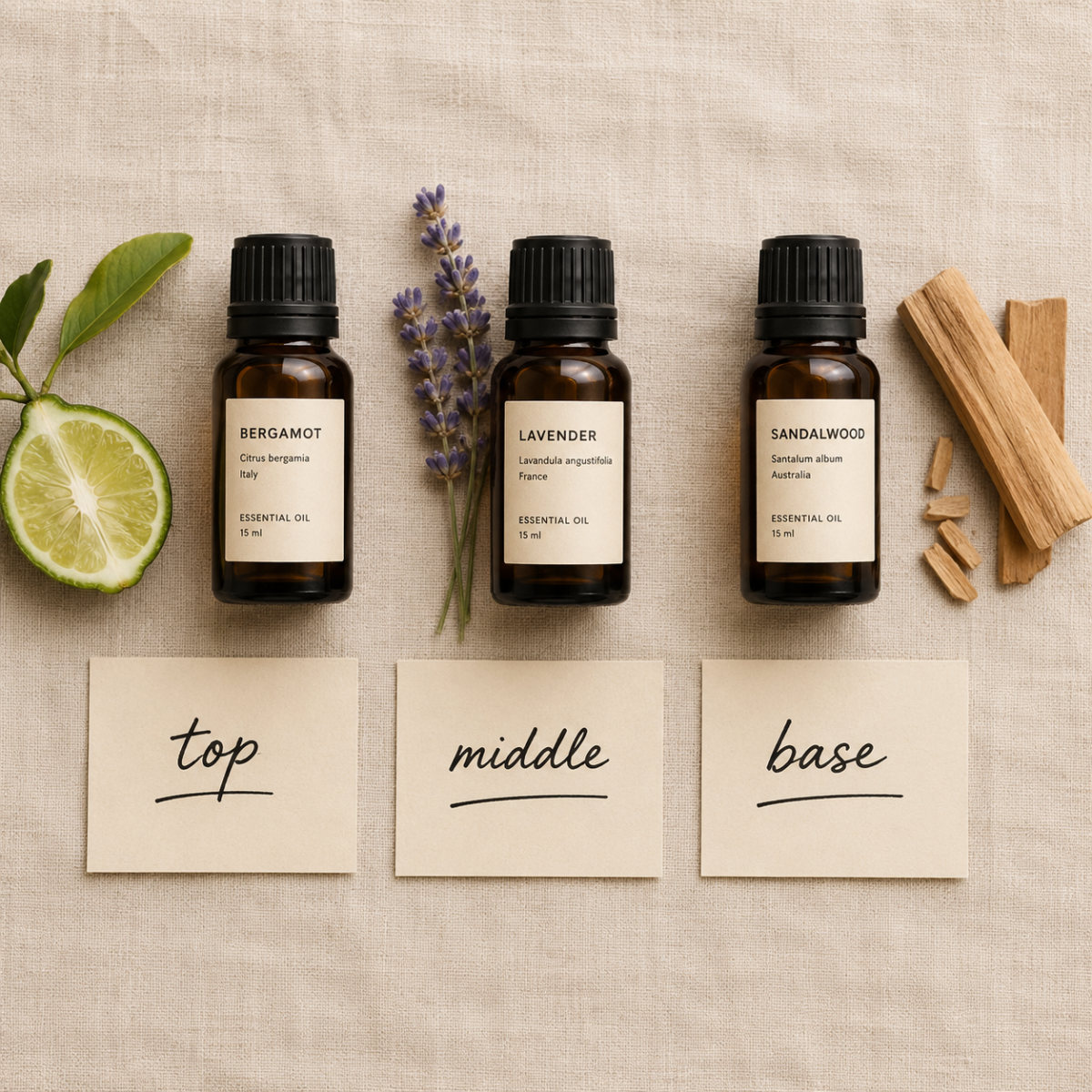
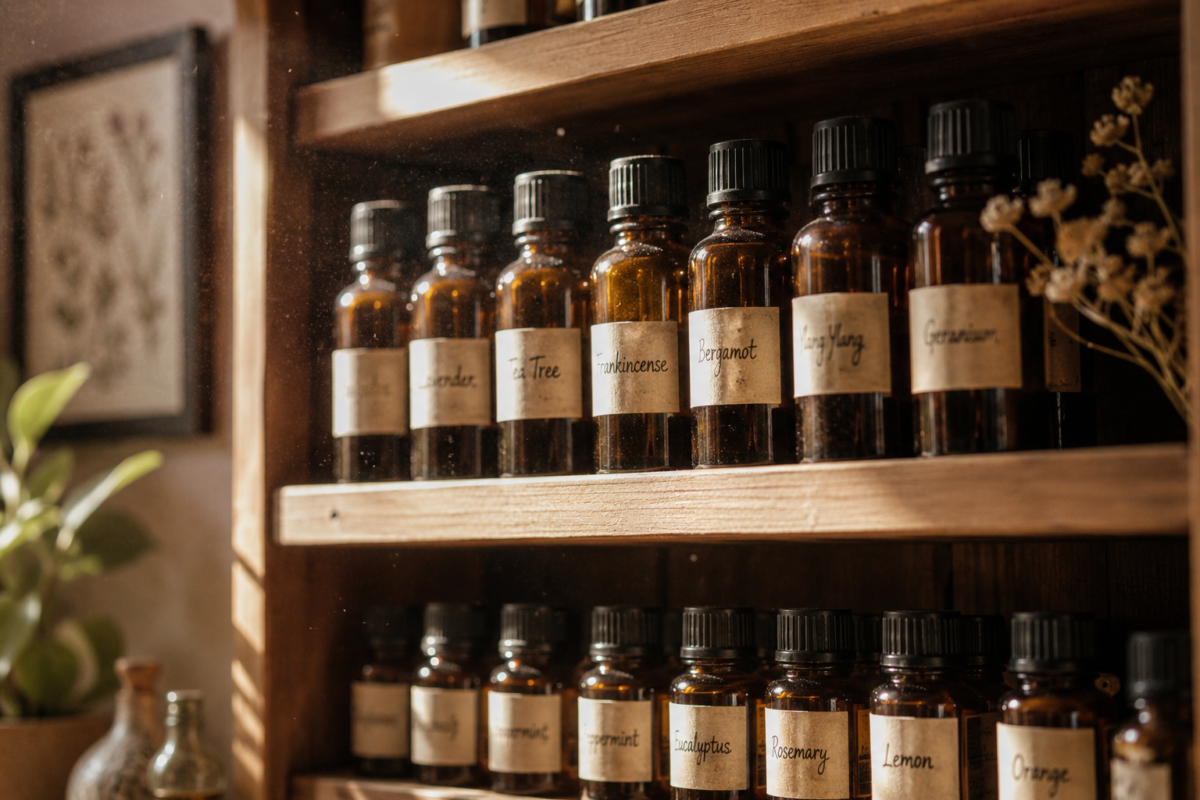
A single essential oil dropped into wax will smell fine for about ten minutes and then go flat. The reason perfumes — solid or otherwise — smell layered and last longer is a structure borrowed from classic perfumery: top, middle, and base notes, each evaporating at a different speed. Top notes hit you first and disappear fastest. Middle notes form the body of the scent. Base notes are the slow, heavy molecules that anchor everything else and keep it on your skin for hours instead of minutes. For more on how this pairs with natural ingredients specifically, our guide to natural fragrance and botanical perfumery covers the bigger picture.
| Note | How It Behaves | Examples |
|---|---|---|
| Top | Fastest to fade — first impression only | Orange, grapefruit, peppermint |
| Middle | The main body of the scent | Lavender, rosemary, geranium, rose |
| Base | Slowest to fade — anchors everything | Sandalwood, patchouli, vetiver, frankincense |
⚠️ Warning: Bright citrus oils like bergamot and lemon are gorgeous in an alcohol spray but nearly disappear within minutes in a wax base — wax just doesn’t carry volatile top notes the way alcohol does. If you want brightness, orange holds up better because it has more body. Otherwise, treat citrus as a supporting player, not your lead note.
A simple starting formula: roughly 2 parts base note, 1 part middle, 1 part top, expressed in drops. So for a 40-drop batch, that’s about 20 drops base, 10 drops middle, 10 drops top. Keep the total number of different oils small — three notes tend to read as an actual scent, while eight different oils crammed into one tin usually reads as confusion. If you’re picking oils based on mood rather than a specific note structure, our piece on aromatherapy and mood is a useful starting point for matching scent families to how you want to feel wearing them.
If you’re stuck choosing between oils that all smell “nice,” try this instead of picking from a list: open each bottle, smell it, and notice two things — what memory or image comes to mind, and where in your body you feel it. Oils that read as grounding tend to feel low and settled; oils that energize tend to feel like they lift upward. This isn’t a scientific test, but it’s a far better filter than scrolling a chart, because your own scent memory is what will make you actually want to wear the finished blend a month from now instead of leaving the tin in a drawer.
From Our Library
Natural Beauty & Ritual Recipes
If you enjoyed building a scent from scratch, our natural beauty eBooks walk through dozens more face, hair, and ritual recipes in the same hands-on style — real ratios, real ingredients, nothing left vague.
Browse Natural Beauty Guides →Getting the Dilution Right (Without a Chemistry Degree)
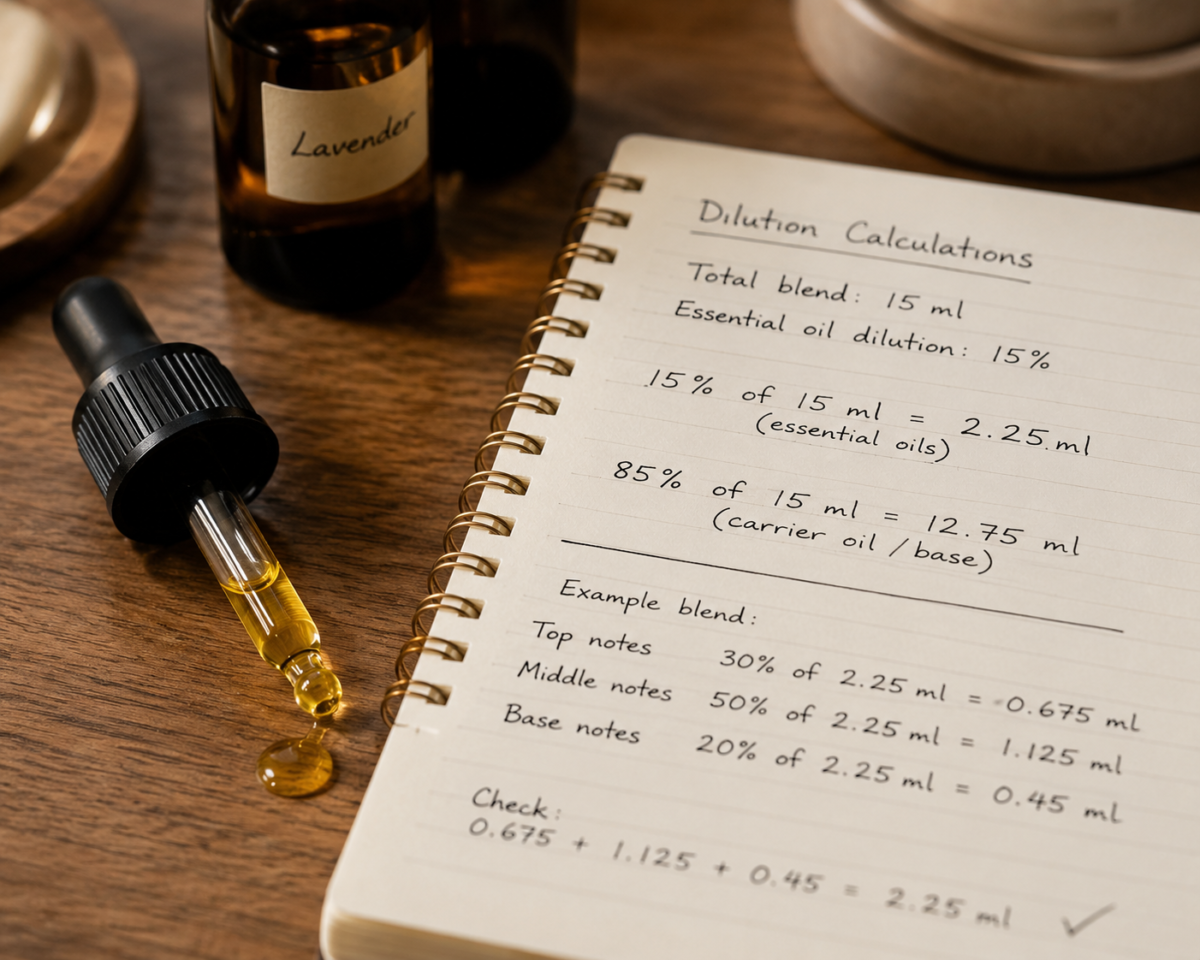
Essential oils are concentrated plant extracts, and how much you use changes both how a blend feels on skin and how long it lasts. Aromatherapy safety researchers, including the widely cited Tisserand Institute dilution guidelines, note that facial products typically sit around 0.5–1.2% essential oil, while body oils and lotions run 1–3%. Products meant for a small area of skin — like a rollerball or, by the same logic, a solid perfume applied only to pulse points — can safely run higher, often somewhere in the 8–12% range, because you’re covering a few square centimeters of skin, not your whole body.
0.5–1.2%
Facial cosmetics
1–3%
Body oils & lotions
~8–12%
Solid perfume / rollerballs (small-area use)
A 40-drop blend in a 20g wax-and-oil base lands you in roughly that range. If you have reactive or easily irritated skin, start lower — closer to 20 drops — and build up in future batches once you know how your skin responds. Some individual oils, particularly citrus oils like bergamot and lemon, carry their own extra caution: they’re phototoxic, meaning they can cause a skin reaction if you’re in direct sun within 12 to 18 hours of application. For a full rundown of which oils need extra care and how to store and dilute them safely, see our complete guide to essential oil safety, storage, and dilution — it’s worth reading once, fully, before you build your first blend.
“Solid perfume doesn’t fill a room — and it’s not supposed to. It’s meant for one person to notice, twice a day, on their own wrist.”
Vegan and Sensitive-Skin Variations
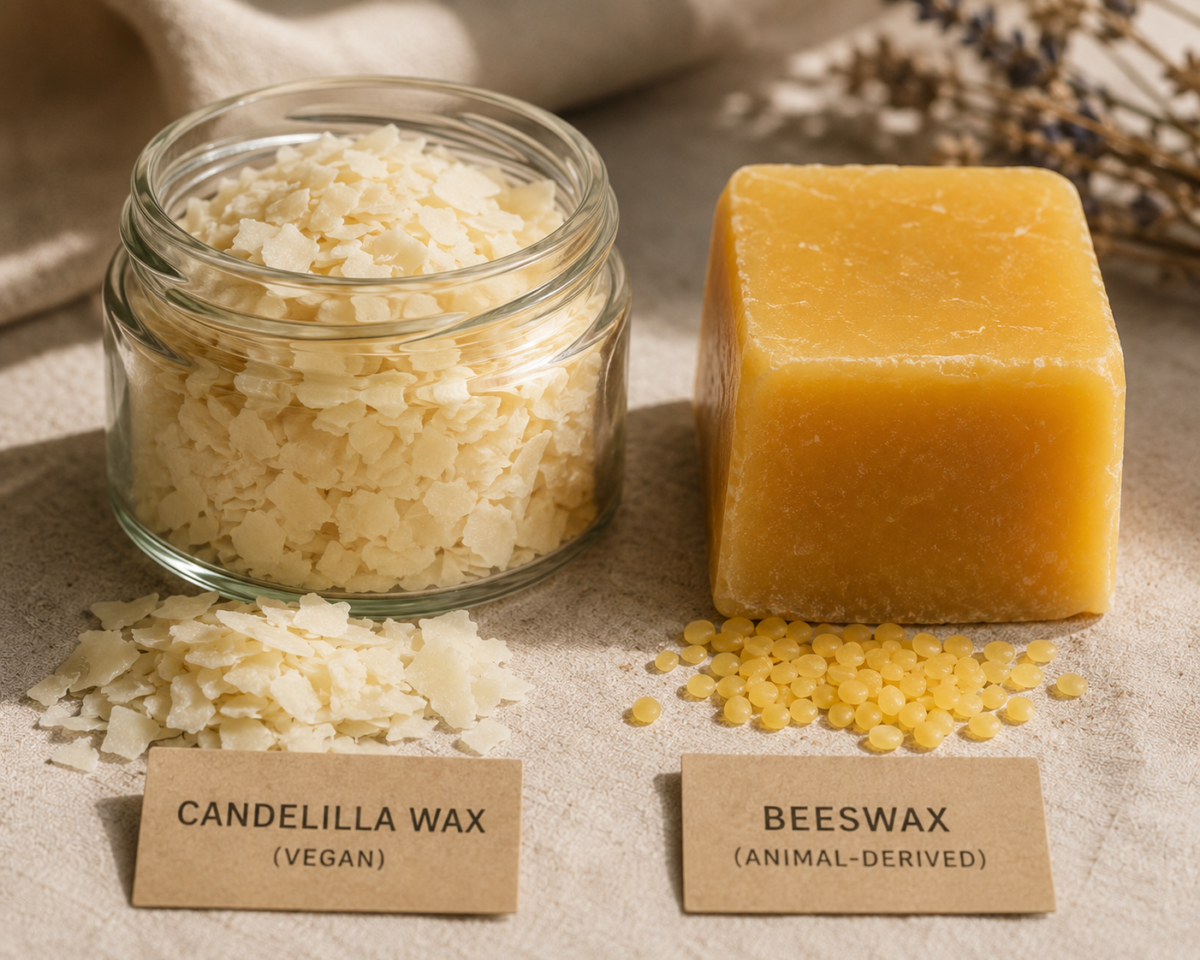
Beeswax isn’t the only option, and skipping it doesn’t mean skipping the technique. Candelilla wax is the most straightforward vegan swap — it behaves similarly enough that you can use it at the exact same ratio, 1 part candelilla to 3 parts carrier oil. Carnauba wax produces a stiffer, drier bar and takes more trial and error to get the texture right, so it’s better suited to a second or third batch once you’ve got a feel for the process. Floral waxes are worth knowing about too: they carry a natural scent of their own and can replace some of your carrier oil, at a fraction of the cost of a rose or tuberose absolute.
❗ Important: “Natural” and “non-reactive” aren’t the same thing. Essential oils and absolutes can still trigger sensitivity at higher concentrations, vegan wax or not. Patch test every new blend on your inner forearm and wait a full 24 hours before applying it to pulse points, especially on the face or neck.
Solid perfume also happens to be one of the easier natural gifts to make in a small batch — no spray bottle to worry about, no shipping restrictions, and a tin that fits in a stocking or gift bag. If you’re building a gift set, our guide to essential oils for every man is a good companion piece for choosing woodier, less floral notes for the people in your life who’d rather smell like cedar than rose.
How to Make It Last Longer
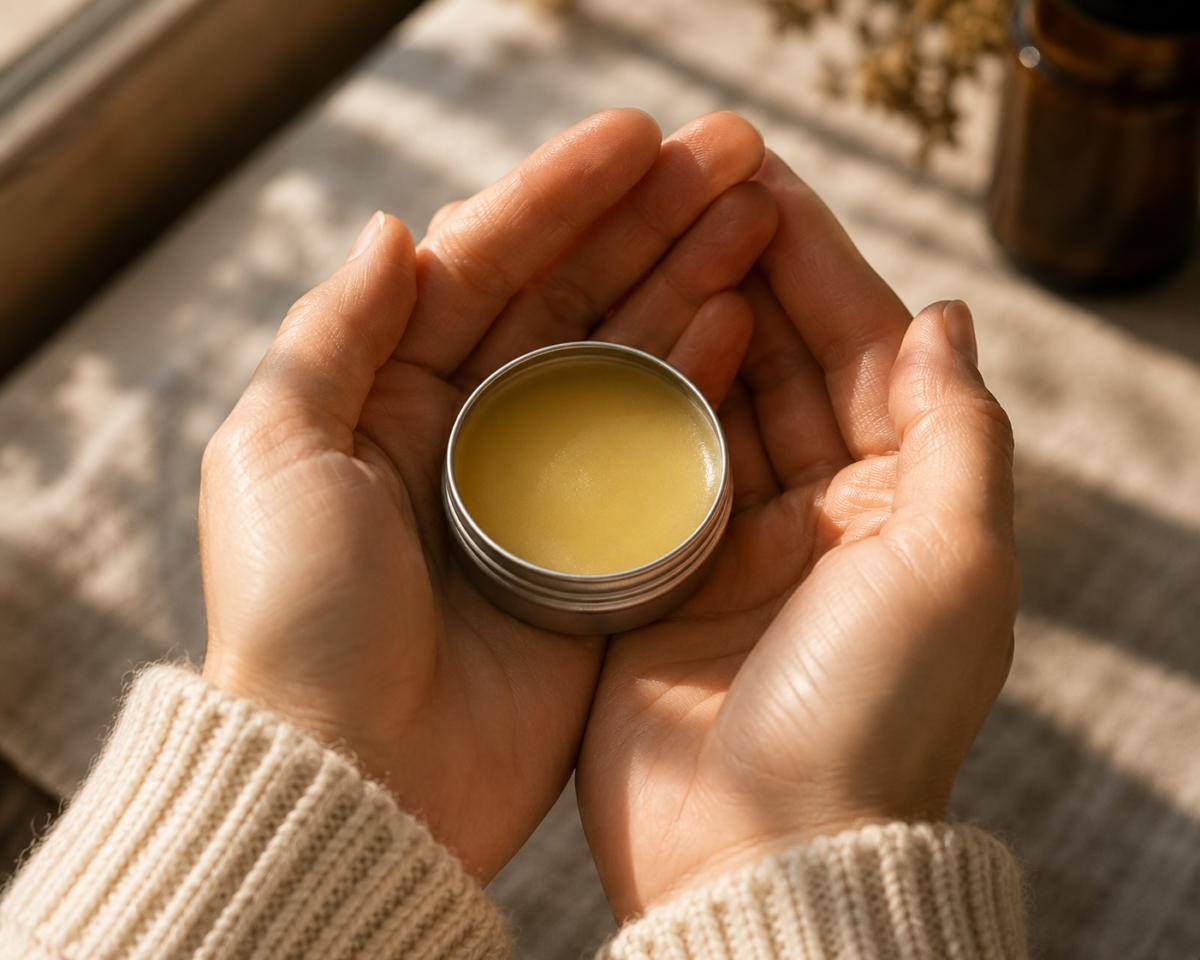
Don’t judge a fresh batch straight out of the pan. Hot wax and melted oil smell different from the same blend at room temperature on your skin — the top notes are still burning off and everything smells more intense than it will end up being. Let the tin sit, capped, for at least 24 hours before deciding whether the blend needs adjusting. Some perfumers leave a batch for up to two weeks so the oils have time to fully meld, and honestly, the scent is usually better for the wait.
Once it’s ready to wear, apply it to pulse points — wrists, the base of your throat, behind your ears, the inside of your elbow. These spots run warmer than the rest of your skin, and that warmth is what releases the scent from the wax. Warming the tin briefly between your palms before you dip a finger in helps too. Expect 4 to 6 hours of wear on skin before it fades, with base-heavy blends (the sandalwood-and-vetiver types) lasting toward the longer end. Reapplying through the day isn’t a sign you did something wrong — it’s simply how this format works, and it’s part of why a tin in your bag is genuinely useful.
For storage, keep your tins away from direct sunlight, radiators, and hot car interiors — heat and light both degrade essential oils faster over time and can soften the wax past the point of holding its shape. Stored properly in a cool spot, a well-made batch keeps comfortably for close to a year.
Solid Perfume vs. Perfume Oil vs. Alcohol Spray: Which Should You Actually Make?
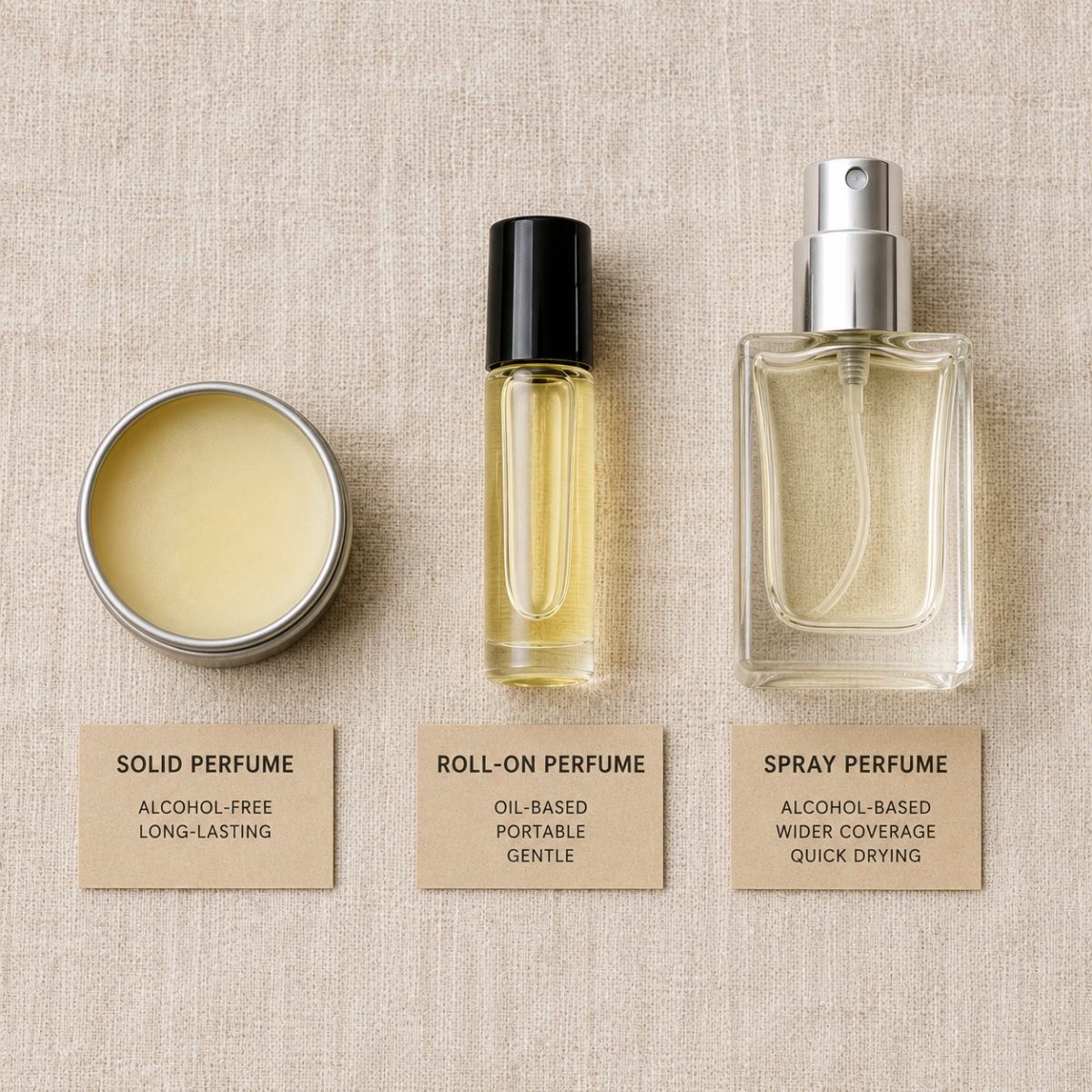
Solid perfume isn’t the only DIY fragrance format, and it isn’t automatically the “best” one — it’s the right pick for certain situations and not others. Here’s how the three most common natural fragrance formats actually compare, so you’re not disappointed by projection you were never going to get from a balm.
| Format | Projection | Wear Time | Best For |
|---|---|---|---|
| Solid perfume | Low, intimate | 4–6 hrs, reapply | Purses, gifts, sensitive skin, travel (no liquid restrictions) |
| Roll-on perfume oil | Low–medium | 3–5 hrs, reapply | Daily wear, quick application, layering |
| Alcohol-based spray | High, fills a room | Varies, top notes fade fast | When you want scent to be noticed at a distance |
If you’re not sure which format fits your routine, roll-on blends are the easiest entry point since they skip the melting step entirely — our guide on roller blend recipes and where to apply them is a good next read if you want to compare the two formats side by side before committing to a full solid-perfume setup.
Common Mistakes When You Make Solid Perfume with Essential Oils
❌ Skipping the base note
Adding only a light, bright oil with nothing to anchor it means the scent fades within the hour, no matter how much you use. Instead: always build in a woody or resinous base — sandalwood, patchouli, or vetiver — even in a small amount.
❌ Guessing the wax-to-oil ratio
Eyeballing it usually lands you with something either too hard to release scent or too soft to hold its shape in a warm bag. Instead: start at 1 part wax to 3 parts oil by weight and adjust from there in small steps.
❌ Making citrus the star of the show
Bergamot and lemon are stunning in a spray and nearly silent in wax within minutes. Instead: use orange for brightness, or treat citrus purely as a top-note accent over a heavier base.
❌ Judging the scent while it’s still warm
Hot wax reads completely differently than cured, skin-temperature wax. Instead: wait at least 24 hours — longer if you can — before deciding a blend needs reworking.
❌ Skipping the patch test because it’s “natural”
Natural doesn’t mean non-reactive, and some oils are phototoxic on top of that. Instead: patch test on your inner arm and wait 24 hours before wearing any new blend on pulse points.
Keep Building Your Ritual
More Natural Beauty & Wellness Recipes
Explore our full shop for more small-batch, ingredient-first guides — face, hair, body, and ritual recipes you can make with what’s already in your kitchen.
Visit the Shop →Frequently Asked Questions
Once you’ve made one batch, the process stops feeling like a recipe and starts feeling like a skill — you’ll know within a minute of melting whether your ratio is off, and you’ll start picking oils by note instead of by whatever smells nice in the bottle. Learning how to make solid perfume with essential oils is less about following exact numbers forever and more about understanding why those numbers work, so the next blend you build is entirely your own.