
Matched By Headache Type · Safety Ratios Included
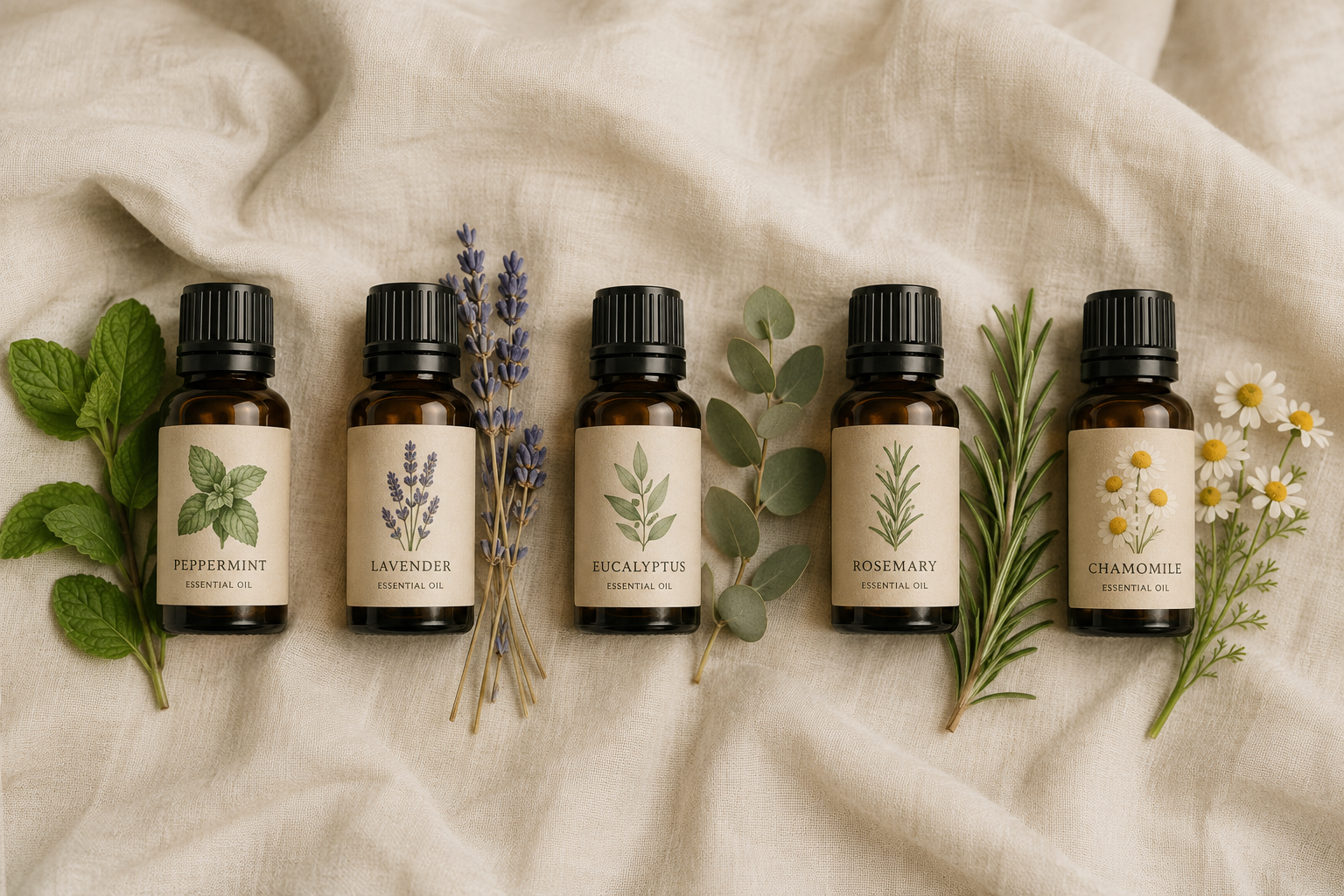
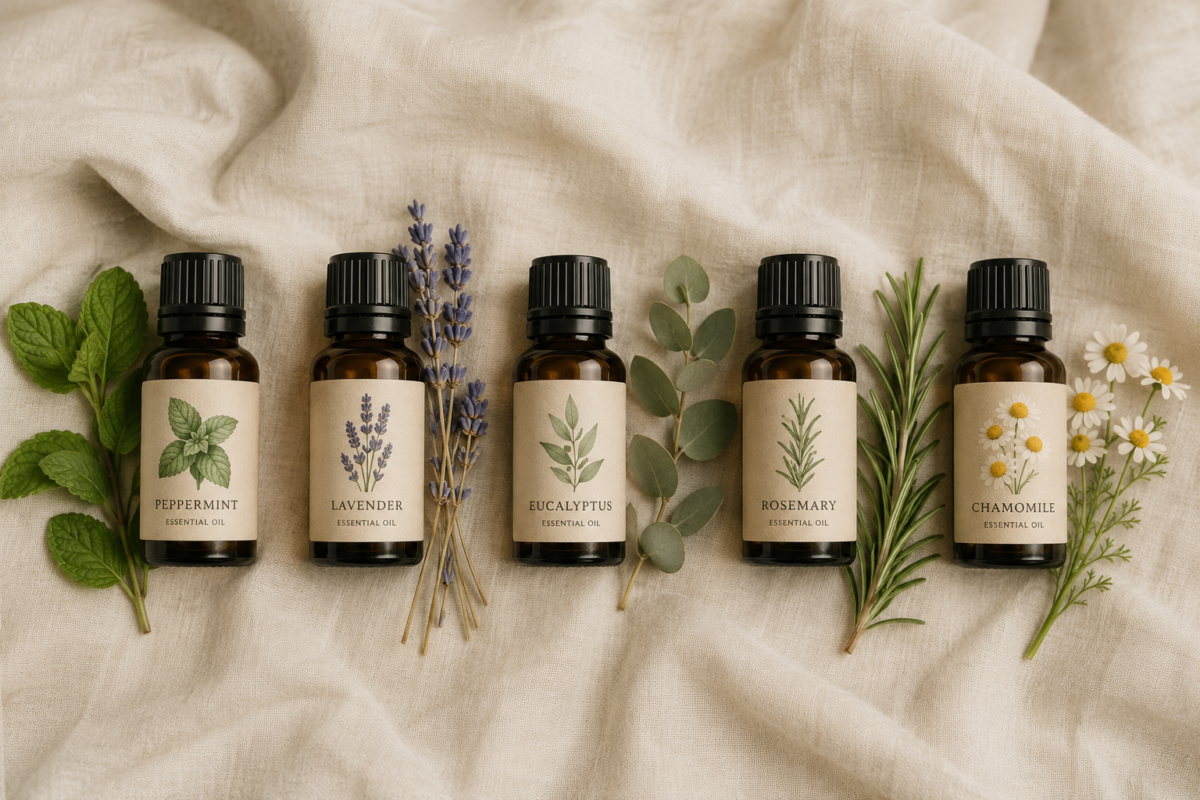
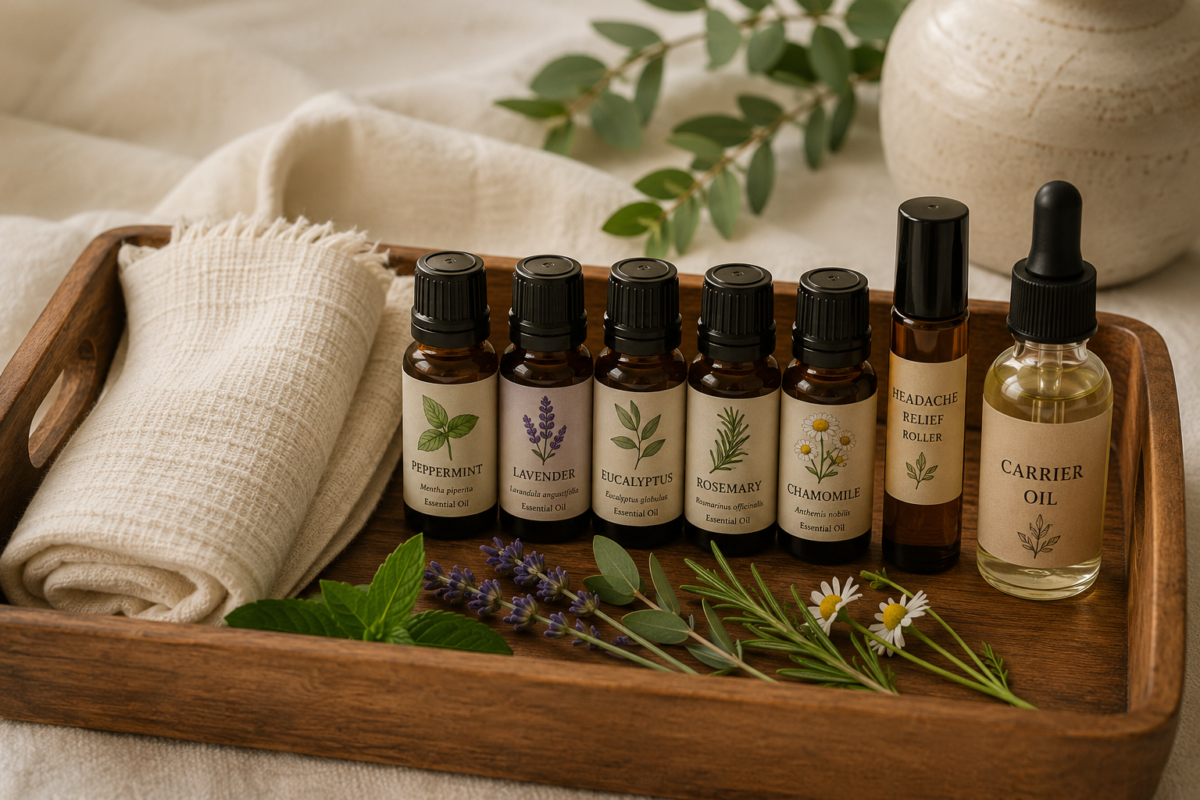
Essential oils for headaches aren’t interchangeable, and that’s the part most guides skip. Peppermint, lavender, eucalyptus, rosemary and Roman chamomile each work through a different mechanism — which means the right oil depends entirely on which kind of headache you’re actually having. Here’s how to match the oil to the pain, and use it safely.
The best essential oil for a headache depends on its type: peppermint has the strongest evidence for tension headaches applied topically, lavender for migraine via inhalation, and eucalyptus for sinus-pressure headaches. Most oils need diluting in a carrier oil before skin contact — commonly one to two drops per teaspoon for facial and temple use. No single oil suits every headache, which is why matching matters more than picking a favourite.

Key Takeaways
- ✓There is no single “best” oil — peppermint leads for tension headaches, lavender for migraine, eucalyptus for sinus pressure.
- ✓Peppermint and lavender are the only two on this list with placebo-controlled trial evidence behind them.
- ✓Topical use always requires dilution — roughly one to two drops per teaspoon of carrier oil for temple application.
- ✓Inhalation is gentler than topical use, but strong scents can worsen migraine-related smell sensitivity.
- ✓Rosemary and Roman chamomile rest on traditional use rather than clinical trials — pleasant, low-risk, but not proven.
- ✓A headache pattern that’s changing or worsening is a reason to see a doctor, never a reason to try a different oil.
❗ Educational use only. Essential oils are potent plant extracts, not gentle add-ons. This article is general information rather than medical advice — dilute before skin contact, patch test new oils, and check with a healthcare professional before use during pregnancy, with children, or alongside medication.
How Essential Oils Work on Headache Pain
Headaches generally involve some combination of three things: tight muscles across the scalp, neck and shoulders; changes in blood vessel dilation; and overactive pain signalling in the trigeminal nerve. Essential oils address these through genuinely different chemistry, which is exactly why one oil doesn’t cover every case.
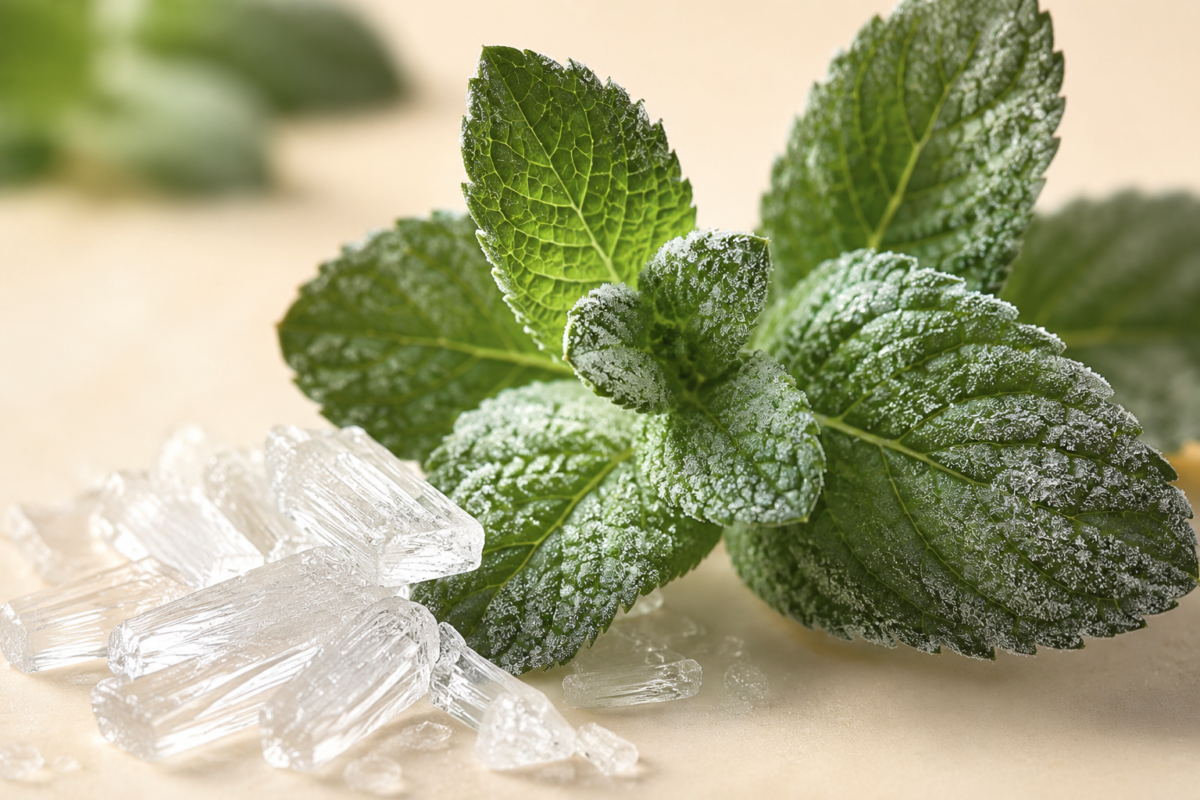
Menthol-rich oils like peppermint activate cold receptors in the skin, producing a cooling sensation that both distracts pain pathways and relaxes surrounding muscle. Calming oils like lavender work further upstream on the nervous system, easing the stress and tension that trigger or amplify headaches in the first place. Decongestant oils like eucalyptus target a third thing entirely — the sinus congestion behind facial pressure. Understanding which of those three your headache actually involves is most of the work.
The Best Essential Oils for Headaches, Matched by Type
Peppermint — for tension-type headaches
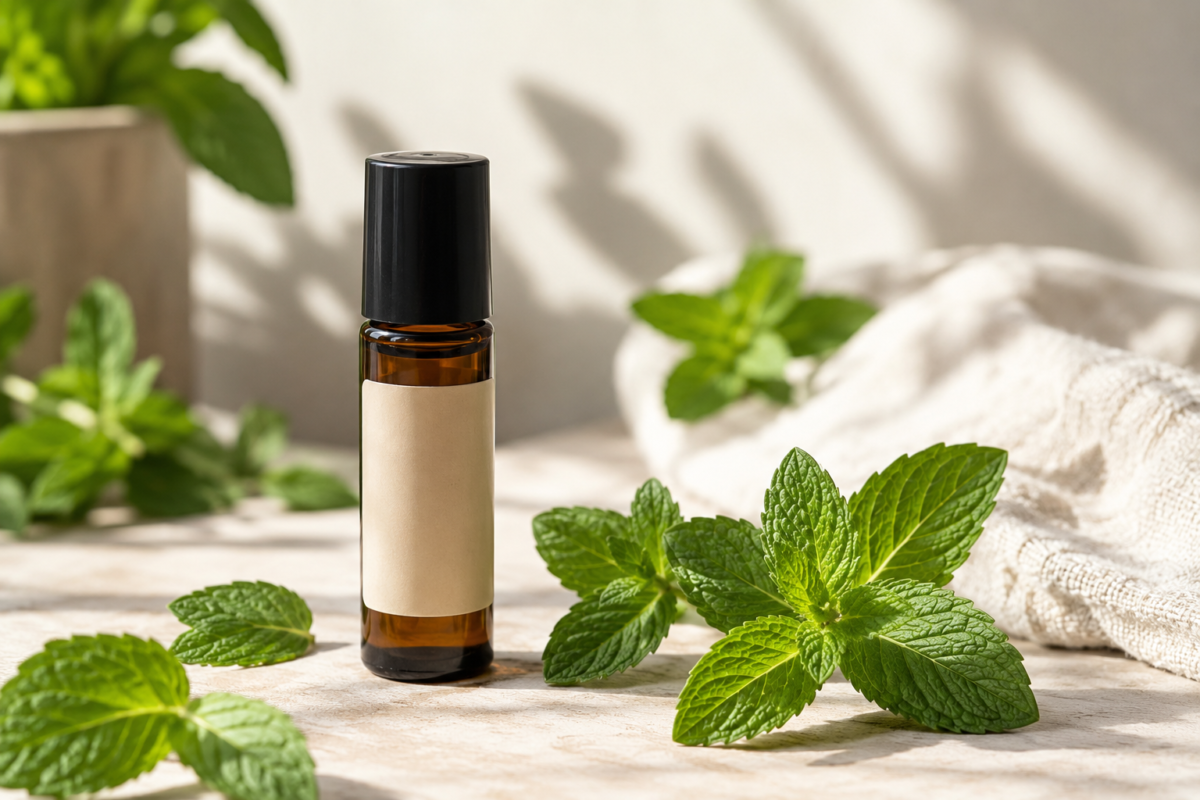
The most clinically studied option here. A 10% peppermint oil solution applied to the forehead and temples matched the effect of a standard acetaminophen dose for tension-type headache in controlled research, with a measurable difference at around 15 minutes. The menthol content triggers a cooling sensation that eases muscle tension and interrupts pain signalling. Our peppermint oil application guide covers exact placement and three roller blend recipes.
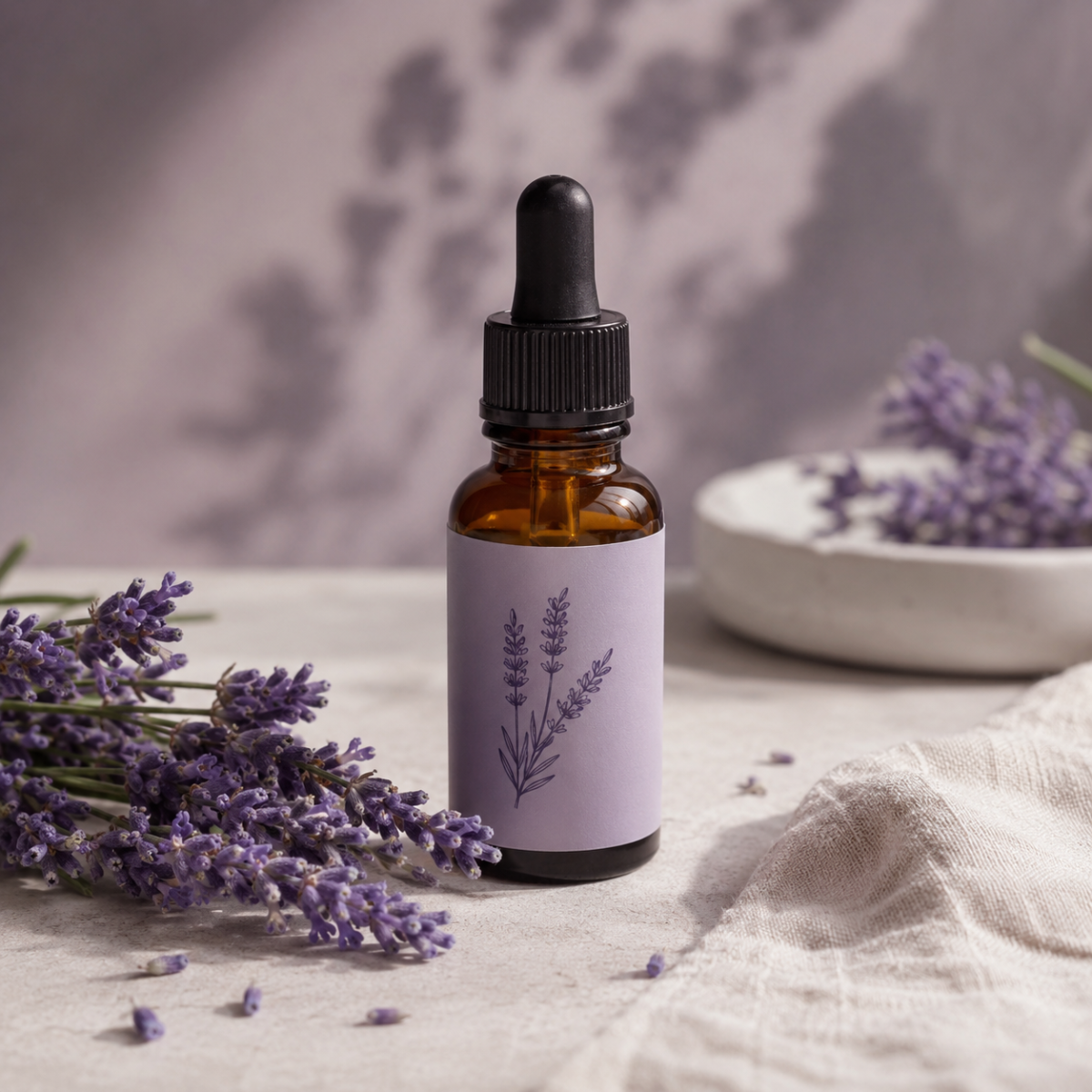
Lavender — for migraine and stress-triggered headaches
In a placebo-controlled trial, patients who inhaled lavender essential oil during a migraine attack showed significantly greater reduction in headache severity than those inhaling a placebo. Its calming, anxiolytic effect likely plays a role, since stress is among the most common migraine triggers. Full detail in our lavender oil for migraines guide, including the red-flag symptoms that need a doctor.
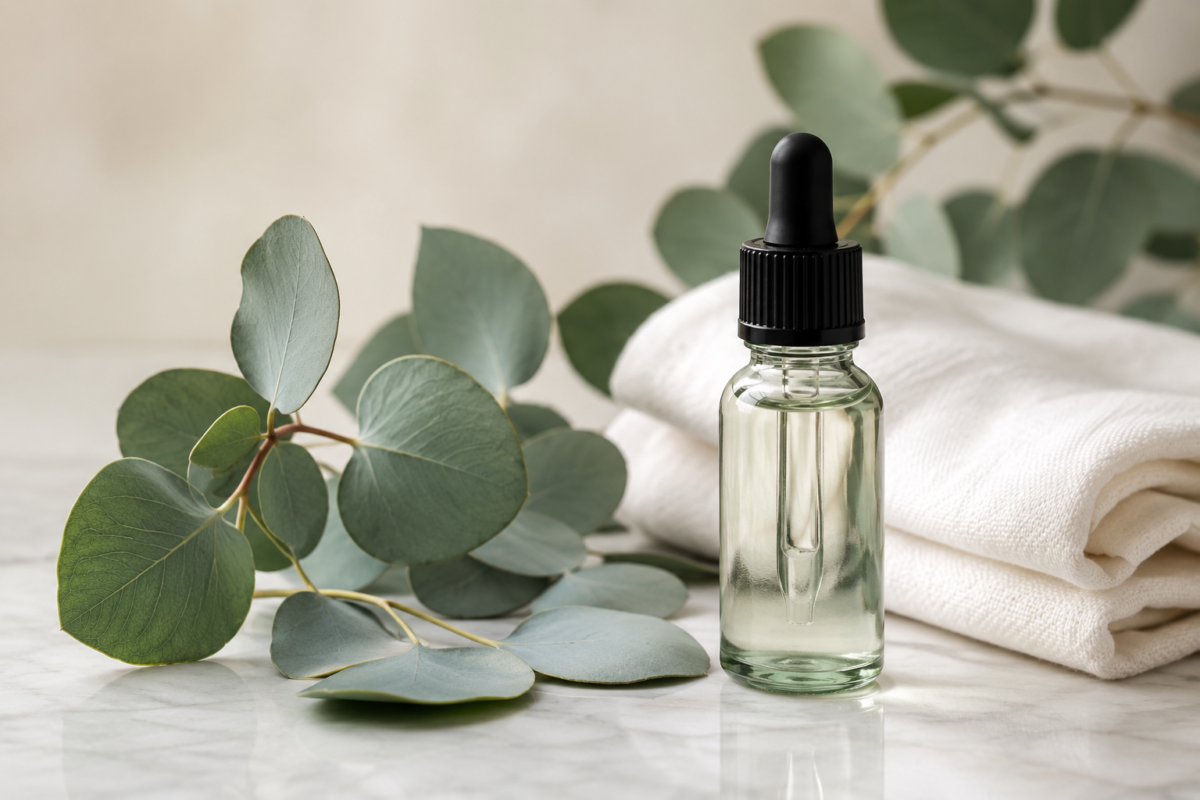
Eucalyptus — for sinus-pressure headaches
Eucalyptus oil’s 1,8-cineole content has a decongestant, opening effect that can ease the facial pressure and dull ache accompanying sinus congestion. Research on peppermint-eucalyptus blends applied to the forehead also showed a muscle-relaxing, mentally clarifying effect, even where pain-sensitivity changes were modest. Our comparison of eucalyptus vs tea tree oil is worth a look if you’re choosing between the two.
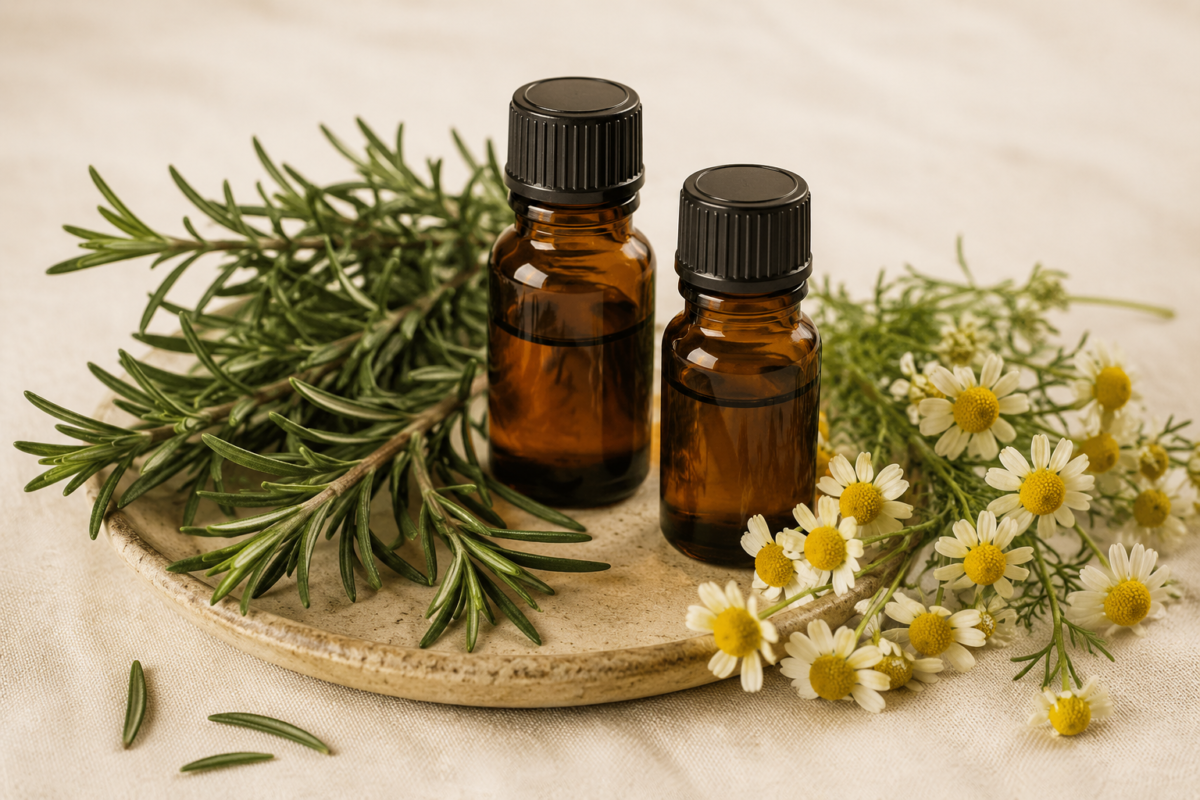
Rosemary — for mental fatigue and low-energy headaches
Rosemary has a long history of traditional use for mental clarity and circulation, and its brisk, herbaceous scent is often used against the foggy, sluggish feeling accompanying an afternoon headache. The evidence here is traditional rather than clinical, so treat it as a pleasant, low-risk addition rather than a primary approach.
Roman chamomile — for stress-and-tension headaches
Roman chamomile is valued for its gentle, calming character and traditionally used to ease anxiety-linked muscle tension. It suits an evening wind-down routine well, particularly for people whose headaches build steadily across a stressful day rather than arriving suddenly.
Which Oil for Which Headache
| Oil | Best For | Method | Key Compound |
|---|---|---|---|
| Peppermint | Tension-type headache | Diluted, topical | Menthol |
| Lavender | Migraine, stress-triggered | Inhalation or diffuser | Linalool |
| Eucalyptus | Sinus-pressure headache | Inhalation or steam | 1,8-cineole |
| Rosemary | Mental fatigue, low energy | Inhalation | Camphor / cineole |
| Roman chamomile | Anxiety-linked tension | Diffuser, evening use | Esters (angelate) |
If Stress Keeps Showing Up As The Trigger
The Natural Reset Bundle
Ten guides on calming a wired nervous system, repairing broken sleep, and breaking the cortisol cycle behind stress-linked headaches — the upstream work no oil can do for you.
See What’s Inside →Getting the Dilution Right
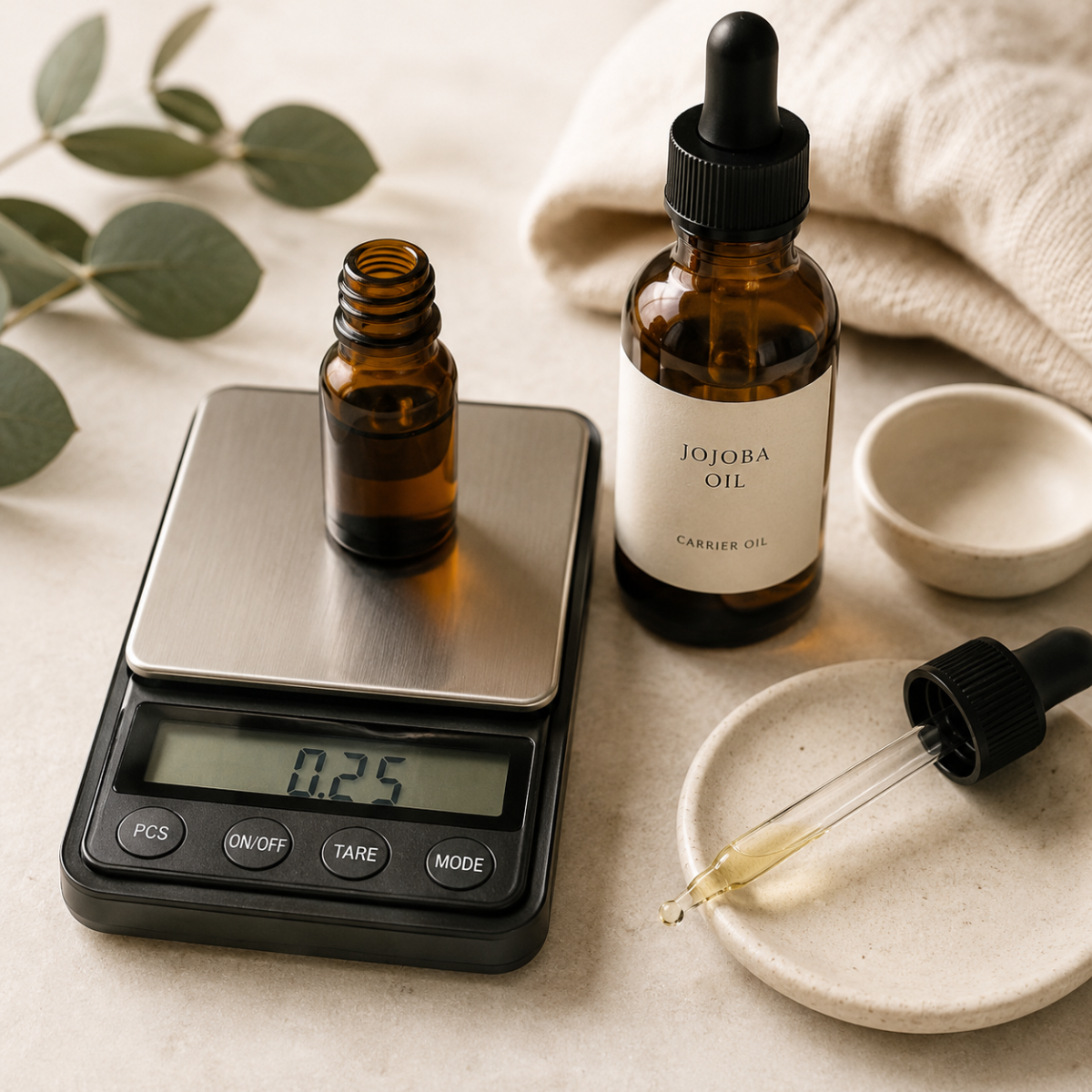
Essential oils are concentrated plant extracts, and concentration changes both how a blend feels on skin and how likely it is to cause irritation. Aromatherapy safety guidance places facial products around 0.5 to 1.2% essential oil, body oils and lotions at 1 to 3%, and small-area applications like a temple roller somewhat higher, since you’re covering a few square centimetres rather than your whole body.
0.5–1.2%
Facial cosmetics
1–3%
Body oils & lotions
1–2 drops
Per teaspoon carrier oil, temple use
If you have reactive or easily irritated skin, start at the lower end and build up only once you know how you respond. For a full rundown of which oils need extra care — including phototoxic citrus oils that react in sunlight — and how to store and dilute them properly, see our complete guide to essential oil safety, storage, and dilution.
Using Them Safely
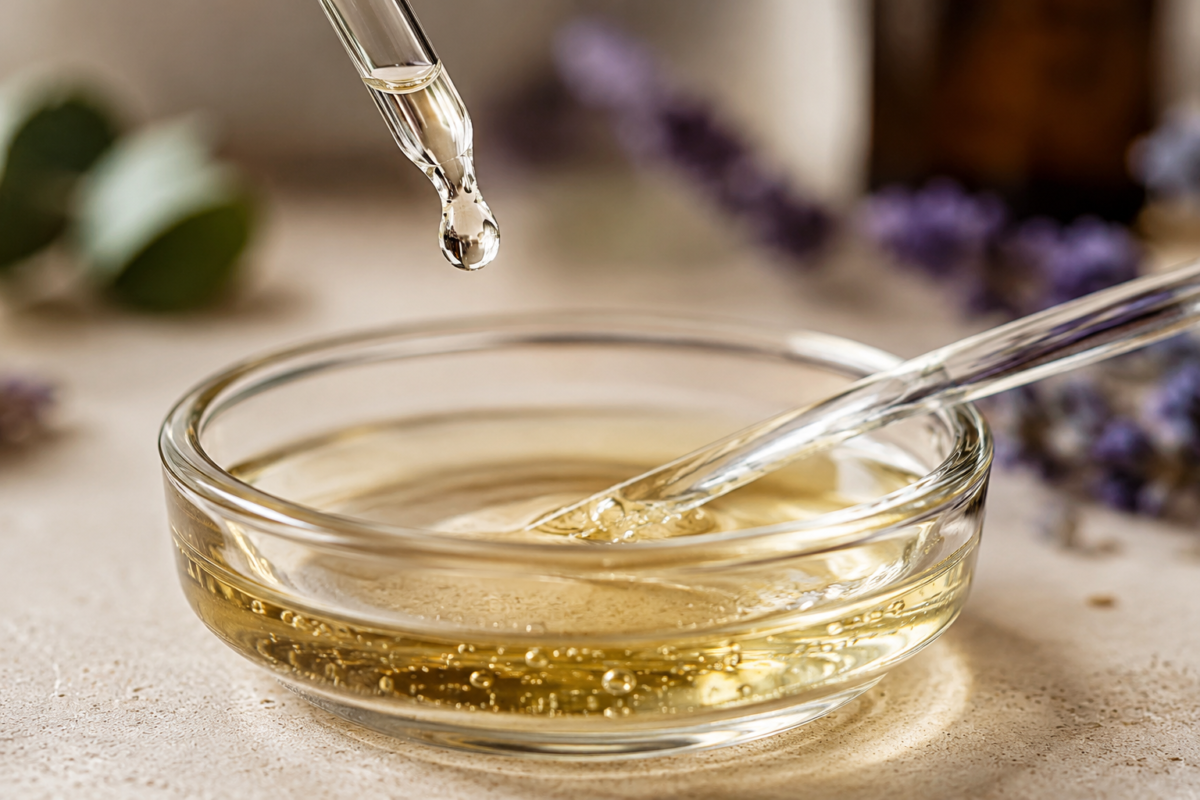
- Dilute before any topical use. One to two drops per teaspoon of carrier oil such as jojoba or sweet almond is a common starting ratio for adult temple application.
- Patch test first. Apply a small diluted amount to the inner forearm and wait a full 24 hours before using anything near your face.
- Avoid the eye area and broken skin, and keep undiluted oils well away from children and pets.
- Introduce one oil at a time. If you react to a five-oil blend, you’ll have no idea which one caused it.
- Check with a doctor before use during pregnancy, while breastfeeding, or alongside prescribed medication.
“The goal isn’t finding one miracle oil — it’s building a small, matched toolkit for the specific headaches you actually get.”
Common Mistakes to Avoid
❌ Using the same oil for every headache type
A cooling oil does very little for sinus pressure, and a decongestant does little for muscle tension. Instead: match the mechanism — cooling for tension, calming for stress, decongesting for sinus.
❌ Applying oils near the eyes
Peppermint vapour in particular is genuinely painful in the eyes, and the skin there is thin and reactive. Instead: keep application to the temples, outer forehead, and back of the neck.
❌ Assuming “natural” means no risk of reaction
Essential oils are among the more common causes of contact sensitisation in cosmetics. Instead: dilute properly, patch test, and add new oils one at a time.
❌ Chasing a new oil when the pattern is changing
Headaches that are getting more frequent, more severe, or waking you from sleep are a medical question, not a formulation question. Instead: get it evaluated properly before experimenting further.
For A Calmer Daily Ritual
BLOOM — The Natural Beauty Handbook
Fifty-one pages of plant-based rituals — facial steams, calming teas, scalp and temple treatments — for slowing down before tension has a chance to build.
Get Bloom →Frequently Asked Questions
Related Reading
Keep Exploring
- →Where to Apply Peppermint Oil for Headaches (Plus 3 Roller Blends)
- →Lavender Oil for Migraines: What the Research Shows
- →Natural Remedies for Tension Headaches That Actually Work
- →A Guide to the Safe Use, Storage, and Dilution of Essential Oils
- →Eucalyptus vs Tea Tree: Which Essential Oil Should You Choose?
Once you’ve matched two or three oils to the headaches you actually get, the guesswork drops away — you reach for peppermint when it’s pressure, lavender when it’s stress and throbbing, eucalyptus when your face feels full. That’s a small, practical toolkit rather than a shelf of bottles you never quite know what to do with.
Sources: Göbel H, Schmidt G, Soyka D, “Effect of Peppermint and Eucalyptus Oil Preparations on Neurophysiological and Experimental Algesimetric Headache Parameters,” Cephalalgia, 1994 · Göbel H, Fresenius J, Heinze A, et al., “Effectiveness of Oleum menthae piperitae and Paracetamol in Therapy of Headache of the Tension Type,” 1996 · Sasannejad P, et al., “Lavender Essential Oil in the Treatment of Migraine Headache: A Placebo-Controlled Clinical Trial,” European Neurology, 2012 · Tisserand Institute, essential oil dilution guidance.
This content is for educational and informational purposes only and is not intended as medical advice, diagnosis, or treatment. Always consult a qualified healthcare professional before making changes to your health practices.