Quick answer
There are about 20 drops of essential oil per ml, so a 1% blend is 2 drops in 10 ml of carrier oil and a 2% blend is 4 drops. For adults, use 0.5 to 1% on the face and 1 to 2% on the body. Round down, and patch test before the first full use.
Key facts
- 1 ml of essential oil is about 20 drops; drop size varies by dropper
- Formula: drops = ml of carrier × % strength × 0.2
- Face: 0.5 to 1% (1 to 2 drops in 10 ml); body: 1 to 2% (2 to 4 drops in 10 ml)
- 30 ml of carrier: 6 drops for 1%, 12 drops for 2%
- Clove bud stays at 0.5% or less; cold-pressed lemon at 2% or less on skin that sees the sun
- Adults only: ask a doctor or qualified aromatherapist for children, pregnancy or breastfeeding
Most charts count about 20 drops of essential oil per ml, so 1 ml of carrier oil with 1 drop gives you roughly a 5% blend, and a 1% blend is 2 drops in every 10 ml. That one number lets you mix any bottle, from a 5 ml face oil to a 100 ml body oil, without guessing.
In this guide we give you the full chart, a simple formula, the right strength for face, body and bath, and the safety steps we never skip. As a result, you can put the calculator away for everyday blends and still mix with confidence.
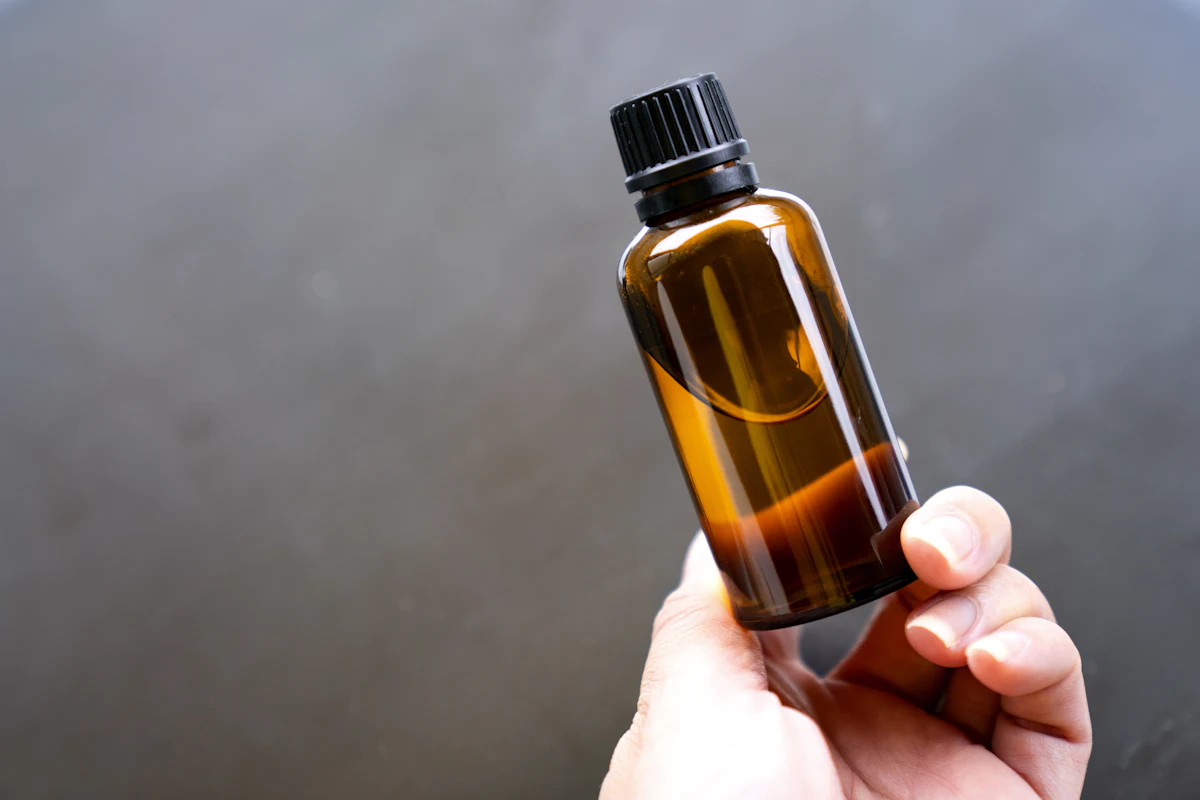
How many drops of essential oil per ml? The short answer
First, the simple rule: one millilitre of essential oil is about 20 drops. So the number of drops of essential oil per ml of carrier depends on the strength you want, not on the oil itself. In other words, you choose a percentage first, and then the drops follow.
Here is the quick math behind it. A 1% blend means 1 part essential oil in 100 parts of the total. Because 10 ml of carrier is 200 drops, 1% of that is 2 drops. Likewise, 2% is 4 drops in 10 ml, and 3% is 6 drops.
- 1 ml of essential oil is about 20 drops (drop size varies by bottle).
- 1% blend is 1 drop per 5 ml, or 2 drops per 10 ml.
- 2% blend is 2 drops per 5 ml, or 4 drops per 10 ml.
- A teaspoon holds about 5 ml, so 1% in a teaspoon of carrier is just 1 drop.
That said, a drop is not a lab measure. Therefore we treat every number of drops of essential oil per ml as a close guide, and we always round down when a result falls between two whole drops.
The Essential Oils Bundle
How many drops in a 10 ml roller? 2 at 1 %, 4 at 2 %. The Essential Oils Bundle has the chart, the blends and the safety rules.
- EbookEssential Oils Without the Hype
- Ebook100 Diffuser Blends
- EbookEssential Oils Room by Room
- PrintableEssential Oil Dilution Chart
- SpreadsheetOil Inventory & Blend Log
- PrintableBlend Recipe Cards


Drops of essential oil per ml chart: 5 to 100 ml
Next, find your bottle size in the left column and read the drops of essential oil per ml for the strength you need. All numbers assume about 20 drops per ml and are rounded down to whole drops, so they stay on the gentle side.
| Carrier oil | 0.5% (sensitive skin) | 1% (face, daily use) | 2% (body oil) | 3% (short-term, small area) |
|---|---|---|---|---|
| 5 ml (1 tsp) | skip or 1 drop in 10 ml | 1 drop | 2 drops | 3 drops |
| 10 ml (roller) | 1 drop | 2 drops | 4 drops | 6 drops |
| 15 ml (1 tbsp) | 1 drop | 3 drops | 6 drops | 9 drops |
| 30 ml (1 fl oz) | 3 drops | 6 drops | 12 drops | 18 drops |
| 50 ml | 5 drops | 10 drops | 20 drops | 30 drops |
| 100 ml | 10 drops | 20 drops | 40 drops | 60 drops |
Also, note that the numbers are the total for the whole blend. For example, if you mix lavender and frankincense at 1% in 10 ml, that is 2 drops in total, not 2 drops of each.
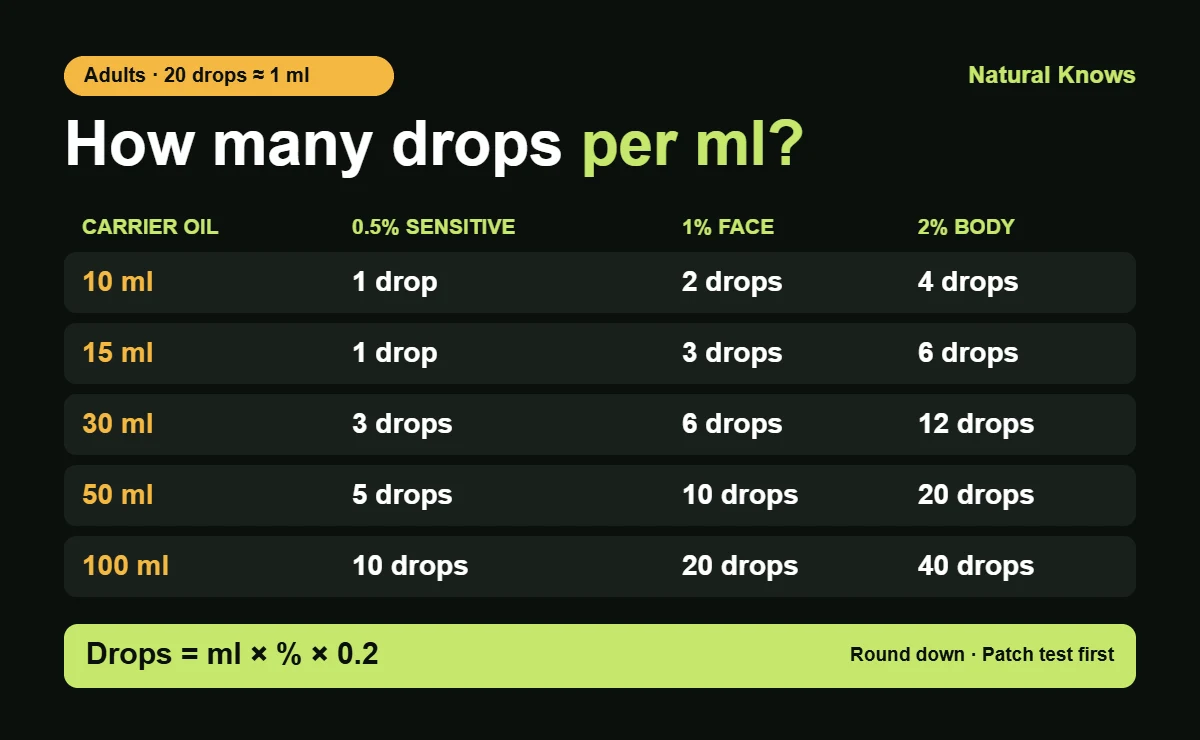
For odd sizes, such as 20 ml or 75 ml, our free oil dilution calculator gives you the exact drops in seconds. Meanwhile, if you like a chart on the fridge, our printable Essential Oil Dilution Chart covers every size from 5 to 100 ml on one page.
How to work out drops of essential oil per ml yourself
Sometimes you have a jar with no chart in sight. In that case, one short formula does the job, and it works for any size.
The 3-second formula
Drops = ml of carrier × % strength × 0.2
Example: 30 ml at 2% → 30 × 2 × 0.2 = 12 drops. Example: 10 ml at 1% → 10 × 1 × 0.2 = 2 drops.
The 0.2 comes from two facts: 20 drops in 1 ml, and the percentage divided by 100. So, 20 ÷ 100 = 0.2. In practice, you multiply three numbers and round down.
- Measure the carrier in ml with a small measuring cup, a syringe or a marked bottle.
- Pick the strength from the table in the next section (face, body, bath).
- Multiply ml × % × 0.2 to get the total drops.
- Round down to the nearest whole drop. For example, 7.5 becomes 7.
- Split the total between your oils, then label the bottle with the oils and the strength.
Likewise, you can run the formula backwards. If you added 8 drops to 20 ml, then 8 ÷ (20 × 0.2) = 2, so your blend is 2%. This helps when you want to check an old bottle you mixed months ago.
Which strength to choose: drops of essential oil per ml by use
The right number of drops of essential oil per ml depends on where the blend goes. Thin skin on the face needs much less than a body oil. According to the Tisserand Institute guide to dilution, increasing the concentration always increases risk but may not increase benefit, so starting low is the smart default.
| Use (adults) | Strength | Drops in 10 ml | Drops in 30 ml |
|---|---|---|---|
| Sensitive or reactive skin | 0.5% | 1 | 3 |
| Face oil, serum, under-arm | 0.5 to 1% | 1 to 2 | 3 to 6 |
| Daily body oil or lotion | 1 to 2% | 2 to 4 | 6 to 12 |
| Massage oil, whole body | 1 to 2% | 2 to 4 | 6 to 12 |
| Bath oil (mixed in carrier first) | 1 to 2% | 2 to 4 | 6 to 12 |
| Short-term, small area (a roller on the neck or wrists) | up to 3% | up to 6 | up to 18 |
Tisserand also lists wider ranges for some short-term, targeted uses. However, those higher numbers belong to trained practitioners, not to a home routine. For daily life, we stay at 1% on the face and 2% on the body, and that is plenty for a lovely scent.
Why the face gets fewer drops
Facial skin is thinner, and it sits close to the eyes and nose. As a result, a strong blend can sting or irritate quickly. So we keep face oils at 0.5 to 1%, which is only 1 to 2 drops in a 10 ml bottle.
Why a bath still needs a carrier
Essential oils do not mix with water. Instead, they float on top and touch the skin undiluted. Therefore, always stir the drops into a spoon of carrier oil, or into unscented liquid soap, before you add them to the bath.
Why drops of essential oil per ml are never exact
Here is the honest part about drops of essential oil per ml. The Tisserand Institute notes that conversions using drops are always approximate, because no two drops are the same. In fact, several things change the size of a drop.
- The dropper insert. Each brand uses a different orifice reducer, so the same oil can give 18 drops per ml from one bottle and 30 from another.
- The oil itself. Thin oils, such as citrus, form small drops. Thick oils, such as vetiver or sandalwood, form large, slow ones.
- Temperature. Cold oil is thicker, so drops get bigger in a cold room.
- The angle. Holding the bottle straight down gives more even drops than tilting it.
For this reason, published charts differ a little. Some, including the Tisserand Institute dilution chart, count smaller drops and list a few more per bottle. We use 20 drops of essential oil per ml because it keeps the drop counts low, which is the safer side for home blends.
How to test your own dropper
Want to know the real drops of essential oil per ml from your own bottle? It takes two minutes and a cheap 1 ml syringe from the pharmacy.
- Pull the plunger out of a clean 1 ml syringe, cap the tip, and stand the barrel upright in a cup.
- Count the drops from your essential oil bottle into the barrel, held straight down, until the oil reaches the 1 ml line.
- Write the number on the bottle cap. That is your personal count of drops of essential oil per ml, then use the measured oil in your next blend.
- Adjust the chart: if your bottle gives 30 drops per ml, our numbers are on the gentle side, which is fine for daily use.
If you want real accuracy, use a 1 ml pipette or a small syringe for the essential oil. Then 0.1 ml in 10 ml of carrier is exactly 1%. Otherwise, the drop chart is close enough for everyday blends.
How to mix a 10 ml roller bottle, step by step
Rollers are the most common bottle at home, so let us put the drops of essential oil per ml chart to work. This recipe gives a 2% body roller for the wrists or the back of the neck.
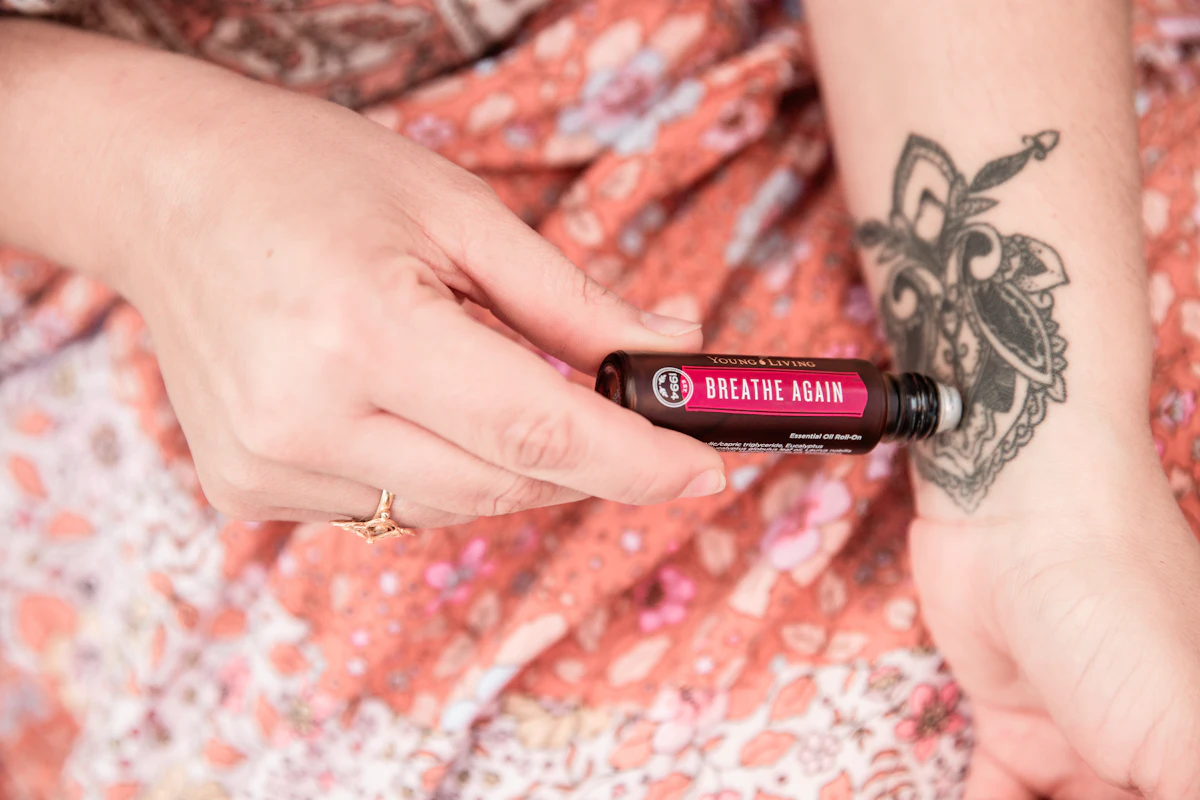
Recipe: calm evening roller (2%, adults)
- 10 ml roller bottle, glass, with a steel or glass ball
- About 9.5 ml fractionated coconut oil or jojoba
- 3 drops lavender essential oil
- 1 drop cedarwood essential oil
Method: add the 4 drops first, top up with carrier to the shoulder, press in the ball, cap, and roll between your palms for 20 seconds.
Shelf life: about 6 months away from heat and light, or sooner if the carrier smells off.
Safety: patch test first, keep away from eyes, and stop if the skin turns red or itchy.
- Wash and dry the bottle well, because water left inside shortens the shelf life.
- Add the essential oils first. Count slowly with the bottle held straight down.
- Top up with carrier almost to the neck, leaving space for the roller ball.
- Close and roll the bottle between your hands to mix.
- Label it with the oils, the strength (2%) and the date you made it.
- Patch test on the inner forearm before the first full use.
Need a face roller instead? Simply halve the drops: 2 drops in 10 ml gives 1%. Not sure which carrier suits your skin? Our carrier oil finder picks one in a minute, and our guide to the best carrier oils for diluting essential oils compares the common ones side by side.
Shortcut vs source: a scented store oil or your own blend
Many scented body oils list “fragrance” or “parfum” with no detail. In contrast, your own blend has two or three ingredients you can name and count. Here is how the two compare.
| Shortcut: scented store oil | Source: your own blend | |
|---|---|---|
| Ingredients | Often a long list plus “fragrance” | 1 carrier + 1 to 3 essential oils |
| Strength | Usually not on the label | You choose: 1% face, 2% body |
| Cost per 30 ml | Often higher for small bottles | A few drops plus a spoon of carrier |
| Patch test | Hard to know which part reacts | Easy: one oil at a time |
So, the swap is simple: one good carrier, a few well-chosen oils and the right drops of essential oil per ml. Nature is the base, and you stay in control of every drop.
Which oils need fewer drops of essential oil per ml?
Some oils are stronger on the skin than others. Therefore, they need a lower limit than the general chart, even for adults.
| Oil | Why it needs care | Suggested max on skin |
|---|---|---|
| Clove bud | Skin sensitivity risk | 0.5% (1 drop in 10 ml) |
| Lemon (cold-pressed) | Can react with sunlight (phototoxic) | 2% on skin that sees the sun |
| Grapefruit (cold-pressed) | Can react with sunlight | up to 4%; we stay lower |
| Cinnamon bark, oregano, thyme | Can irritate even at low strength | Ask a qualified aromatherapist |
The University of Minnesota Taking Charge guide to essential oil safety adds that thyme, oregano, clove and cinnamon bark can irritate skin at 3 to 5%. Likewise, cold-pressed citrus oils can cause a burn-like reaction in the sun. So if a blend contains citrus, use it at night or on covered skin.
Safety first: patch test and who should ask a professional
Even the perfect number of drops of essential oil per ml does not suit every skin. So we follow a few rules every single time.
Safety box
- Never use essential oils undiluted on the skin, and never swallow them.
- Patch test: rub a little of the diluted blend on the inner forearm, cover loosely and wait 24 to 48 hours. Redness, itching or swelling means skip that oil.
- Keep away from eyes, inner ears and broken or irritated skin.
- Babies, children, pregnancy and breastfeeding: the chart above is for adults only. Ask a doctor or a qualified aromatherapist before any use.
- Health conditions or medicines: check with your doctor or pharmacist first.
- Pets: some oils are unsafe for cats and dogs, so ask your vet.
- Store safely: tight caps, dark glass, cool place, out of reach of children.
Educational information only. Essential oils are used here for scent and traditional comfort; they are not a medical treatment, so see a doctor for any health concern.
Also, a skin reaction can show up after weeks of daily use, even with a blend that passed the patch test. For a deeper look at storage, diffusers and risky oils, read our full essential oil safety guide.
Your quick blending checklist
Before you close the bottle
- ☐ Carrier measured in ml
- ☐ Strength chosen: 1% face, 2% body
- ☐ Total drops worked out (ml × % × 0.2), rounded down
- ☐ Strong oils kept below their limit
- ☐ Citrus blends used at night or on covered skin
- ☐ Bottle labelled with oils, strength and date
- ☐ Patch test done before first full use
If you would rather have everything in one place, The Essential Oils Bundle gathers the printable dilution chart, ready blends and our safety rules, so you can mix without searching every time. Otherwise, bookmark this page and the free calculator; together they cover most home blends.
Looking for blend ideas to try next? Browse our essential oils guides, or see three simple roller blends that use the same 10 ml math.
You want lemon oil in a body oil before a beach day. Best move?
FAQ: drops of essential oil per ml
How many drops are in 1 ml of essential oil?
About 20 drops. In practice, the number of drops of essential oil per ml can range from roughly 18 to 30 depending on the dropper and the oil. Because of that, every drop chart is a close guide rather than an exact measure.
How many drops of essential oil go in a 10 ml roller?
For adults, 2 drops gives a 1% face roller and 4 drops gives a 2% body roller. Up to 6 drops (3%) is used only for short-term use on a small area.
How many drops of essential oil per 30 ml of carrier oil?
Use 6 drops for 1%, which suits the face, and 12 drops for 2%, which suits a body oil. For sensitive skin, 3 drops (0.5%) is a gentle start.
Is 1 drop of essential oil per ml too strong?
Yes, for most uses. A single drop in 1 ml of carrier is about 5%, which is far above the 1 to 2% we use for daily face and body oils. So spread that drop across 5 to 10 ml instead.
Can I use a teaspoon instead of ml?
Yes. A teaspoon holds about 5 ml, so 1 drop in a teaspoon of carrier is about 1%, and 2 drops is about 2%. A tablespoon holds about 15 ml.
Does the chart work for children or during pregnancy?
No. This chart is for adults only. For babies, children, pregnancy or breastfeeding, ask a doctor or a qualified aromatherapist before using any essential oil.
Do I count drops per oil or for the whole blend?
For the whole blend. The chart gives the total number of drops of all essential oils combined, so split that total between the oils you choose.
Natural still needs amounts and care. Patch test new skin products, keep oils and herbs away from small children, and ask a doctor or pharmacist first if you are pregnant, breastfeeding, take medicines or have a health condition.