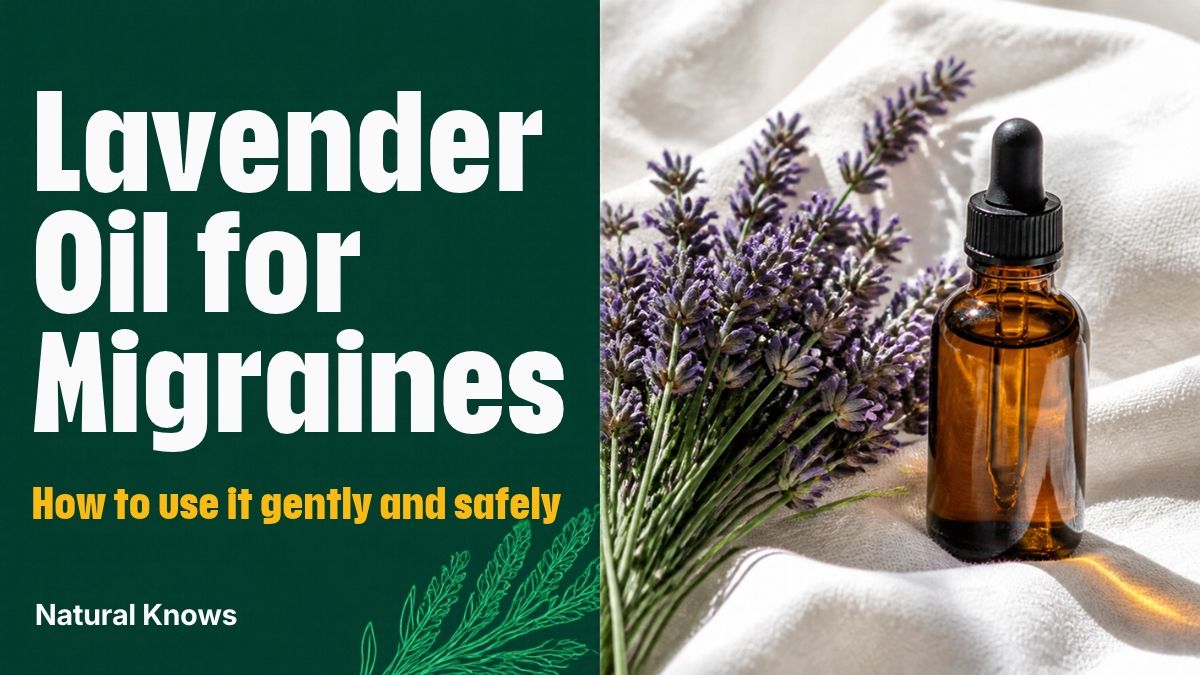
Lavender oil for migraines is one of the gentlest comfort options: breathing a faint lavender scent for a few minutes may help you relax while you rest in a dark, quiet room. However, it is not a medicine. Therefore, keep following your doctor’s plan, and use lavender as a soft extra.
Quick answer: put 2 to 3 drops of lavender on a tissue, hold it a hand-width from your nose, and breathe normally for up to 15 minutes at the first sign of an attack. In addition, keep a 1% lavender roller for the neck and shoulders.
What we know about lavender oil for migraines
First, the evidence. One small placebo-controlled trial asked people to inhale lavender for 15 minutes during an attack, and more of them reported feeling better than in the comparison group. However, the study was small, and it has not been repeated at scale. Likewise, the NCCIH aromatherapy overview describes the research on essential oils as limited.
As a result, we talk about lavender oil for migraines as comfort that is low-risk and pleasant for most adults, and nothing more.

Why lavender oil for migraines feels soothing
Lavender contains linalool and linalyl acetate, which give its soft, floral smell. For many people, that scent is tied to rest: clean sheets, baths and quiet evenings. Consequently, it can help you loosen your jaw, drop your shoulders and slow your breath. In other words, lavender supports the resting part of your routine.
Which lavender oil for migraines should you buy?
| Type | Latin name | Scent | Our view |
|---|---|---|---|
| True lavender | Lavandula angustifolia | Soft, sweet | Best choice |
| Spike lavender | Lavandula latifolia | Sharp, camphor-like | Too strong here |
| Lavandin | Lavandula x intermedia | Brighter, stronger | Fine for cleaning, not for this |
Therefore, check the label for Lavandula angustifolia. Also, choose a dark glass bottle, and replace it about two years after opening. Our oil shelf life tool helps you track each bottle.
5 gentle ways to use lavender oil for migraines
1. Tissue inhalation
- First, place 2 to 3 drops on a tissue.
- Next, hold it about a hand-width from your nose.
- Then breathe normally for up to 15 minutes.
- Finally, put the tissue aside if the scent feels too strong.
2. A 1% neck and shoulder roller
- 10 ml roller bottle
- 2 drops lavender
- Jojoba oil to fill
First, add the drops. Next, fill with jojoba and shake. Then roll it on the back of the neck and the tops of the shoulders, and massage gently. Shelf life: about 12 months. Safety note: this is a 1% blend for adults, so patch test on the inner arm for 24 hours, and keep it away from the eyes.
3. Cool lavender cloth
Mix 1 drop into 1 teaspoon of carrier oil, and stir it into a bowl of cool water. After that, soak a cloth, wring it out and rest it on your forehead for 10 minutes.
4. Pillow corner
Put 1 drop on the far corner of the pillowcase. As a result, the scent stays faint while you lie down.
5. Evening routine between attacks
Because poor sleep is a common trigger, a calm evening matters. Therefore, diffuse 3 drops for 20 minutes before bed on good days. See essential oils for better sleep for the full method.
When to use lavender oil for migraines
| Moment | Method | Amount |
|---|---|---|
| First warning signs | Tissue inhalation | 2 to 3 drops, up to 15 minutes |
| During rest | Pillow corner or cool cloth | 1 drop |
| Tight neck | 1% roller | A thin layer |
| Good days | Evening diffuser | 3 drops, 20 minutes |
Meanwhile, take any prescribed medicine as your doctor directed. In short, lavender oil for migraines works beside your plan, never in place of it.
If smell is one of your triggers
Some people become very sensitive to odors before and during an attack. Therefore, test lavender on a good day first. If any scent makes you feel worse, skip oils completely, and use a plain cool cloth instead.
Safety rules
- Never swallow lavender oil.
- Dilute to 1% for skin, and patch test.
- Keep it away from the eyes and the inside of the nose.
- If you are pregnant, nursing or take sedating medicine, ask your doctor first.
- Store the bottle away from children and pets.
- Stop if you notice a rash, nausea or a stronger headache.
Above all, see a doctor for a diagnosis, and get urgent help for a sudden severe headache, or one with weakness, confusion, fever and stiff neck, or changes in vision or speech. Our essential oil safety guide explains daily use.
Related reading
Next, compare options in essential oils for migraine relief and essential oils for headaches, or learn the plant in our lavender essential oil guide. Furthermore, The Essential Oils Bundle includes the dilution chart and blend cards. You can check ratios with the oil dilution calculator and explore the essential oils section.
FAQ: lavender oil for migraines
Does lavender oil for migraines work?
A small study found that inhaling it helped some people feel better. However, larger studies are still needed.
How do I inhale it?
Use 2 to 3 drops on a tissue, and breathe normally for up to 15 minutes.
Can I put lavender oil on my temples?
Yes, at 1% dilution. Also, stay two finger-widths from the eyes.
You want lemon oil in a body oil before a beach day. Best move?
Is lavender safer than peppermint?
In general, lavender is milder on skin and scent. Therefore, it is the better first choice.
Can I use it every day?
For most adults, short daily use is fine. Still, take breaks, and rotate with unscented days.
Can I use it with my medicine?
Usually yes, as a scent. Nevertheless, ask your doctor or pharmacist first.
Natural still needs amounts and care. Patch test new skin products, keep oils and herbs away from small children, and ask a doctor or pharmacist first if you are pregnant, breastfeeding, take medicines or have a health condition.