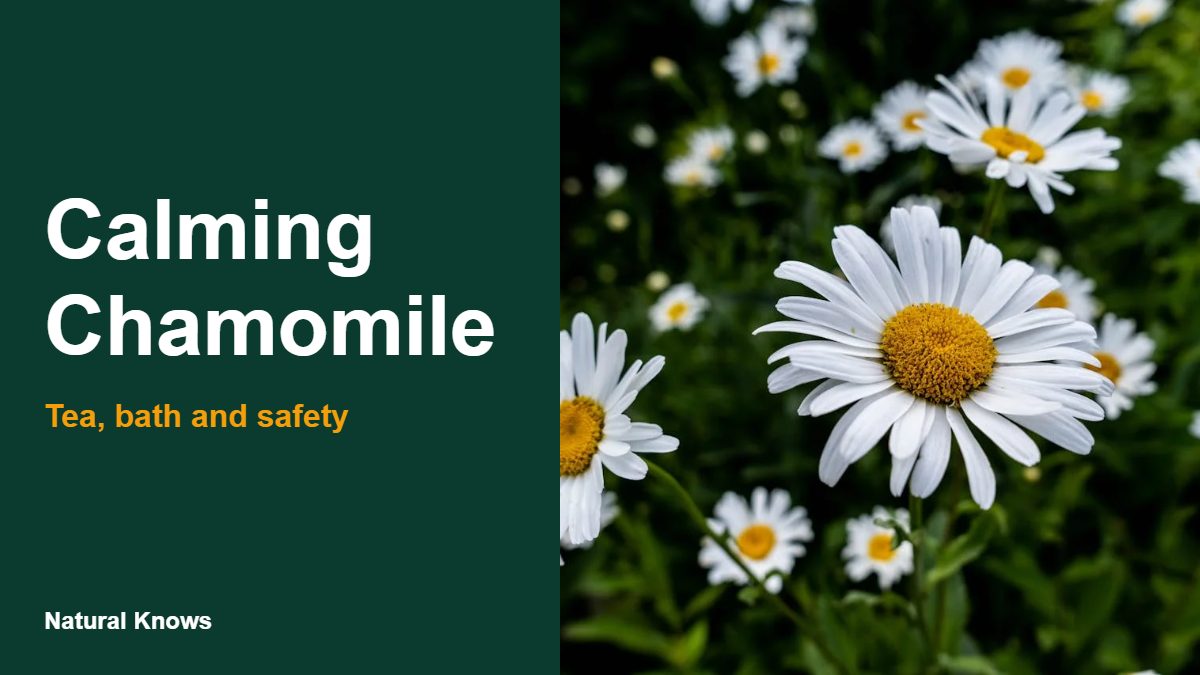
The calming effects of chamomile are gentle and mostly traditional: a cup of the tea, a warm bath or the soft apple-like scent helps many people slow down in the evening. In short, chamomile is one of the mildest, best-loved herbs for unwinding. However, studies are early, and it is not a medicine for anxiety or insomnia. Therefore, this guide covers what we know, five simple ways to use it, and the safety points.
Quick answer: steep 1 tablespoon of dried flowers in a covered cup for 10 minutes, and sip it an hour before bed. In addition, a chamomile bath or a pillow sachet extends the ritual.
What studies say about the calming effects of chamomile
Chamomile flowers contain apigenin, a flavonoid that binds to some of the same brain receptors as calming medicines, at least in laboratory research. Still, human evidence is limited.
| Topic | What the evidence says |
|---|---|
| Generalized anxiety | Preliminary studies of supplements suggest a possible benefit |
| Insomnia | Evidence is scarce, and one study found no benefit |
| Tea specifically | Rarely studied; much weaker than extracts |
| Ritual and warmth | Reliable comfort for most people |
The National Center for Complementary and Integrative Health summarizes this research. Consequently, we describe the calming effects of chamomile as comfort, with honest limits.
German or Roman: which plant gives the calming effects of chamomile
| Type | Latin name | Common use |
|---|---|---|
| German chamomile | Matricaria chamomilla | Tea, compresses, baths |
| Roman chamomile | Chamaemelum nobile | Essential oil for aroma, some teas |
In addition, both belong to the daisy family, so the same allergy caution applies.

Five ways to enjoy the calming effects of chamomile
- Tea. First, the classic: one covered cup in the evening.
- Bath. Next, a strong infusion poured into warm bathwater.
- Aroma. Then a few drops of Roman chamomile essential oil in a diffuser.
- Warm compress. After that, a cloth soaked in the tea, on closed eyes or a tense neck.
- Pillow sachet. Finally, dried flowers in a small cotton bag near your pillow.
Recipe: tea for the calming effects of chamomile
- 1 tablespoon dried chamomile flowers
- 1 cup just-boiled water
- 1 teaspoon honey (optional)
First, pour the water over the flowers. Next, cover the cup, and steep for 10 minutes. Then strain, and sip slowly.
Shelf life: drink fresh; store dried flowers for up to 12 months in an airtight jar. Safety note: skip it with a daisy-family allergy.
Recipe: bath for the calming effects of chamomile
- 4 tablespoons dried chamomile flowers
- 1 liter just-boiled water
First, steep the flowers, covered, for 15 minutes. Next, strain the infusion into a warm bath. Then soak for 15 to 20 minutes.
Shelf life: use at once. Safety note: patch test the cooled infusion on your inner arm first, and rinse the tub, because it can be slippery. Our bath oil mixer helps if you prefer an oil-based bath.
Aroma: the calming effects of chamomile essential oil
Roman chamomile oil smells sweet and fruity. For example, diffuse 3 drops with 2 drops of lavender for 30 minutes before bed, in a ventilated room. For skin, dilute to 1%: about 6 drops in 2 tablespoons of carrier oil. In addition, our diffuser blend tool and dilution calculator do the math.
Safety note: never swallow essential oils, keep them away from eyes, and keep pets out of the room while diffusing.
When to use the calming effects of chamomile
| Moment | Best form |
|---|---|
| After a stressful day | Tea, then a bath |
| One hour before bed | Tea and a pillow sachet |
| Tired eyes after screens | Cooled tea-bag compress, on closed eyes |
| A tense afternoon | A cup of tea and five slow breaths |
Furthermore, the evening calm check shows which other habits help.
Common mistakes
- Steeping for two minutes. Instead, give it ten, covered.
- Using old, dusty tea bags. As a result, the cup tastes like hay.
- Expecting a sedative. Chamomile is mild.
- Applying undiluted essential oil. Otherwise, skin may react.
- Ignoring allergies. Reactions happen, especially with ragweed sensitivity.
Safety notes on the calming effects of chamomile
- Allergy: people sensitive to ragweed, chrysanthemums, marigolds or daisies are more likely to react.
- Medicines: interactions are possible with warfarin and other drugs. Therefore, ask your doctor or pharmacist.
- Pregnancy and breastfeeding: little is known about safety, so ask a professional first.
- Children: this guide is for adults.
- Amount: two to three cups a day is plenty.
When to ask for help
See a doctor or mental health professional when worry or poor sleep lasts for weeks, or affects work, relationships or driving. Meanwhile, never stop prescribed medicine in favor of herbs.
Keep going
Next, compare cups in our guides to the best teas for anxiety and herbal teas for better sleep. In addition, browse the herbs and teas and sleep and calm sections.
FREE · 10-PAGE PDF
Get the Natural Glow Starter, free
5 simple recipes from our BLOOM handbook: a gentle cleanser, a clay mask, a glow serum, a body polish and a calm evening cup, each with a safety note. Enter your email and we send it straight to your inbox.
No spam. One useful email now and then, and you can leave any time.
FAQ: calming effects of chamomile
Are the calming effects of chamomile proven?
Partly. Early studies of extracts are encouraging; however, tea itself is rarely studied.
How long does chamomile take to work?
Most people feel more relaxed within 30 to 45 minutes.
Can I drink chamomile tea every night?
Yes, most healthy adults can. Still, check interactions with your medicines.
Does chamomile make you sleepy during the day?
Usually not. Nevertheless, notice how you react before driving.
Is chamomile addictive?
No, there is no evidence of dependence.
Which is better, tea or essential oil?
They differ. Tea is for drinking; essential oil is only for aroma or diluted skin use.