Quick answer
most recipes need only 10 to 20 drops of essential oil per 500 ml. Use lemon, tea tree, lavender or eucalyptus. Vinegar and baking soda do the real cleaning work, while the oils add a natural scent. Never mix vinegar with bleach, and keep oils away from pets and children.
Key facts
- White vinegar: Cuts grease, limescale and soap scum, Marble, granite, stone, wood wax
- Baking soda: Gentle scrub and odour absorber, Aluminium pans for long periods
- Liquid castile soap: Lifts dirt and grease, Do not mix with vinegar in one bottle
- Lemon essential oil: Fresh citrus scent, Sunny windowsills (can mark surfaces)
- Tea tree essential oil: Sharp, clean scent for bathrooms, Homes with cats (keep well away)
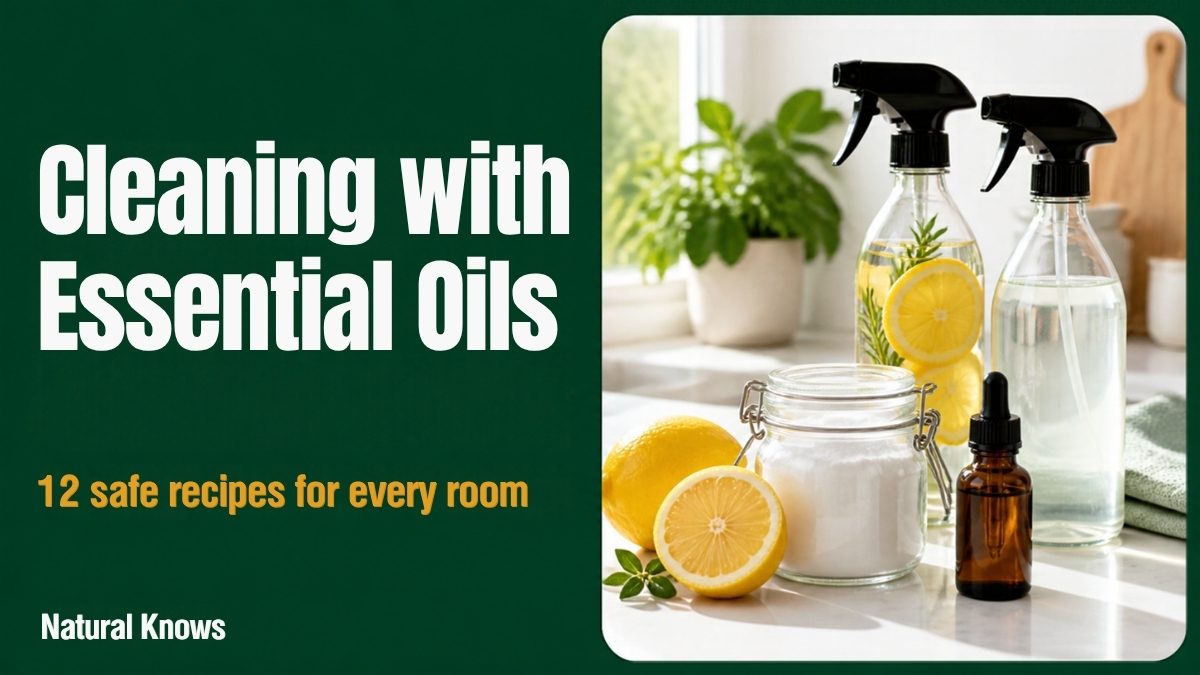
Cleaning with essential oils is a simple way to get a fresh, clean home without a cupboard full of harsh, heavily scented sprays. In this guide we share 12 recipes for every room, built on three cheap basics (white vinegar, baking soda and castile soap) plus a few drops of oil.
Why Choose Cleaning with Essential Oils
Many store cleaners list “fragrance” as one ingredient, which can hide dozens of chemicals. In contrast, a homemade spray has four or five ingredients you can read. As a result, you know exactly what you spray near food, children and pets.
There is also a cost benefit. For example, one bottle of white vinegar and a box of baking soda make dozens of refills. Moreover, you reuse the same glass bottles, so there is far less plastic.
- Fewer ingredients: you choose every one.
- Lower cost: pantry basics, bought in bulk.
- Less waste: refill the same glass bottles.
- A lighter scent: fresh, not overpowering.
One honest note: essential oils mainly add scent. The cleaning power comes from vinegar, soap and baking soda. So for a surface that needs real disinfection, for example after raw meat, follow the EPA guidance and use a registered disinfectant as directed.
The Essential Oils Bundle
How many drops in a 10 ml roller? 2 at 1 %, 4 at 2 %. The Essential Oils Bundle has the chart, the blends and the safety rules.
- EbookEssential Oils Without the Hype
- Ebook100 Diffuser Blends
- EbookEssential Oils Room by Room
- PrintableEssential Oil Dilution Chart
- SpreadsheetOil Inventory & Blend Log
- PrintableBlend Recipe Cards


The Basic Kit for Cleaning with Essential Oils
Before you start, gather these basics. Most are already in your kitchen.
| Ingredient | What it does | Do not use on |
|---|---|---|
| White vinegar | Cuts grease, limescale and soap scum | Marble, granite, stone, wood wax |
| Baking soda | Gentle scrub and odour absorber | Aluminium pans for long periods |
| Liquid castile soap | Lifts dirt and grease | Do not mix with vinegar in one bottle |
| Lemon essential oil | Fresh citrus scent | Sunny windowsills (can mark surfaces) |
| Tea tree essential oil | Sharp, clean scent for bathrooms | Homes with cats (keep well away) |
| Lavender essential oil | Soft scent for linen and bedrooms | None, but use little |
| Glass spray bottles | Store recipes safely | Avoid cheap plastic with citrus oils |
In addition, our free cleaning kit builder lists exactly what to buy for the rooms you clean most.
Safety Rules for Cleaning with Essential Oils
Natural cleaners still need care. Therefore, follow these rules every time.
- Never mix vinegar with bleach. Together they release a dangerous gas.
- Do not combine vinegar and castile soap in one bottle. They cancel each other out and leave a greasy film.
- Label every bottle with the recipe and the date.
- Keep oils away from pets. The ASPCA warns that concentrated oils can harm cats and dogs. So let surfaces dry before pets walk on them.
- Ventilate. Open a window while you clean.
- Patch test surfaces. Try a hidden corner first, especially on stone, wood and painted walls.
- Store out of reach of children, because some oils are dangerous if swallowed.
12 Recipes for Cleaning with Essential Oils
Here are all twelve recipes in one table. After that, each one has its own steps.
| Recipe | Base | Oils | Keeps for |
|---|---|---|---|
| All-purpose spray | Water + vinegar | 10 lemon + 5 tea tree | 4 weeks |
| Glass and mirror spray | Water + vinegar | 5 lemon | 4 weeks |
| Soft scrub | Baking soda + castile soap | 10 lemon | 2 weeks |
| Bathroom spray | Water + vinegar | 10 tea tree + 5 eucalyptus | 4 weeks |
| Toilet fizz bombs | Baking soda + citric acid | 20 tea tree | 3 months |
| Floor wash | Warm water + castile soap | 10 lemon | Use same day |
| Wood polish | Olive oil + lemon juice | 5 lemon | 1 week |
| Fridge wipe | Water + baking soda | None | Use same day |
| Chopping board scrub | Coarse salt + lemon half | None | Use same day |
| Carpet freshener | Baking soda | 15 lavender | 4 weeks |
| Linen spray | Water + vodka | 10 lavender | 4 weeks |
| Bin and drain fresh | Baking soda | 10 lemon | Use same day |
1. All-purpose spray
First, pour 250 ml of water and 250 ml of white vinegar into a 500 ml glass spray bottle. Then add 10 drops of lemon and 5 drops of tea tree. Shake before each use, spray, and wipe with a damp cloth.
Use it on worktops, sinks, tiles and the outside of appliances. Shelf life: 4 weeks. Safety note: skip natural stone, because vinegar dulls it.
2. Streak-free glass spray
Next, mix 250 ml of water with 250 ml of vinegar and just 5 drops of lemon. Fewer drops means fewer streaks. Spray, then dry with a flat microfibre cloth. Shelf life: 4 weeks.
3. Lemon soft scrub
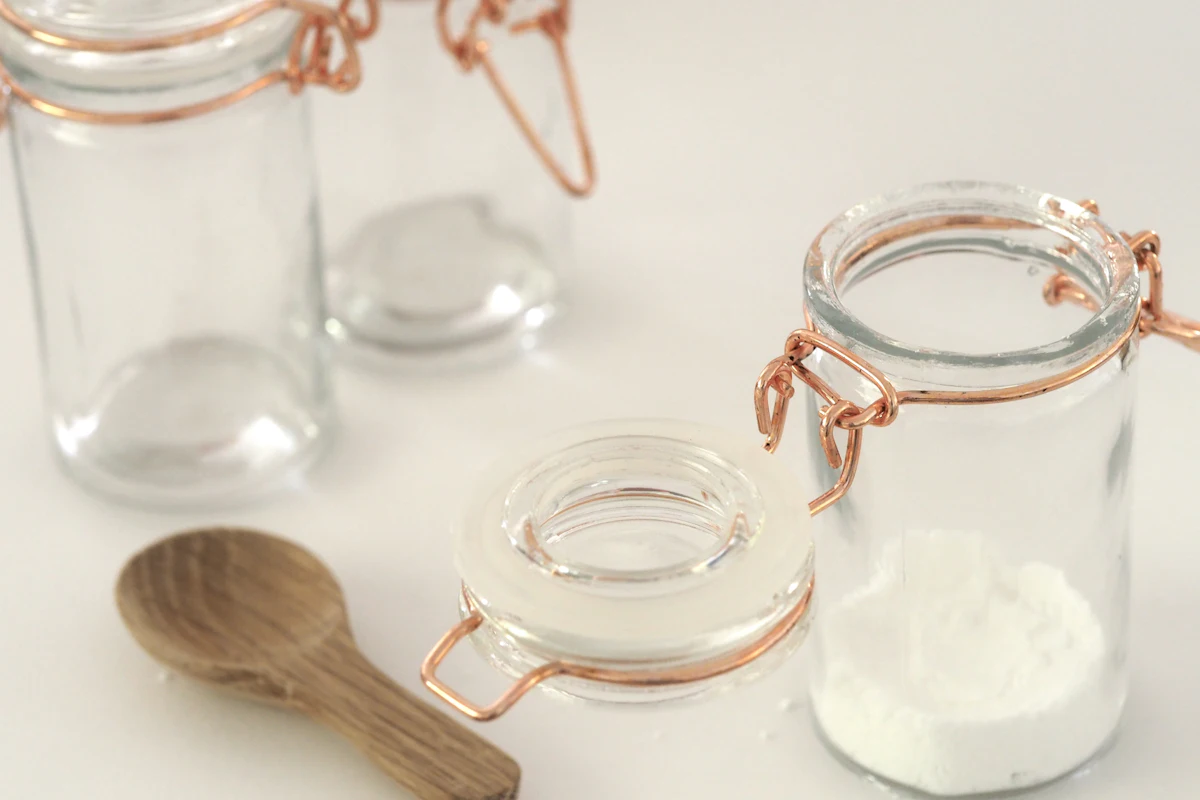
For sinks and stovetops, stir half a cup of baking soda with 2 tablespoons of castile soap and 10 drops of lemon until it forms a paste. Then scrub with a damp sponge and rinse well. Shelf life: 2 weeks in a lidded jar.
4. Bathroom spray
Bathrooms need a sharper scent, and this is where cleaning with essential oils shines. So mix 250 ml of water, 250 ml of vinegar, 10 drops of tea tree and 5 drops of eucalyptus. Spray tiles and the shower screen, leave for 5 minutes, then wipe. Shelf life: 4 weeks. Safety note: keep cats out of the bathroom until it dries.
5. Toilet fizz bombs
Mix 1 cup of baking soda with a quarter cup of citric acid. Add 20 drops of tea tree, then spritz with water until the mix holds its shape. Press into an ice cube tray and dry overnight. Afterwards, drop one into the bowl, let it fizz for 10 minutes, then brush and flush. Shelf life: 3 months in a sealed jar.
6. Floor wash
Floors are an easy place to start cleaning with essential oils. Add 1 teaspoon of castile soap and 10 drops of lemon to a bucket of warm water. Mop as usual and let the floor dry with a window open. However, for unsealed wood, use a well-wrung mop and test first.
7. Simple wood polish
Mix 2 tablespoons of olive oil, 1 tablespoon of lemon juice and 5 drops of lemon oil. Rub a little into sealed wooden furniture with a soft cloth, then buff. Shelf life: 1 week in the fridge, because of the fresh juice.
8. Fridge wipe
Inside the fridge, skip the oils completely, since food sits there. Instead, dissolve 2 tablespoons of baking soda in 500 ml of warm water and wipe the shelves.
9. Chopping board scrub
Similarly, food boards need no oils. Sprinkle coarse salt on the board, scrub with half a lemon, rinse with hot water and dry upright.
10. Carpet freshener
Soft furnishings also benefit from cleaning with essential oils. Stir 15 drops of lavender into 1 cup of baking soda, shake it through a sieve onto the carpet, wait 30 minutes, then vacuum. Safety note: keep pets off the carpet until you vacuum.
11. Linen spray
In a 100 ml spray bottle, mix 80 ml of water, 20 ml of vodka and 10 drops of lavender. Mist sheets and towels from a distance. Shelf life: 4 weeks. Also, spot test on dark fabric first.
12. Bin and drain refresh
Finally, tip half a cup of baking soda mixed with 10 drops of lemon into the empty bin or down the drain. Wait 15 minutes, then flush the drain with hot water.
Best Oils for Cleaning with Essential Oils
Not every oil suits every room. This chart helps you choose.
| Oil | Scent | Best room | Note |
|---|---|---|---|
| Lemon | Bright, citrus | Kitchen, glass | Can break down some plastics over time |
| Tea tree | Sharp, clean | Bathroom | Keep away from cats |
| Eucalyptus | Cool, fresh | Bathroom, floors | Not around young children |
| Lavender | Soft, floral | Bedroom, linen | Good for fabrics |
| Peppermint | Cool, minty | Bins, entryway | Keep away from cats |
| Orange | Sweet citrus | Living room | Gentle, family-friendly scent |
Unsure which scent fits your home? Try our cleaning style quiz to find your match in a minute.
A Weekly Plan for Cleaning with Essential Oils
Recipes work best with a routine. So here is a simple week of cleaning with essential oils.
- Monday: kitchen worktops and sink with the all-purpose spray.
- Tuesday: bathroom spray on tiles, plus a toilet fizz bomb.
- Wednesday: floors with the lemon floor wash.
- Thursday: glass and mirrors.
- Friday: bins and drains refresh.
- Weekend: linen spray and carpet freshener.
For a printable version, our free cleaning schedule maker builds a plan for your home.
Shortcut vs Source
| The shortcut | The natural source |
|---|---|
| Multi-surface chemical spray | Vinegar spray with lemon and tea tree |
| Plug-in air freshener | Bin and drain refresh with lemon |
| Toilet cleaner gel | Tea tree fizz bombs |
| Scented fabric spray | Lavender linen spray |
You do not need to change everything at once. Instead, swap one product a week, starting with the one you use most. Our natural home hub has more swaps room by room.
Make Cleaning with Essential Oils Easier
If you want all the recipes, labels and a full cleaning schedule in one place, The Non-Toxic Home Bundle brings together our home guides and printables. Furthermore, the essential oils hub explains each oil and how to use it safely.
You want lemon oil in a body oil before a beach day. Best move?
Frequently Asked Questions
Do essential oils really clean?
Essential oils mainly add a fresh scent. The cleaning work comes from vinegar, soap and baking soda. Therefore, for surfaces that need disinfection, use a registered disinfectant as the label directs.
Which essential oil is best for cleaning?
Lemon is the most useful all-rounder for kitchens and glass. Tea tree suits bathrooms, and lavender is best for linen and bedrooms.
Can I mix vinegar and castile soap?
Not in one bottle. They react and leave a greasy film. Instead, use them in separate recipes or on separate days.
Is cleaning with essential oils safe for pets?
Use care. Let surfaces dry fully before pets walk on them, keep bottles closed, and avoid tea tree and peppermint around cats. If a pet seems unwell, call your vet.
How long do homemade cleaners last?
Most sprays last about four weeks. Recipes with fresh lemon juice last about a week in the fridge. Label every bottle with the date.
Can I use essential oils on granite or marble?
The oils themselves are fine in small amounts, but vinegar can damage stone. For stone, use warm water with a little castile soap instead.
Natural still needs amounts and care. Patch test new skin products, keep oils and herbs away from small children, and ask a doctor or pharmacist first if you are pregnant, breastfeeding, take medicines or have a health condition.