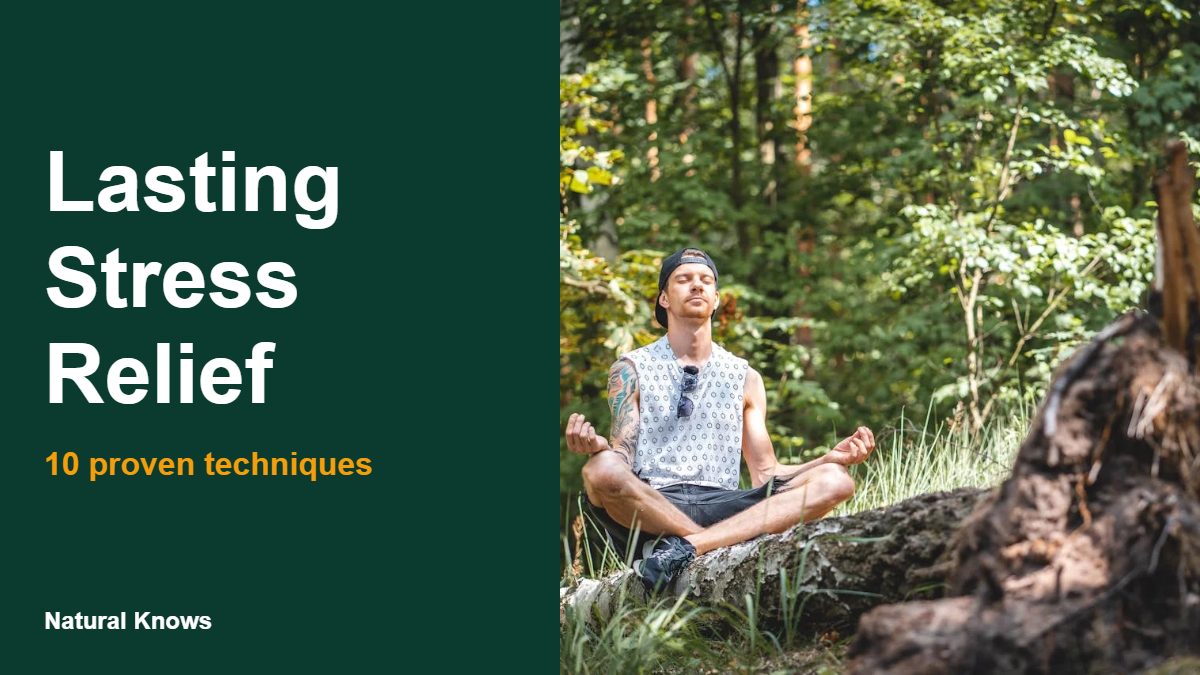
Lasting stress relief comes from a handful of habits repeated most days: movement, enough sleep, slow breathing, time outdoors, real breaks, supportive people and clear limits on what you take on. In short, quick fixes calm the moment, while routines change how your body responds to pressure over weeks. However, nobody needs all ten techniques at once. Therefore, this guide explains each one briefly, shows a muscle relaxation exercise, offers a weekly plan, and lists the signs that call for professional support.
Quick answer: pick two habits this week: a 20-minute daily walk, and five minutes of slow breathing before bed. In addition, protect one hour each evening without screens or work.
Ten techniques for lasting stress relief
| Technique | Time needed | What it does |
|---|---|---|
| 1. Daily movement | 20 to 30 minutes | Uses up stress hormones; lifts mood |
| 2. Regular sleep | 7 to 9 hours | Restores emotional balance |
| 3. Slow breathing | 2 to 5 minutes | Switches on the body’s rest response |
| 4. Progressive muscle relaxation | 10 minutes | Releases physical tension |
| 5. Time in nature | 20 minutes | Lowers arousal and rumination |
| 6. Mindfulness or meditation | 5 to 10 minutes | Trains attention away from worry loops |
| 7. Social connection | Any | Shared worries feel lighter |
| 8. Boundaries and saying no | Ongoing | Reduces overload at the source |
| 9. Planning and writing | 5 minutes | Clears the head; turns worries into steps |
| 10. Enjoyable activities | 30 minutes | Hobbies, music, cooking, play |
The National Center for Complementary and Integrative Health notes that relaxation techniques are generally considered safe for healthy people, and that some approaches reduced self-reported stress in studies.
The Natural Calm & Evening Bundle
Calmer mornings, steadier days, easier evenings: 6 natural calm products with a 30-day path that ties them together.
- EbookNatural Calm
- EbookThe Natural Sleep Guide
- EbookMindful Mornings Naturally
- PrintableWind-Down Routine
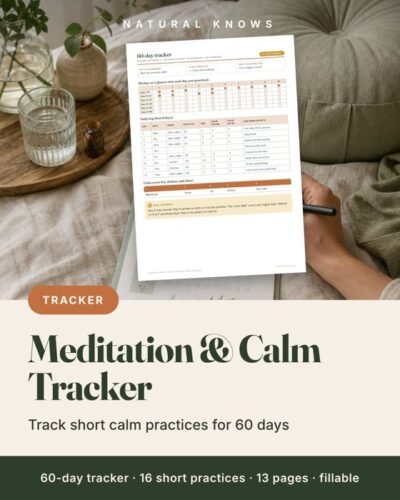
- TrackerMeditation & Calm Tracker
- PrintableBreathing Practice Cards


Quick relief vs lasting stress relief
| In the moment | Over weeks |
|---|---|
| Three slow breaths | A daily breathing or meditation habit |
| A short walk | Regular exercise |
| A cup of herbal tea | A steady evening routine |
| Stepping outside | Weekly time in nature |
| Venting to a friend | Ongoing, honest relationships |
Consequently, use the left column today, and build the right column gradually.
Progressive muscle relaxation: a core tool for lasting stress relief
- First, sit or lie down comfortably, and close your eyes.
- Next, tense your feet for 5 seconds, and then release for 15 seconds.
- Then move upward: calves, thighs, hands, arms, shoulders and face.
- After that, notice the difference between tension and release in each area.
- Finally, breathe slowly for one minute before getting up.
Shelf life: not applicable. Safety note: tense gently, and skip any area that is injured or painful.
Movement, sleep and food
- Move most days. For example, walk briskly, cycle, swim or dance.
- Keep a fixed wake time; our sleep window tool helps.
- Eat regular meals with protein and fiber, so energy stays steady.
- Limit caffeine after noon, and keep alcohol low; both disturb sleep.
Furthermore, see our guide to foods that reduce anxiety.
Boundaries: the overlooked route to lasting stress relief
| Situation | A boundary to try |
|---|---|
| Too many tasks | List them; choose three for today; postpone or delegate the remainder |
| Constant messages | Check at set times; silence notifications after work |
| Requests you cannot take on | “I can’t this week; I could next month” |
| No time for yourself | Block 30 minutes in the calendar, like an appointment |
Meanwhile, removing one source of stress often helps more than adding another coping tool.
A weekly plan for lasting stress relief
| Day | Small step |
|---|---|
| Monday | 20-minute walk at lunch |
| Tuesday | Five minutes of slow breathing before bed |
| Wednesday | Call or meet a friend |
| Thursday | Ten minutes of muscle relaxation |
| Friday | A screen-free evening hour |
| Saturday | Time in a park, forest or by water |
| Sunday | Plan the week; choose what to drop |
In addition, the evening calm check helps you shape the last hour of the day.
Gentle comforts that support the plan
- A warm cup; see the best teas for anxiety
- A calm scent; try the diffuser blend tool
- A tidy corner; see relaxing space at home
- A simple practice; see breathing exercises for stress and meditation for anxiety relief
Safety note: never swallow essential oils; diffuse briefly in a ventilated room, away from pets.
Signs that stress is becoming too much
| Body | Mind | Behavior |
|---|---|---|
| Headaches, tight muscles | Constant worry | Snapping at others |
| Poor sleep | Trouble concentrating | Withdrawing |
| Stomach upset | Feeling overwhelmed | More alcohol, food or scrolling |
| Tiredness | Low mood | Skipping things you enjoy |
Common obstacles
- “I have no time.” Start with two minutes; habits grow.
- “I forget.” Attach the habit to something you already do.
- “It does not work.” Give each technique two weeks before judging.
- “I feel guilty resting.” Rest is maintenance, not a reward.
Safety: when lasting stress relief needs professional help
See a doctor or mental health professional when stress lasts for weeks, disturbs sleep or work, or comes with panic attacks, chest pain, hopelessness or heavy drinking. In an emergency, contact your local emergency number or a crisis line. Chest pain always deserves prompt medical attention.
Keep going
Next, visit the sleep and calm section for more routines.
FAQ: lasting stress relief
What is the fastest route to lasting stress relief?
There is no shortcut. However, daily movement and better sleep bring the biggest change.
How long until I feel a difference?
Usually two to four weeks of steady practice.
Which technique should I start with?
The one you are most likely to keep.
You want to fall asleep earlier. Which change helps most?
Does exercise really reduce stress?
Yes, it is one of the best-supported methods.
Can herbs help?
A calming tea is a pleasant extra, not the main tool.
When should I get help?
When stress lasts for weeks, or affects your health and daily life.
Natural still needs amounts and care. Patch test new skin products, keep oils and herbs away from small children, and ask a doctor or pharmacist first if you are pregnant, breastfeeding, take medicines or have a health condition.