Every spring or ragweed season, the same question pops up in wellness circles: can a humble cup of tea really calm your sneezing and itchy eyes? If you’re tired of feeling foggy on pharmacy antihistamines, nettle tea for allergies is one of the most talked-about natural options — and one of the most misunderstood. This guide covers exactly what the science says, how to brew it for real effect, the right dosage and timing, and the mistakes that leave most people thinking it “doesn’t work.”

Nettle tea may ease mild seasonal allergy symptoms — sneezing, runny nose, and itchy eyes — by acting as a gentle natural antihistamine. Stinging nettle contains compounds that interfere with the body’s histamine response and calm inflammation. The effect is modest, not as strong as a pharmacy antihistamine, and freeze-dried capsules are more potent than tea. For the best results, start drinking it a few weeks before pollen season begins.
- ✓ Nettle works as a mild natural antihistamine, best for prevention rather than fast rescue relief.
- ✓ Freeze-dried nettle capsules are stronger than tea; tea is gentler and better for daily upkeep.
- ✓ The clinical evidence is real but modest — expect a helpful reduction in symptoms, not a cure.
- ✓ Start two to four weeks before your allergy season and drink it consistently for the best effect.
- ✓ It’s generally safe, but people who are pregnant or on blood pressure, diabetes, or blood-thinning medication should check with a doctor first.
Does Nettle Tea for Allergies Actually Work?
Here’s the honest answer before the marketing spin: the evidence is promising but modest, and knowing that upfront will save you from disappointment. Stinging nettle (Urtica dioica) has been used as a folk allergy remedy for centuries, and a handful of real clinical studies back at least part of the reputation.
The most-cited trial is a 1990 randomized, double-blind study published in Planta Medica. Participants took freeze-dried nettle for their allergic rhinitis — the medical term for hay fever, meaning nasal inflammation triggered by allergens like pollen. Around 58% rated the nettle as effective, compared with 37% for the placebo. That’s a genuine signal, though not a dramatic one, and on the day-to-day symptom diaries the gap between herb and placebo was small.
More recently, a 2017 randomized, double-blind, placebo-controlled trial found that stinging nettle root extract, used alongside standard treatment, improved allergic rhinitis symptoms more than placebo. The keyword there is “alongside” — nettle performs best as supportive therapy, layered onto good habits, not as a lone miracle cure.
Bakhshaee et al., stinging nettle & allergic rhinitis (NCBI).
So does nettle tea for allergies work? For mild to moderate symptoms, many people get real, noticeable relief. If your allergies are severe, think of nettle as a helper that may let you rely less on other remedies — not a replacement for them. For a fuller picture of your options, our guide to natural remedies for seasonal allergies maps out where nettle fits among the rest.
How Nettle Tea Fights Allergy Symptoms
Understanding the mechanism explains why timing and consistency matter so much with this herb. Your allergy misery is mostly driven by histamine — a chemical your immune cells release when they mistake harmless pollen for a threat, triggering the sneezing, itching, and congestion.
Laboratory research shows nettle extract works on several fronts at once. It appears to block histamine H1 receptors (the same targets that drugstore antihistamines hit), dampen mast cell tryptase (an enzyme that fuels the allergic cascade), and reduce the production of inflammatory prostaglandins. In plain terms: instead of jamming one lever like a single-target drug, nettle gives a few of them a gentle nudge in the calming direction.
Nettle is also rich in quercetin and other antioxidant flavonoids — plant compounds that naturally stabilise the immune cells responsible for dumping histamine into your system. This is the same reason quercetin for allergies has become popular, and why nettle and quercetin are often used together.
A cup of tea contains a far lower dose of these actives than a concentrated freeze-dried capsule. That’s why tea is wonderful for daily maintenance but underpowered as a last-minute rescue when you’re already miserable.
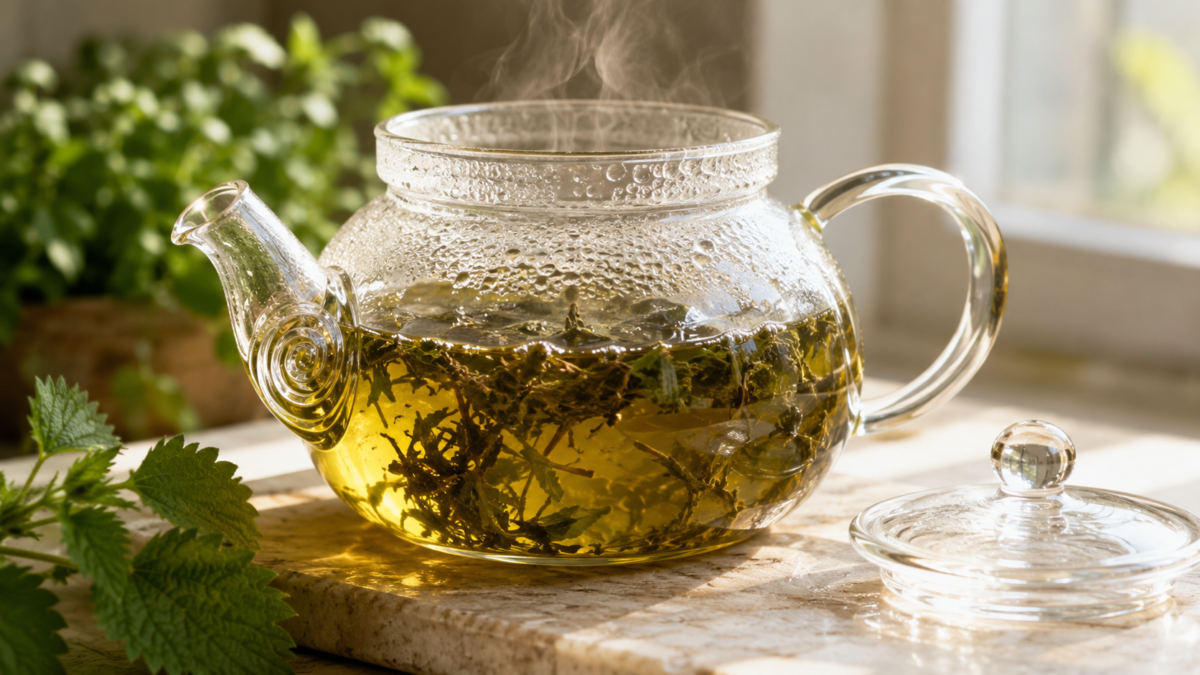
Because it’s topping up antioxidants and calming your baseline immune reactivity, nettle rewards patience. The people who swear by it almost always started early and drank it daily, not the ones who reached for it mid-sneeze.
How to Make Nettle Tea for Allergies (Recipe + Dosage)
The way you brew nettle changes how much of the good stuff ends up in your cup, and most tutorials under-steep it badly. You want a strong, properly extracted infusion — not a pale two-minute dunk.
Strong Allergy-Season Nettle Tea
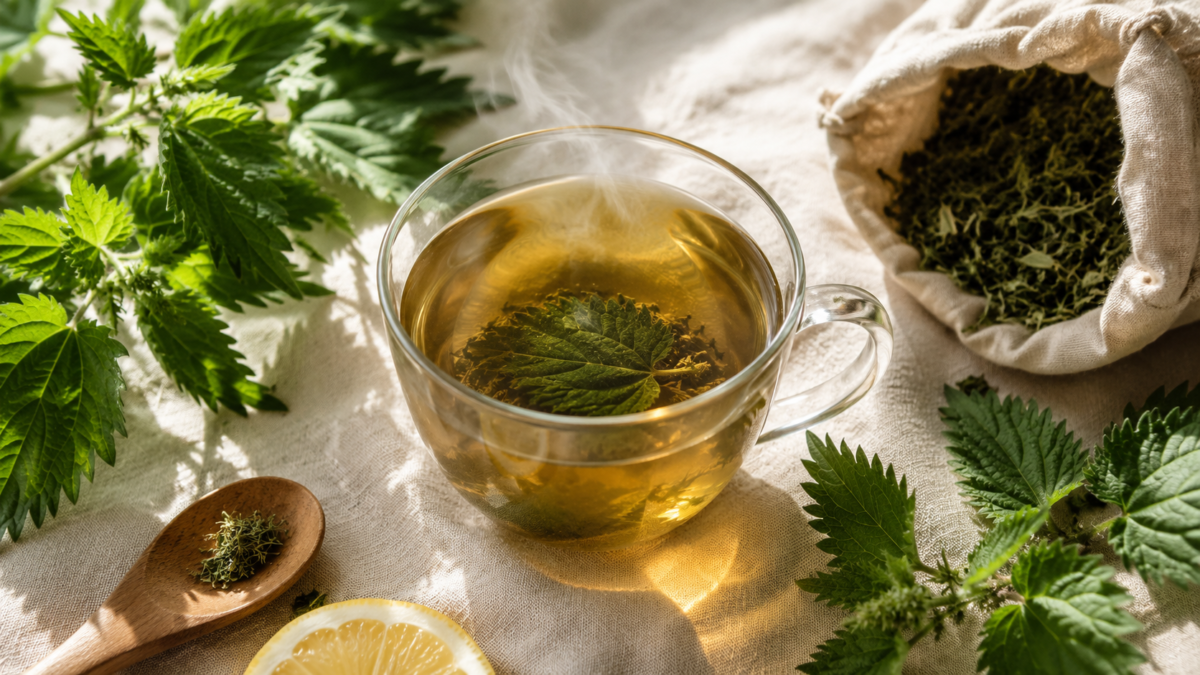
You’ll need: 2–3 teaspoons dried nettle leaf (or 1 tea bag), 1 cup (250 ml) just-boiled water, a lid or saucer, optional lemon or honey.
- Place the dried nettle in a mug or teapot and pour over the just-boiled water.
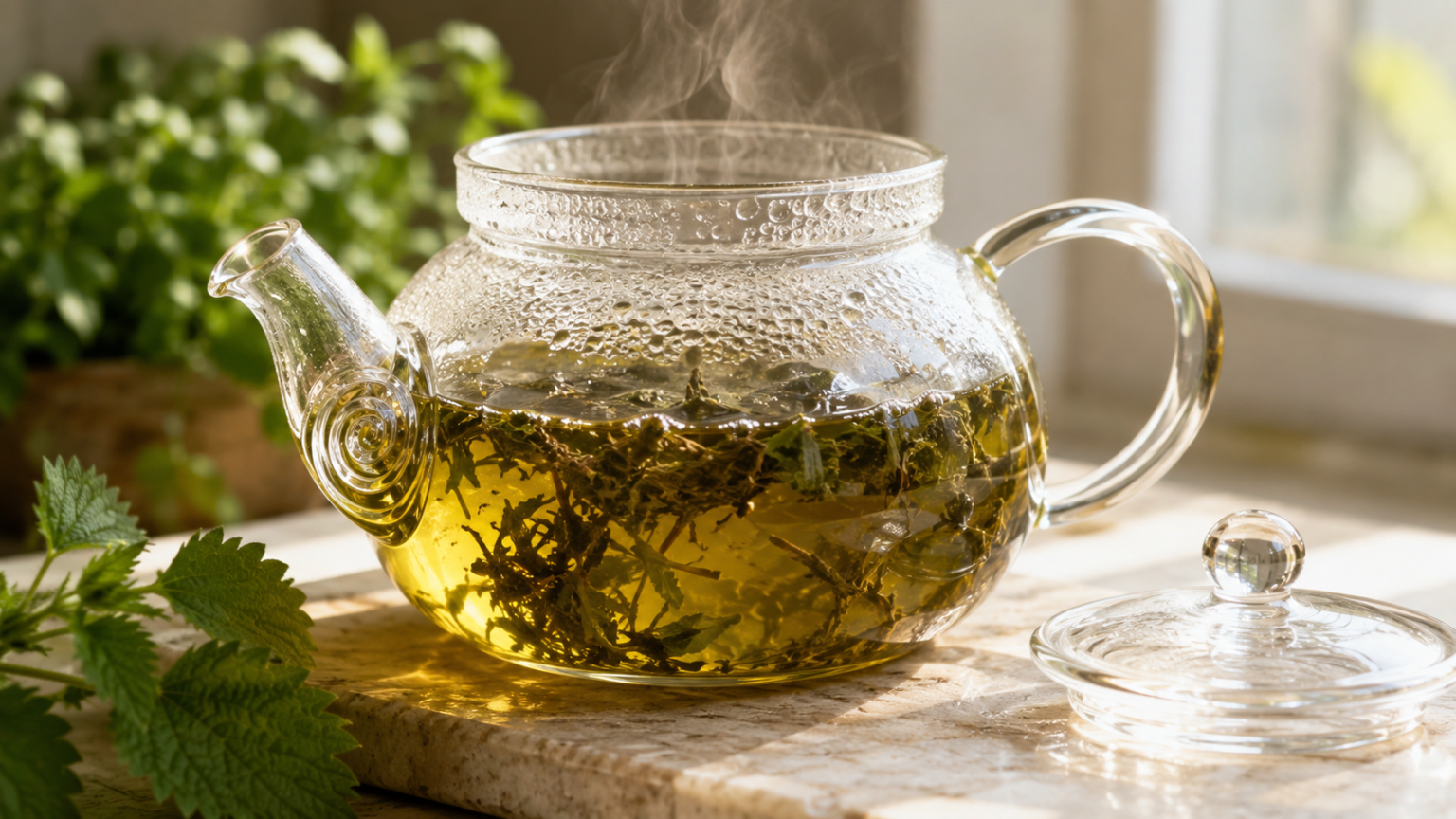
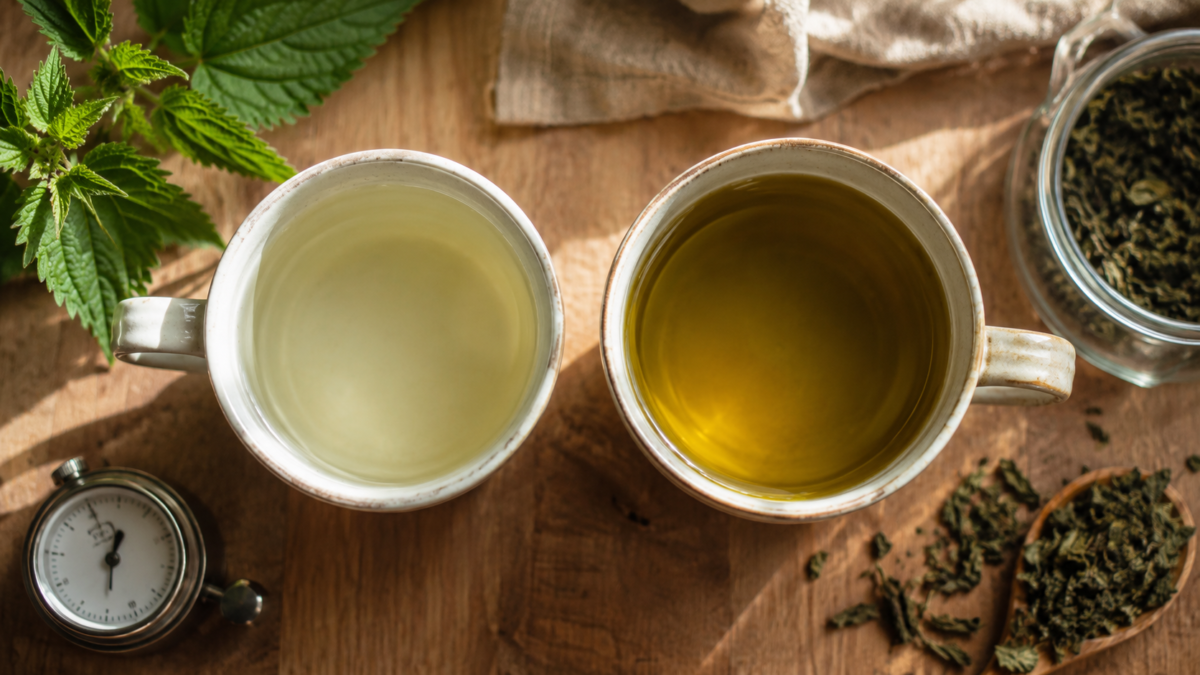
- Cover it and steep for 10–15 minutes — not 3. Covering traps the volatile compounds; the long steep pulls out the flavonoids and minerals.
- Strain well. The liquid should look a deep golden-green, not weak.
- Add lemon (its vitamin C is a natural complement) or a little honey if you like.
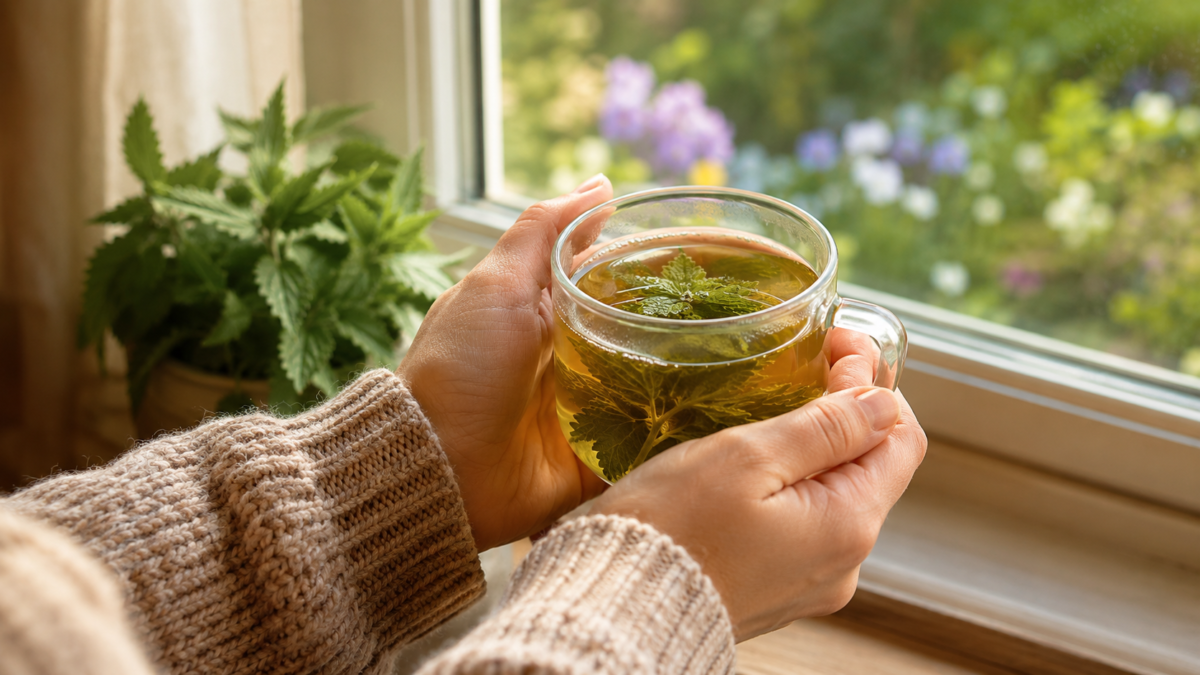
- Drink 2–3 cups a day during allergy season.
On dosage, be realistic about what tea delivers. There’s no official “allergy dose” for nettle tea, but 2 to 3 strong cups daily is the range most herbalists suggest, roughly equal to 2–6 grams of dried herb. If you want something closer to the amounts used in studies, freeze-dried capsules are typically taken at around 300 mg, one to three times a day — more on that trade-off next. You can also blend nettle with other calming herbal teas; see our roundup of herbal teas for immune support for pairings that taste better and stack benefits.
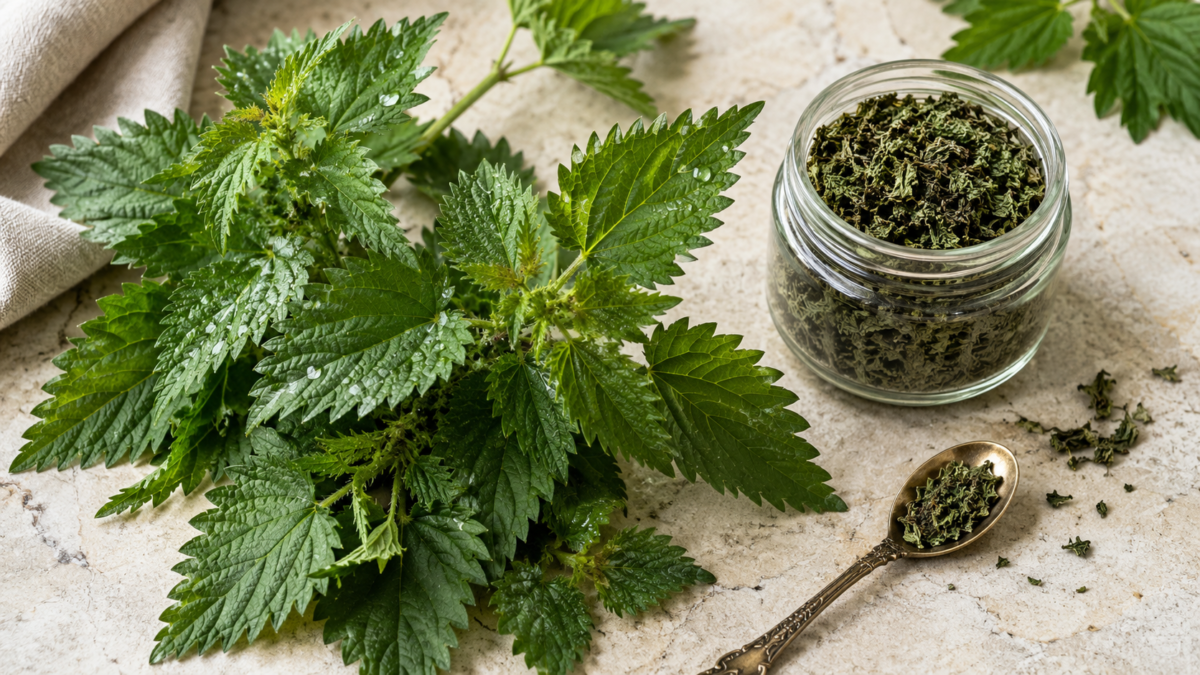
Quality matters more than people assume. Dried nettle leaf is the practical choice for most of us — it stores well and is easy to buy in bulk — but look for a vibrant green colour and a fresh, grassy smell, not dull, dusty, hay-like material that’s been sitting on a shelf for years. Loose-leaf from a reputable herb supplier usually beats generic supermarket tea bags on potency. If you have access to clean, unsprayed land away from roadsides, fresh spring nettle tops make an even more vibrant brew; just wear gloves to harvest and blanch or steep them, since heat neutralises the sting. Our guide to foraging stinging nettle walks through safe identification and the best time to pick. Whichever route you take, store dried nettle in an airtight jar out of sunlight, and replace it each year — herbs lose their punch as they age, and a stale batch is a quiet reason a remedy underperforms.
Make a big batch as a cold-brew: steep a generous handful of dried nettle in a jug of cold water overnight in the fridge. It’s a smooth, grassy iced tea that makes drinking your 2–3 daily cups effortless in hot weather.
Nettle Tea vs. Capsules vs. Tincture: Which Form Is Best?
If you’re serious about allergy relief, the form you choose matters as much as the herb itself. Each has a clear best-use case, and picking the wrong one is why some people conclude nettle is useless.
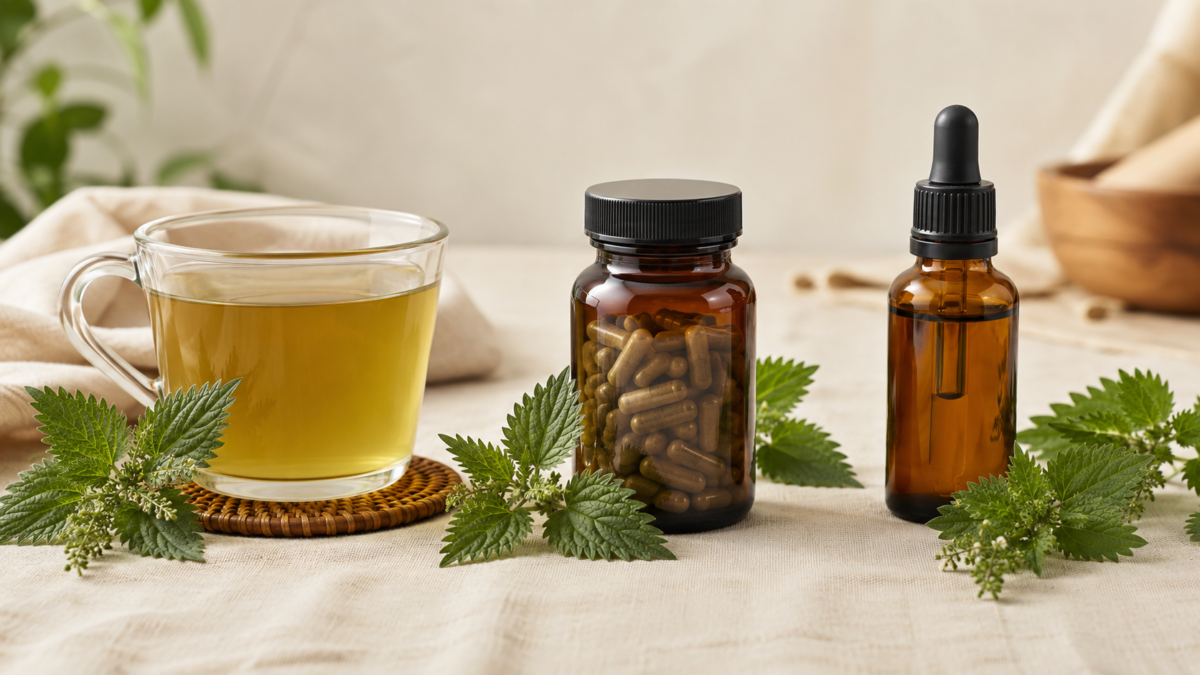
| Form | Strength | Best for | Downside |
|---|---|---|---|
| Tea (infusion) | Mild | Daily prevention, hydration, gentle upkeep | Lower dose; needs consistency |
| Freeze-dried capsules | Strong | Studied doses, stronger symptom relief | Costs more; less ritual, no hydration |
| Tincture (liquid extract) | Moderate–strong | Fast, flexible dosing on the go | Alcohol base; earthy taste |
My honest take after years of recommending this: use tea as your daily base throughout the season, and keep freeze-dried capsules on hand for high-pollen days when you need more muscle. If you want the mechanism-level science on how the extract hits those allergy pathways, this analysis lays it out.
Urtica dioica phytochemicals & allergy targets (Molecules).
How Nettle Compares to Other Natural Allergy Remedies
Nettle rarely works in a vacuum, so it helps to know where it sits among the other popular natural options — and which ones genuinely pair well with it. None of these is a magic bullet, but each brings something different to the table.
Local honey is the folk favourite, based on the idea that tiny amounts of local pollen build tolerance. The evidence is thin and mixed, so treat it as a pleasant maybe rather than a reliable strategy; our honest look at local honey for allergies unpacks what the studies actually found.
Butterbur is the heavyweight of the natural antihistamine world. Some trials have found a specific butterbur extract nearly as effective as a common pharmacy antihistamine for hay fever, which puts it in a different league from tea — though it comes with stricter safety rules. If nettle isn’t cutting it, butterbur for allergies is worth understanding next.
Quercetin is nettle’s natural partner. It’s the flavonoid that stabilises histamine-releasing cells, and since nettle already contains some, stacking a quercetin supplement on top is a common, sensible combination. Where nettle shines is gentleness and versatility: it’s food-safe, hydrating as a tea, cheap, and easy to take daily for weeks. Butterbur hits harder but demands more caution; honey is lovely but unproven; quercetin complements rather than competes. You’ll find all of these explored across our Herbal Remedies collection if you want to build a fuller toolkit. The smartest approach is usually a small, layered stack — not betting everything on one plant.
When to Start, How Often, and What to Expect
Timing is the single biggest factor separating people who love nettle from people who shrug at it. Because nettle calms your baseline reactivity rather than switching off symptoms on the spot, you want it in your system before the pollen count spikes.
Start two to four weeks ahead of your usual allergy season. If tree pollen wrecks your April, begin in mid-March. Drink it daily — skipping days blunts the effect, because you’re trying to maintain a steady anti-inflammatory baseline. Give it a fair two to three weeks of consistent use before deciding whether it’s helping.
What should relief actually feel like? Realistically: fewer sneezing fits, a less streaming nose, calmer eyes, and needing your other remedies a bit less often. In my own experience, the shift is subtle at first — you notice one afternoon that you haven’t reached for a tissue in an hour, then realise the background itch has quietly faded. It usually won’t abolish a severe reaction to a face full of cat dander. Pairing it with simple measures like a daily saline nasal rinse to physically flush allergens out often does more together than either does alone.
Nettle is supportive, not emergency care. If you have asthma or ever experience swelling, wheezing, or trouble breathing during an allergic reaction, that’s a medical situation — use your prescribed treatment and seek care. No tea replaces that.
Who Should Avoid Nettle Tea (Safety & Interactions)
Nettle is one of the safer herbs for most healthy adults, but “natural” never means “risk-free for everyone.” A few groups genuinely need to be careful.
Pregnancy: Nettle may stimulate uterine contractions, so it’s generally advised to avoid medicinal amounts during pregnancy unless your doctor okays it. There’s also limited safety data for young children.
On certain medications: Nettle has a natural diuretic effect and may lower blood sugar and blood pressure. That means it can amplify diuretics, diabetes medication, and blood pressure drugs. It also contains vitamin K, which can work against blood thinners like warfarin. And it may interact with lithium.
Kidney concerns: Older nettle leaves contain oxalates, which is one more reason people with kidney issues should get medical advice first.
Because the FDA doesn’t regulate herbal supplements before sale, potency and purity vary widely between brands. Choose products that are third-party tested, and if you take any prescription medication, clear nettle with your doctor or pharmacist before starting. For a plain-language rundown of side effects and interactions, see this medically reviewed overview of stinging nettle.

Common Mistakes People Make With Nettle Tea
These are the errors that quietly sabotage results — and they’re rarely the obvious ones.
1. Starting too late. Reaching for nettle only once symptoms hit is the number-one mistake. It builds a calmer baseline over time, so a mid-attack cup feels like it does nothing. Begin weeks before your season starts.
2. Under-steeping it. A pale, three-minute cup barely extracts the active compounds. Cover it and steep 10–15 minutes for a strong, deep golden-green infusion that actually delivers a dose.
3. Expecting tea to match a capsule. Tea is the gentle maintenance form. If you drink three weak cups and conclude “nettle doesn’t work,” you may simply need the concentrated freeze-dried form for meaningful relief.
4. Drinking it inconsistently. Nettle’s benefit depends on a steady presence in your system. On-and-off use never lets that baseline build. Treat it like a daily habit for the season, not a sometimes-thing.
5. Ignoring the rest of the picture. Nettle works best layered with basics — rinsing pollen off at night, keeping windows shut on high-count days, supporting gut health for allergies. As a solo fix it underdelivers; as part of a system it shines.
Frequently Asked Questions
The Bottom Line
Used the right way, nettle tea for allergies is a gentle, low-cost ally that can meaningfully take the edge off seasonal symptoms — as long as you start early, brew it strong, and drink it daily rather than expecting a mid-sneeze miracle. Treat it as one reliable piece of a broader plan, lean on the concentrated freeze-dried form when you need more punch, and let realistic expectations do the rest. Your next move: mark your calendar two to four weeks before your allergy season and have your nettle ready before the pollen arrives.
This article is for general education and isn’t a substitute for personalised medical advice. If you’re pregnant, have a health condition, or take medication, talk to your doctor before using stinging nettle in any form.