Quick answer
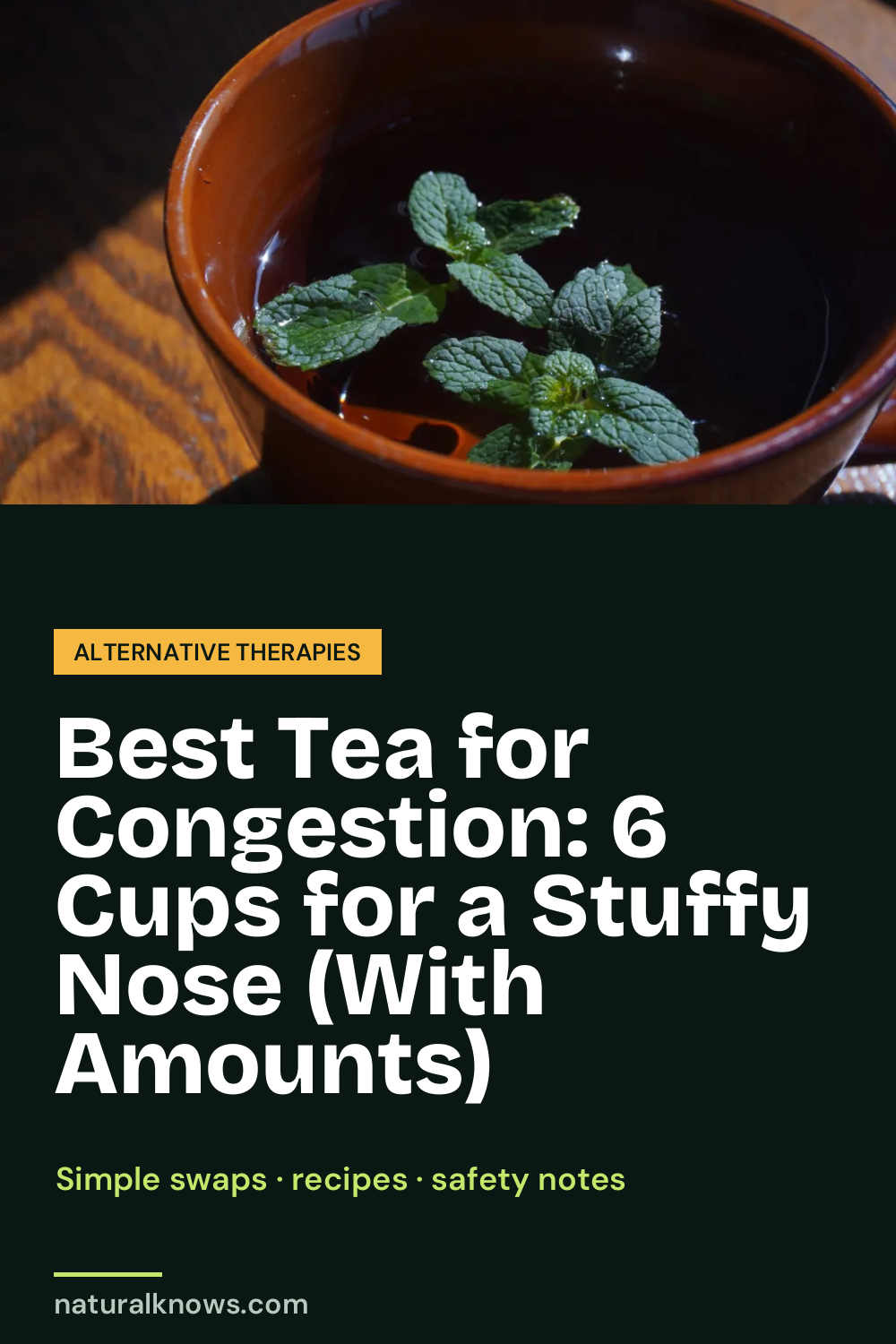
The best tea for congestion is hot peppermint tea: steep 1 teaspoon of dried leaf in 250 ml of just-boiled water for 5 to 7 minutes, covered, and breathe the steam before you sip. Ginger and lemon suits chills and aches, thyme with honey a cough, chamomile bedtime. Tea eases how you feel; it does not cure the cold.
Key facts
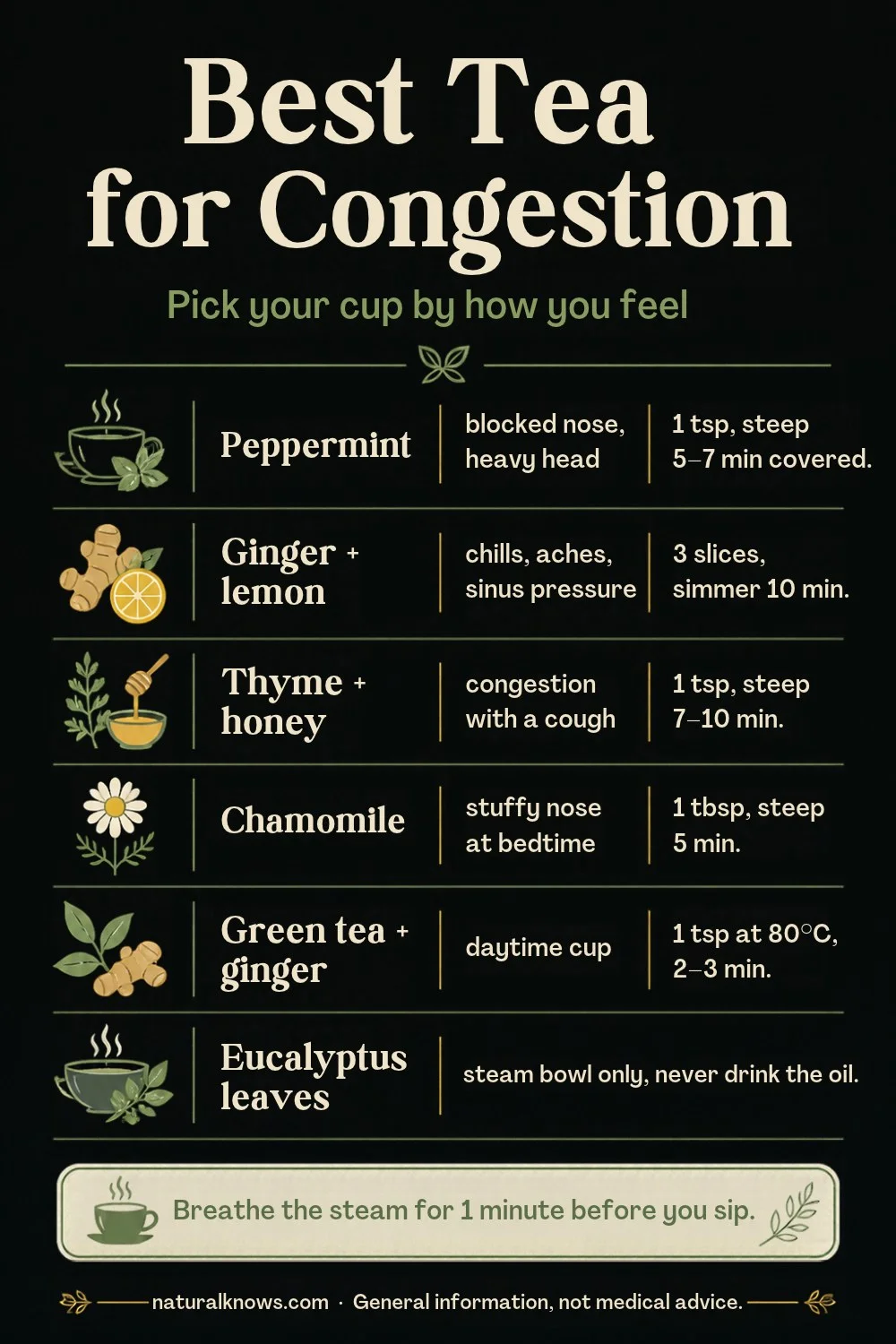
- Peppermint: 1 tsp, steep 5–7 min covered, for a blocked nose
- Ginger and lemon: 3 slices simmered 10 min, for chills and sinus pressure
- Thyme with honey: 1 tsp, steep 7–10 min, when a cough joins in
- Chamomile: 1 tbsp, steep 5 min, 30–60 min before bed
- Eucalyptus: steam bowl only, never drink the oil
- No honey for babies under 1; see a doctor if congestion lasts over 10 days
A stuffy nose makes every cup of tea feel like a small rescue. This guide picks the best tea for congestion by what you actually feel, gives exact amounts and steep times, and keeps the honest part in view: a hot cup makes breathing feel easier, it does not clear the cold itself.
What is the best tea for congestion?
For most people the best tea for congestion is peppermint tea, drunk hot and breathed in while it steeps. The menthol in peppermint gives a cool, open feeling in the nose, and the steam adds warmth and moisture. Ginger tea is the best pick when you feel chilly and achy, and thyme tea when a blocked nose comes with a cough.
| Tea | Best for | Amount per cup (250 ml) | Steep |
|---|---|---|---|
| Peppermint | Blocked nose, heavy head | 1 tsp dried leaf or 1 bag | 5–7 min, covered |
| Ginger and lemon | Chills, aches, sinus pressure | 3 thin slices fresh ginger + ½ lemon | Simmer 10 min |
| Thyme with honey | Congestion with a cough | 1 tsp dried thyme | 7–10 min, covered |
| Eucalyptus leaf (steam only) | Steam bowl, not for drinking | 2–3 dried leaves in hot water | Breathe for 5 min |
| Chamomile | Stuffy nose at bedtime | 1 tbsp dried flowers | 5 min, covered |
| Green tea with ginger | Daytime cup with a little caffeine | 1 tsp green tea + 2 ginger slices | 2–3 min at 80 °C |
The Herbal Kitchen Bundle
Know it, brew it, grow it: 6 herbal kitchen products with a 30-day path, from your herb shelf to your own garden.
- EbookThe Herbal Remedy Shelf
- EbookHerbal Teas for Every Day
- EbookGrowing Your Own Herb Garden
- PrintableHerb Guide Chart
- PrintableTea Blend Recipe Cards
- PrintableHerb Garden Planner


Does hot tea really help a stuffy nose?
Yes, in a limited and honest way. In a small trial at Cardiff University’s Common Cold Centre, 30 people with a cold drank the same fruit drink either hot or at room temperature. The hot drink did not change measured nasal airflow, but people felt their nose was clearer and reported relief from runny nose, cough, sneezing and sore throat (Sanu and Eccles, Rhinology).
So the comfort is real, even when the swelling inside the nose stays the same. Three things in a cup do the work:
- Heat and steam warm the nose and throat and make breathing feel easier.
- Cooling plant compounds, like menthol in peppermint, trigger the nose’s “cool air” sensors, which the brain reads as better airflow.
- Fluid keeps you drinking through the day, which helps a dry throat and thick mucus feel looser.
Peppermint tea: the classic cup for a blocked nose
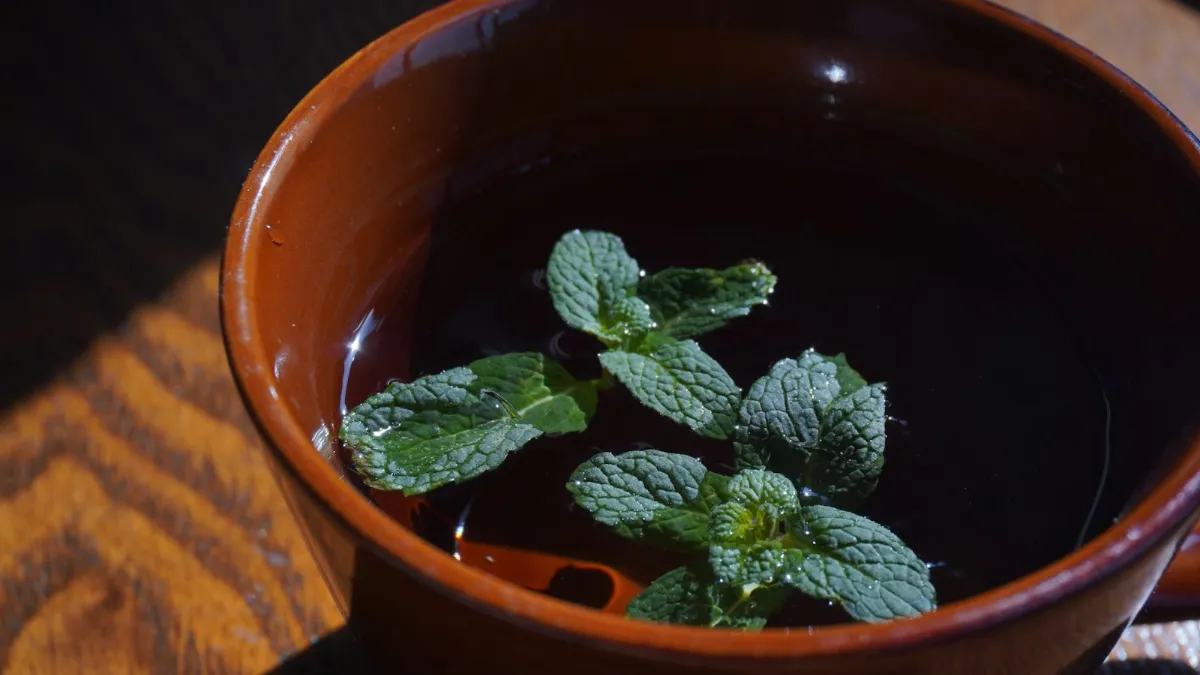
Peppermint is the first cup to reach for. Its menthol gives the familiar cool, open feeling, and the tea is caffeine-free, so you can drink it all day.
- Put 1 teaspoon of dried peppermint (or 1 tea bag, or 8–10 fresh leaves) in a mug.
- Pour 250 ml of water just off the boil.
- Cover with a saucer and steep 5–7 minutes.
- Lift the saucer, lean over the mug and breathe the steam for a minute before you drink.
Take care: peppermint can make heartburn or reflux worse. Peppermint oil is a different thing from peppermint tea: never put the oil in a drink, and keep it away from the faces of young children (NCCIH).
Ginger and lemon tea: when you feel cold and achy
Ginger brings warmth and a little bite, which many people find opens the head. It is the cup for shivery evenings and sinus pressure.
- Slice 3 thin coins of fresh ginger (about 2.5 cm of root).
- Simmer in 300 ml of water for 10 minutes; it reduces to one mug.
- Take off the heat, add the juice of half a lemon and 1 teaspoon of honey.
Take care: large amounts of ginger can upset the stomach. If you take blood thinners, ask your pharmacist before drinking it daily (NCCIH).
Thyme tea: congestion that comes with a cough
Thyme has a long traditional use for chesty colds in European herbal practice. It tastes savoury and warm, and a spoon of honey makes it gentle on a sore throat.
- Put 1 teaspoon of dried thyme (or 3 fresh sprigs) in a mug.
- Add 250 ml of just-boiled water, cover and steep 7–10 minutes.
- Strain and stir in 1 teaspoon of honey.
Our full guide to herbal tea for a cough has more cough cups and amounts.
Chamomile: the bedtime cup for a stuffy nose
Congestion often feels worst when you lie down. A warm, caffeine-free chamomile cup 30–60 minutes before bed is soothing, and its steam helps too. Add 2 slices of ginger for more warmth.
Take care: skip chamomile if you are allergic to ragweed, daisies or other plants in that family.
Eucalyptus: use it as steam, not as a drink
Eucalyptus has a strong, clearing smell, which is why it shows up in so many chest rubs. Use the dried leaves in a steam bowl rather than drinking them, and never swallow eucalyptus essential oil: it is toxic when taken by mouth.
- Put 2–3 dried eucalyptus leaves (or a peppermint tea bag) in a large bowl.
- Pour over 1 litre of hot water, not boiling, and let it cool for 1–2 minutes.
- Sit with your face about 30 cm above the bowl, eyes closed, and breathe slowly for 5 minutes.
Be honest with yourself about what steam does: a Cochrane review found no consistent proof that heated, humidified air shortens a cold (Cochrane). Many people still find it comforting. Never use steam bowls with children, and keep hot water away from the edge of the table: scalds are the main risk.
Is green tea good for congestion?
Green tea is a fine daytime cup: it is warm, hydrating and has a little caffeine for a foggy head. It has no special decongestant effect of its own, so add 2 slices of ginger or a few mint leaves for more of that open feeling. Brew it at about 80 °C for 2–3 minutes so it does not turn bitter, and switch to caffeine-free cups after mid-afternoon so you can sleep.
Three easy blends for a blocked nose
| Blend | What goes in (one mug) | When |
|---|---|---|
| Clear Head | 1 tsp peppermint + 2 slices fresh ginger + 1 tsp honey | Morning and midday |
| Warm Chest | 1 tsp thyme + ½ tsp dried peppermint + juice of ¼ lemon + 1 tsp honey | When a cough joins in |
| Night Breath | 1 tbsp chamomile + 2 slices ginger + 1 tsp honey | 30–60 min before bed |
A simple day plan when your nose is blocked
- Morning: Clear Head blend, breathe the steam first.
- Late morning: a big glass of water or a warm broth.
- Afternoon: ginger and lemon, or green tea with ginger before 3 pm.
- Evening: 5-minute steam bowl, then Night Breath.
- Bed: an extra pillow to raise your head, and a glass of water by the bed.
Other comforts that pair well with tea
- Saline nose rinse or spray, made with sterile or boiled-and-cooled water only, never plain tap water.
- A warm shower for steam without a bowl.
- A warm cloth over the nose and cheeks for 2–3 minutes.
- Rest and fluids: the cold runs its course in about 7–10 days for most adults.
For the whole cold, not just the nose, see our guide to the best herbal teas for cold and flu.
Who should be careful with these teas
- Pregnancy and breastfeeding: this guide does not cover remedies in pregnancy. Ask your midwife, doctor or pharmacist before using herbal teas.
- Babies and children: no honey for babies under 1 year; no steam bowls and no peppermint or eucalyptus oils near young children. Ask a doctor or pharmacist for a child’s congestion.
- Medicines: ginger can interact with blood thinners; chamomile can interact with some medicines. Check with your pharmacist.
- Reflux: peppermint can make heartburn worse.
- Allergies: chamomile can cause reactions in people allergic to the daisy family.
When to see a doctor about congestion
Tea is comfort, not care. See a doctor if you have trouble breathing, a high fever that lasts more than 3 days, severe pain in your face or teeth, symptoms that get better and then suddenly worse, congestion that lasts more than 10 days, or if you have a long-term lung or heart condition.
FAQ: tea for congestion
What tea clears a stuffy nose fastest?
No tea physically clears a blocked nose, but hot peppermint tea gives the quickest feeling of relief. Breathe the steam for a minute before drinking. The menthol and the heat together make the nose feel more open within minutes, even though the swelling inside does not change.
Is ginger tea or peppermint tea better for congestion?
Peppermint is better for the “blocked” feeling because of its cooling menthol. Ginger is better when you feel cold, shivery and achy, or have sinus pressure. Many people mix both: 1 teaspoon of peppermint and 2 slices of fresh ginger in one mug.
You take daily medicine and want to start St John's wort tea. Best move?
Does green tea help sinus congestion?
Green tea helps the way any hot drink does: warmth, steam and fluid. It has no proven decongestant effect of its own. Add ginger or mint for a more open feeling, and avoid it late in the day because of the caffeine.
How many cups of tea a day for a cold?
Three to four cups of herbal tea a day is a comfortable amount for most adults, alongside plain water. Rotate the teas, for example peppermint in the morning, ginger in the afternoon and chamomile at night, rather than drinking very strong amounts of one herb.
Can I add eucalyptus oil to tea?
No. Eucalyptus essential oil is toxic when swallowed, even in small amounts. Use dried eucalyptus leaves in a steam bowl, or keep to peppermint, ginger, thyme and chamomile for drinking.
Is honey in tea good for congestion?
Honey does not clear the nose, but it soothes a sore throat and a cough that often comes with congestion, and makes thyme or ginger tea easier to drink. Add it once the tea has cooled a little. Never give honey to babies under 1 year.
Safety note: General information, not medical advice. Herbal teas soothe symptoms; they do not treat or shorten a cold or flu. Ask a doctor or pharmacist if you are pregnant, breastfeeding, take medicines, or are caring for a child.
Natural still needs amounts and care. Patch test new skin products, keep oils and herbs away from small children, and ask a doctor or pharmacist first if you are pregnant, breastfeeding, take medicines or have a health condition.