Quick answer
Choose eucalyptus oil for scent and freshness around the home: air, showers and laundry. Choose tea tree oil for damp corners, cleaning sprays and small spot use on adult skin at a 1 to 2% dilution. Both are steam distilled from the leaves of Australian trees; never swallow either oil, and keep both away from children and pets.
Key facts
- Eucalyptus: best for fresh air, showers and laundry
- Tea tree: best for bathroom cleaning and diluted spot use
- Skin use for adults: 1 to 2% dilution in a carrier oil
- Both come from the leaves of Australian trees, steam distilled
- Never swallow either oil; keep away from children and pets
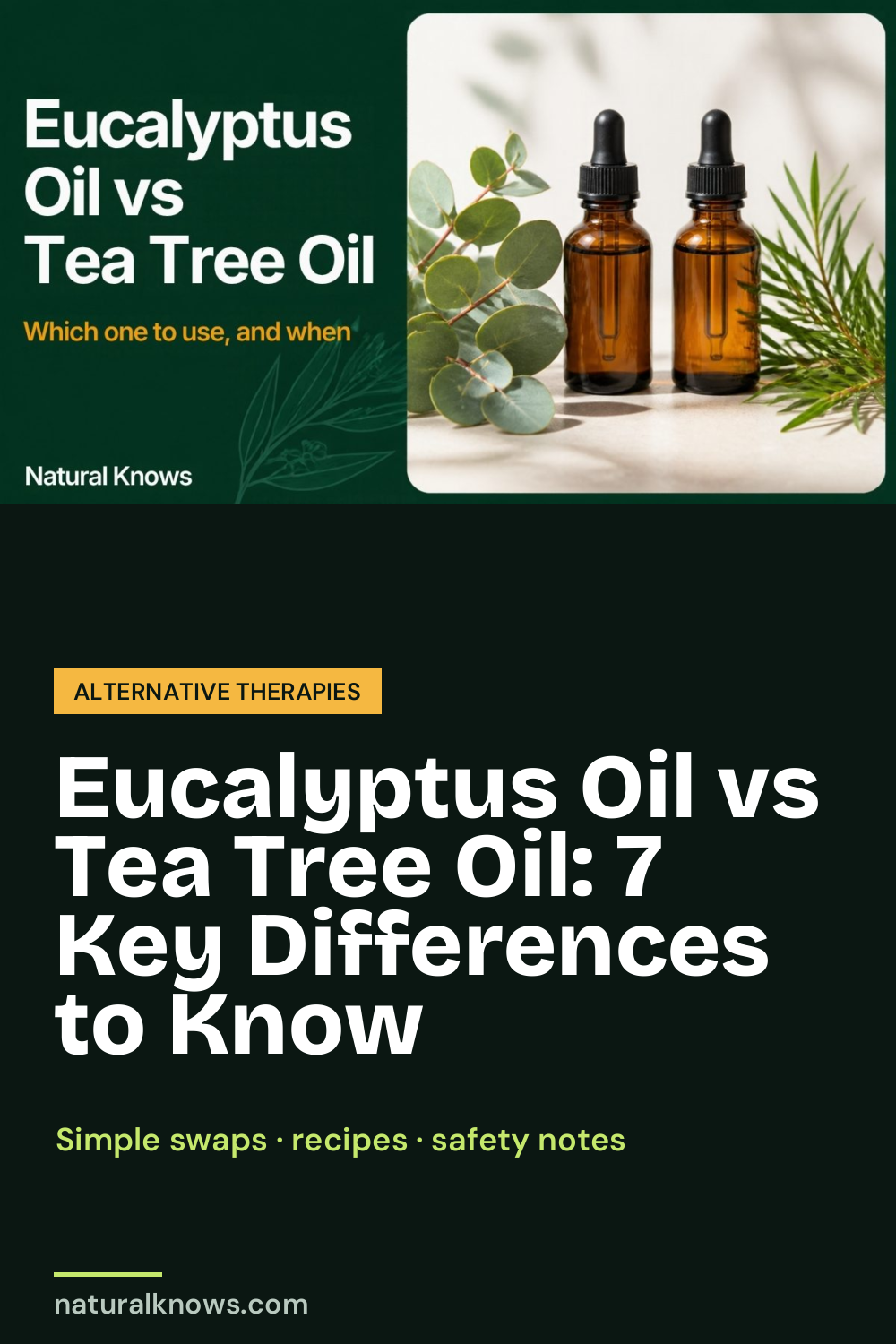
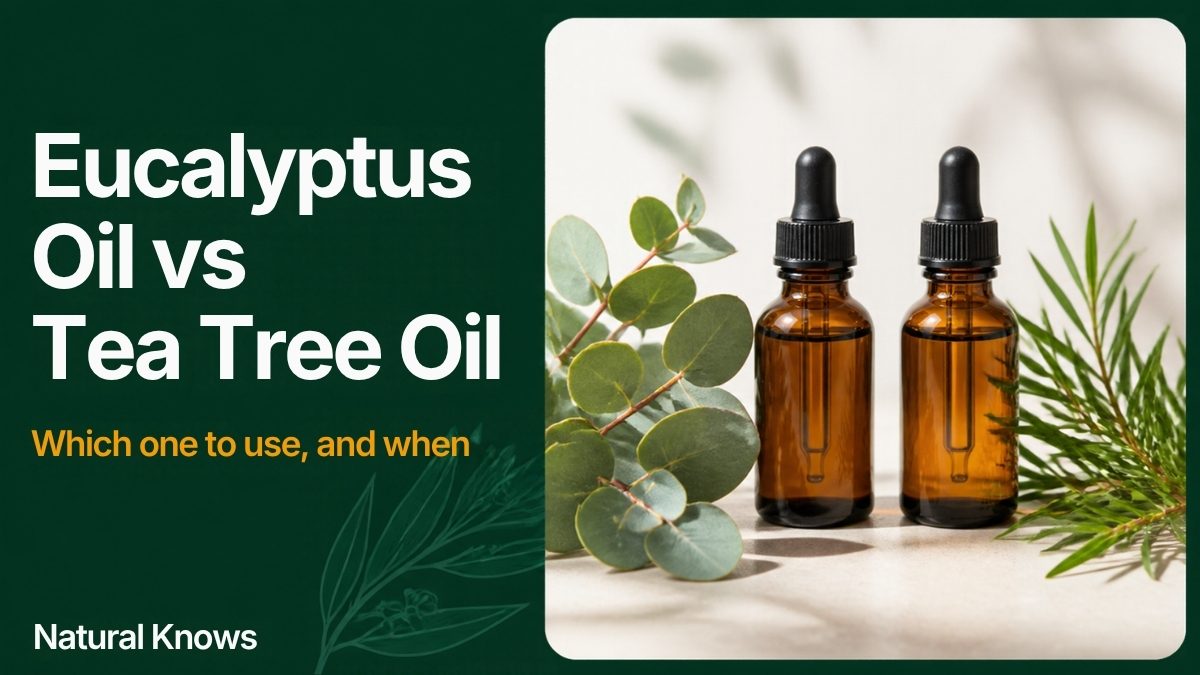
Eucalyptus oil vs tea tree oil is one of the most common questions in home aromatherapy, because both oils come from Australian trees and both smell clean and sharp. In short, eucalyptus is the better choice for fresh air, showers and laundry, while tea tree is the classic pick for bathroom cleaning and small, diluted skin blends.
Eucalyptus Oil vs Tea Tree Oil at a Glance
First, here is the full comparison in one table. After that, we look at each point in detail.
| Eucalyptus oil | Tea tree oil | |
|---|---|---|
| Plant | Eucalyptus globulus or radiata | Melaleuca alternifolia |
| Main natural compound | 1,8-cineole | Terpinen-4-ol |
| Scent | Cool, fresh, minty | Sharp, earthy, medicinal |
| Best home use | Air, showers, laundry | Bathroom surfaces, damp corners |
| Skin use (adults) | Body only, 2% | Small areas, 1 to 2% |
| Diffuser | 3 to 5 drops per 100 ml | 2 to 3 drops, usually in a blend |
| Shelf life after opening | 2 to 3 years | 1 to 2 years |
| Price | Low | Low to medium |
The Essential Oils Bundle
How many drops in a 10 ml roller? 2 at 1 %, 4 at 2 %. The Essential Oils Bundle has the chart, the blends and the safety rules.
- EbookEssential Oils Without the Hype
- Ebook100 Diffuser Blends
- EbookEssential Oils Room by Room
- PrintableEssential Oil Dilution Chart
- SpreadsheetOil Inventory & Blend Log
- PrintableBlend Recipe Cards


Eucalyptus Oil vs Tea Tree Oil: Where Each Comes From
In the eucalyptus oil vs tea tree oil question, the plants matter first. Both trees belong to the myrtle family and both are native to Australia. However, they are different plants with different leaves.
Eucalyptus oil comes from the long, grey-green leaves of the eucalyptus tree. Most bottles use Eucalyptus globulus, also called blue gum. In contrast, tea tree oil comes from the thin, needle-like leaves of Melaleuca alternifolia, a small tree that grows in swampy areas of New South Wales.
Despite the name, tea tree has nothing to do with the tea you drink. Likewise, it is not related to “tea seed oil” used in cooking. Both essential oils are for external home use only.
Eucalyptus Oil vs Tea Tree Oil: The 7 Key Differences
1. Scent
Eucalyptus smells cool and airy, a little like mint and pine. As a result, most people find it pleasant in a diffuser. Tea tree, on the other hand, smells sharper and more medicinal. Therefore, many people prefer it in cleaning products rather than in a living room.
2. Natural chemistry
The scent of eucalyptus comes mostly from 1,8-cineole. Tea tree oil is rich in terpinen-4-ol instead. Because the main compounds differ, the two oils behave differently on skin and in the air. This is also why you should not simply swap one for the other in a recipe.
3. Uses around the home
Eucalyptus shines wherever you want a fresh smell: diffusers, shower steamers, laundry rinses and shoe fresheners. Meanwhile, tea tree is the traditional choice for bathroom sprays, shower curtains and damp cupboards.
4. Use on skin
Tea tree has a long tradition in diluted skin care, for example in spot blends and foot soaks. Eucalyptus is mostly used in body and massage oils, away from the face. In both cases, dilution is essential, and a patch test comes first.
5. Safety around children
Eucalyptus is not suitable on or near the face of young children. For instance, Poison Control advises that children under 2 should not be given eucalyptus oil at all. Tea tree is also unsafe to swallow, so both bottles belong on a high shelf.
6. Safety around pets
Both oils can harm pets. In particular, the ASPCA reports that only a few drops of concentrated tea tree oil can cause problems for a cat or dog. So never apply either oil to an animal, and keep pets out of the room while you diffuse.
7. Shelf life
Tea tree oil ages faster. Once it oxidises, it is more likely to irritate skin. Consequently, buy small bottles, close the cap tightly and use tea tree within one to two years. Eucalyptus usually stays fresh a little longer.
When to Choose Eucalyptus Oil
Choose eucalyptus when your goal is freshness. It is the easier oil to live with, and it blends well with citrus and lavender.
- Diffuser: 3 to 5 drops in 100 ml of water, for 30 minutes.
- Shower steamers: 30 drops per batch of eight tablets. See our eucalyptus shower bomb recipe.
- Laundry rinse: 5 drops in 60 ml of white vinegar, in the softener drawer.
- Body oil for adults: 12 drops in 30 ml of carrier oil, which gives 2%.
For ten complete recipes, read our guide to eucalyptus essential oil.
When to Choose Tea Tree Oil
Choose tea tree when the job is cleaning, especially in the bathroom. Its strong scent fades quickly once surfaces dry.
- Bathroom spray: 15 drops in 250 ml of water and 250 ml of white vinegar.
- Shower curtain rinse: 10 drops in a bucket of warm, soapy water.
- Spot blend for adults: 1 drop in 1 teaspoon of jojoba oil, which is about 1%.
- Foot soak: 3 drops mixed into 1 tablespoon of carrier oil first, then added to a bowl of warm water.
Can You Use Eucalyptus and Tea Tree Oil Together?
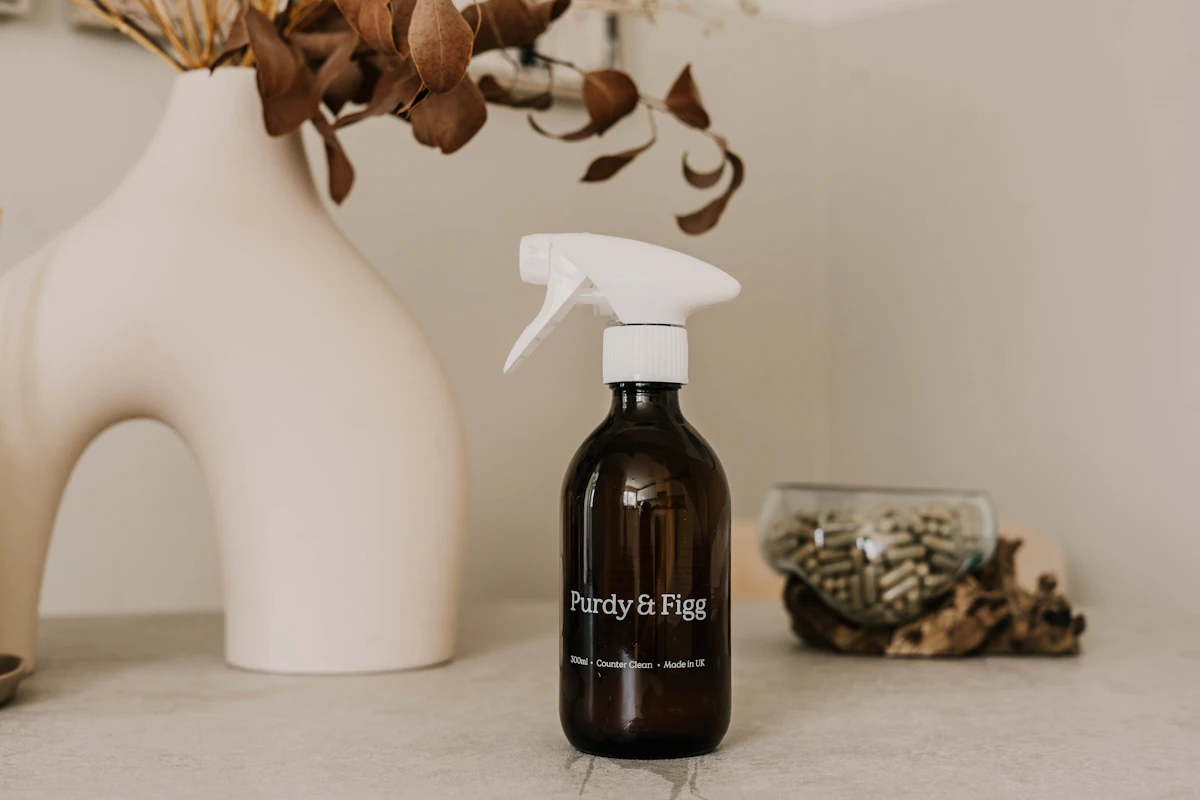
Yes. In fact, the two oils blend well, and the eucalyptus softens the sharp edge of tea tree. Here are three simple recipes.
Fresh bathroom spray
- Pour 250 ml of water and 250 ml of white vinegar into a glass spray bottle.
- Add 8 drops of eucalyptus oil and 8 drops of tea tree oil.
- Shake well, spray on tiles and sinks, then wipe with a damp cloth.
Shelf life: 4 weeks. Safety note: do not use on marble or natural stone, and never mix with bleach.
Clean-air diffuser blend
Add 3 drops of eucalyptus, 1 drop of tea tree and 2 drops of lemon to 100 ml of water. Then run the diffuser for 30 minutes with a window slightly open. Safety note: keep children and pets out of the room while it runs.
Gym bag freshener
Stir 6 drops of eucalyptus and 4 drops of tea tree into half a cup of baking soda. Next, spoon the mix into a small cotton bag and leave it in the gym bag overnight. Shelf life: replace after 4 weeks.
Dilution Chart for Both Oils
Dilution protects your skin, whatever you choose in the eucalyptus oil vs tea tree oil debate. Therefore, measure every time, and start low. Our free oil dilution calculator does the maths for any bottle size.
| Use | Eucalyptus | Tea tree | Base |
|---|---|---|---|
| Face | Not advised | Spot use only, 1% | 1 drop per 5 ml carrier oil |
| Adult body oil | 2% (12 drops) | 2% (12 drops) | 30 ml carrier oil |
| Bath | 4 drops | 3 drops | Mixed into 1 tbsp carrier oil first |
| Diffuser | 3 to 5 drops | 2 to 3 drops | 100 ml water |
| Cleaning spray | 15 drops | 15 drops | 500 ml liquid |
Safety Rules for Both Oils
Natural products still need care. So follow these rules every time, whichever bottle you open.
- Never swallow essential oils. Both are harmful if taken by mouth.
- Always dilute for skin and do a 24-hour patch test on your inner arm.
- Avoid eyes, lips and broken skin.
- Store both oils out of reach of children, with the caps closed.
- Keep them away from pets, and never apply them to an animal.
- Ask a health professional first if you are pregnant, breastfeeding, have asthma or sensitive skin, or take regular medication.
- Throw away old tea tree oil. A sour or harsh smell means it has oxidised.
You can read the complete rules in our essential oil safety guide. In addition, the oil shelf life checker tells you when a bottle is past its best.
Eucalyptus Oil vs Tea Tree Oil: Which to Buy First?
When you weigh eucalyptus oil vs tea tree oil and can buy only one bottle, think about your main goal.
| Your goal | Start with |
|---|---|
| A fresher-smelling home | Eucalyptus |
| A simple diffuser routine | Eucalyptus |
| Natural bathroom cleaning | Tea tree |
| A basic adult spot blend | Tea tree |
| Both cleaning and freshness | One small bottle of each |
Both oils are affordable, so many homes keep the pair. Even so, there is no need to rush. Instead, start with one, learn how it behaves, then add the second.
When you are ready to go further, The Essential Oils Bundle collects our oil guides, dilution charts and blend cards in one place. Furthermore, our essential oils hub lists every free tool and recipe on the site.
Frequently Asked Questions
Is eucalyptus oil the same as tea tree oil?
No. They come from different trees and contain different natural compounds. Although both are Australian and both smell fresh, they do different jobs at home.
Which smells better, eucalyptus or tea tree?
Most people prefer eucalyptus, because it is cooler and softer. Tea tree is sharper and more medicinal. However, scent is personal, so smell both before you decide.
You want lemon oil in a body oil before a beach day. Best move?
Can I mix eucalyptus oil and tea tree oil?
Yes. They blend well in cleaning sprays and diffusers. For example, use equal drops of each in a vinegar spray, or 3 drops of eucalyptus to 1 drop of tea tree in a diffuser.
Which oil is better for cleaning?
Tea tree is the traditional choice for bathrooms and damp areas. Eucalyptus, in contrast, is better when you mainly want a fresh scent on floors, fabrics and in the air.
Can I put either oil directly on my skin?
No. Always dilute in a carrier oil first, then patch test. Tea tree suits small areas at 1 to 2%, while eucalyptus is for body use at 2%, away from the face.
Are these oils safe for pets?
Take great care. Both oils can be harmful to cats, dogs and birds. Therefore, never apply them to a pet, and diffuse only in a room your animals cannot enter. We explain more in is eucalyptus oil safe for pets.
How should I store eucalyptus and tea tree oil?
Keep both in dark glass bottles, in a cool cupboard, with the caps tightly closed. Also write the opening date on each label.
Natural still needs amounts and care. Patch test new skin products, keep oils and herbs away from small children, and ask a doctor or pharmacist first if you are pregnant, breastfeeding, take medicines or have a health condition.