Quick answer
for a gentle, food-level start, drink a cup of cooled sage tea in the evening, dress in layers, and keep the bedroom cool. In addition, talk to your doctor before taking concentrated herbal products, especially with a history of breast cancer, liver problems or regular medicines.
Key facts
- Black cohosh: Hot flashes, night sweats, Mixed to moderately positive
- Sage: Sweating, Small positive studies
- Red clover: Hot flashes, Mixed
- St. John's wort: Low mood, Some support, often with black cohosh
- Lemon balm and valerian: Sleep, restlessness, Limited
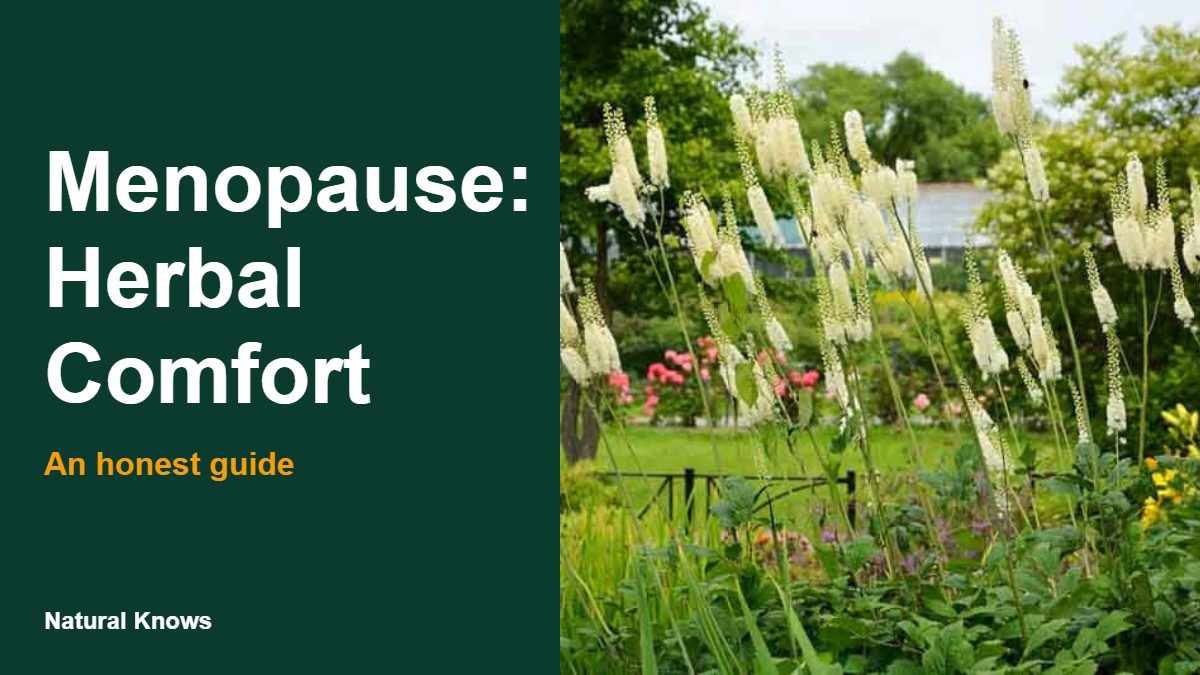
Herbal remedies for menopause are plants such as black cohosh, sage, red clover and lemon balm that many women use for comfort during hot flashes, night sweats and restless sleep. In short, a few have encouraging studies, most have mixed evidence, and none works for everyone. However, menopause is a natural transition, not an illness, and comfort is a fair goal. Therefore, this guide covers six herbs honestly, a cooling tea, daily habits and the points to discuss with your doctor.
Six herbal remedies for menopause at a glance
| Herb | Traditional use | Evidence so far | Main caution |
|---|---|---|---|
| Black cohosh | Hot flashes, night sweats | Mixed to moderately positive | Rare liver injury reported |
| Sage | Sweating | Small positive studies | Not in large amounts long term |
| Red clover | Hot flashes | Mixed | Hormone-sensitive conditions: ask first |
| St. John’s wort | Low mood | Some support, often with black cohosh | Many drug interactions |
| Lemon balm and valerian | Sleep, restlessness | Limited | Drowsiness; sedatives |
| Evening primrose oil | Breast tenderness, flashes | Largely negative | Blood thinners |
According to the National Center for Complementary and Integrative Health, a recent review of studies suggested black cohosh may help overall menopause symptoms and hot flashes, while rare cases of liver injury have been reported. Consequently, even the best-studied herb calls for medical guidance.
The Herbal Kitchen Bundle
Know it, brew it, grow it: 6 herbal kitchen products with a 30-day path, from your herb shelf to your own garden.
- EbookThe Herbal Remedy Shelf
- EbookHerbal Teas for Every Day
- EbookGrowing Your Own Herb Garden
- PrintableHerb Guide Chart
- PrintableTea Blend Recipe Cards
- PrintableHerb Garden Planner


How to think about herbal remedies for menopause
- Symptoms vary widely. As a result, what helps a friend may not help you.
- Placebo effects are strong in hot flash studies, often 30% or more.
- Products differ. Supplements are not checked like medicines.
- Effective medical options exist. For example, hormone therapy and non-hormonal prescriptions; your doctor can explain the benefits and risks.
Cooling sage tea: a food-level start with herbal remedies for menopause
Makes 1 cup.
- 1 teaspoon dried sage leaves, or 3 fresh leaves
- 1 cup just-boiled water
- 1 slice lemon (optional)
First, pour the water over the sage. Next, cover, and steep for 5 to 8 minutes. Then strain, let it cool, and sip it lukewarm or chilled in the evening.
Shelf life: up to 24 hours in the fridge. Safety note: keep to one or two cups a day, for a few weeks at a time, because sage contains thujone. Also, avoid it with epilepsy, and ask your doctor if you take diabetes or seizure medicine.
Evening calm tea for sleep
- 2 teaspoons dried lemon balm
- 1 teaspoon dried chamomile flowers
- 1 cup just-boiled water
Steep, covered, for 10 minutes, and drink an hour before bed.
Shelf life: drink fresh. Safety note: skip chamomile with a daisy-family allergy. Furthermore, see our guide to herbal teas for better sleep.
Daily habits that support herbal remedies for menopause
| Symptom | Helpful habit |
|---|---|
| Hot flashes | Layers, a fan, cool drinks; note triggers such as alcohol, spicy food and hot rooms |
| Night sweats | Cotton bedding, a cool bedroom, a glass of water nearby |
| Poor sleep | Regular hours; less caffeine after noon |
| Mood swings | Daily movement, daylight, time with friends |
| Joint stiffness | Strength training and walking |
| Vaginal dryness | Moisturizers and lubricants; ask your doctor about local options |
In addition, our sleep window tool and evening calm check help with nights.
Food and herbal remedies for menopause
- Soy foods and flaxseed contain plant estrogens; studies show modest, variable effects on hot flashes.
- Calcium and vitamin D foods support bones: dairy or fortified alternatives, sardines, leafy greens.
- Protein at each meal helps maintain muscle.
- Less alcohol often means fewer flashes and better sleep.
Meanwhile, strength training twice a week protects bones and mood.
Questions to ask before trying herbal remedies for menopause
- First, ask whether your symptoms need a check-up, such as thyroid tests.
- Next, ask whether the herb interacts with your medicines.
- Then ask whether your history (breast cancer, blood clots, liver disease) changes the advice.
- After that, ask how long to try it; eight to twelve weeks is typical.
- Finally, agree on signs that mean you should stop.
Who should be especially careful
- Women with a history of hormone-sensitive cancers
- Anyone with liver disease
- Women taking antidepressants, blood thinners, tamoxifen or hormonal medicines
- Anyone before surgery
St. John’s wort, in particular, weakens many medicines. Therefore, never add it without a pharmacist’s check. We do not sell or recommend supplements.
Safety: when herbal remedies for menopause are not enough
See a doctor for:
- Bleeding after menopause, or very heavy or irregular bleeding
- Hot flashes or sleep loss that disrupt daily life
- Low mood, anxiety or palpitations
- Signs of liver trouble while taking herbs: dark urine, yellow skin, unusual tiredness
Effective, well-studied care exists, and you do not have to manage alone.
Keep going
Next, visit our natural living for women and natural living after 40 sections. In addition, The Natural Life System for Women gathers our guides and planners in one place.
FAQ: herbal remedies for menopause
Which herbal remedies for menopause have the best evidence?
Black cohosh has the most studies, with mixed to positive results. However, discuss it with your doctor.
Does sage tea help hot flashes?
Small studies and long tradition suggest it may reduce sweating.
You take daily medicine and want to start St John's wort tea. Best move?
How long do herbs take to work?
Usually four to twelve weeks.
Are herbs safer than hormone therapy?
Not automatically. Both have benefits and risks, so decide with your doctor.
Can I combine several herbs?
Better not. Instead, try one at a time.
Does soy help?
Some women notice a modest effect from soy foods.
Natural still needs amounts and care. Patch test new skin products, keep oils and herbs away from small children, and ask a doctor or pharmacist first if you are pregnant, breastfeeding, take medicines or have a health condition.