A tension headache creeps in, you’ve got a bottle of peppermint oil in the drawer, and you freeze — because dabbing it in the wrong spot does nothing, and too close to your eyes stings like fire. Knowing exactly where to apply peppermint oil for headaches is the difference between fast, cooling relief and a frustrating waste of good oil. This guide gives you the precise spots, the safe dilution, three roller-blend recipes that actually work, and the mistakes that stop peppermint from doing its job.

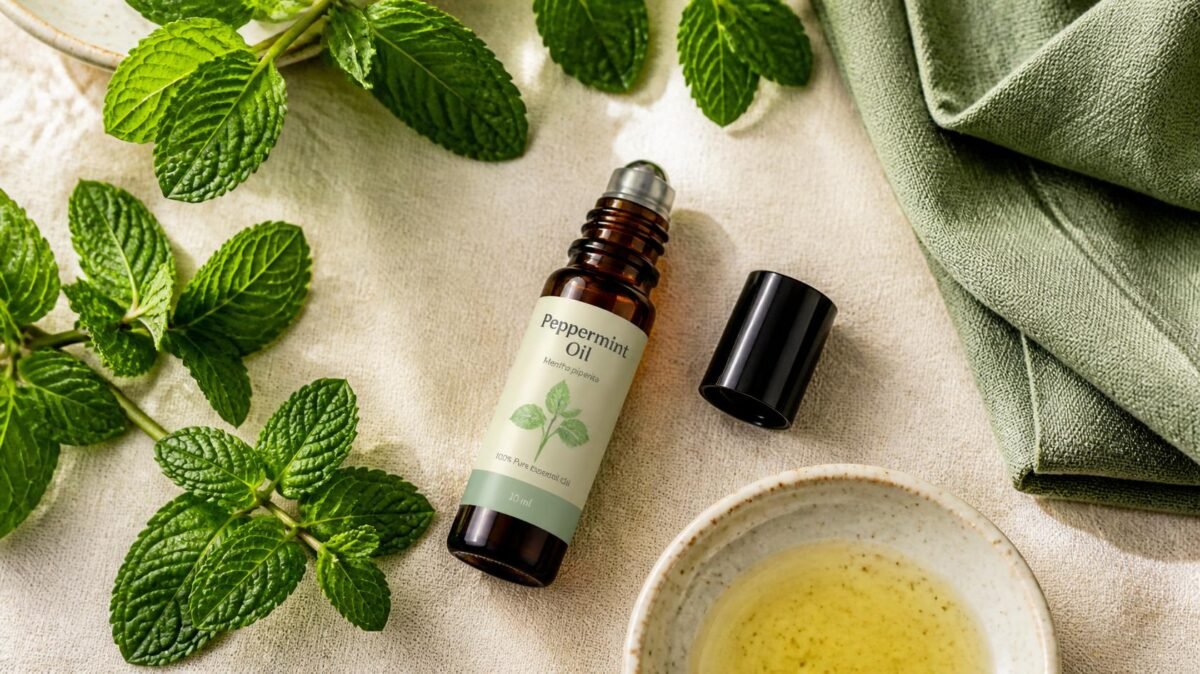
Apply diluted peppermint oil to your temples, across your forehead along the hairline, and the back of your neck — the areas where tension-headache pain concentrates. Always dilute it in a carrier oil first, and keep it well away from your eyes. Gently massage a small amount into each spot and reapply after 15–30 minutes if needed. Menthol’s cooling effect usually eases tension-type headache pain within about 15 minutes.
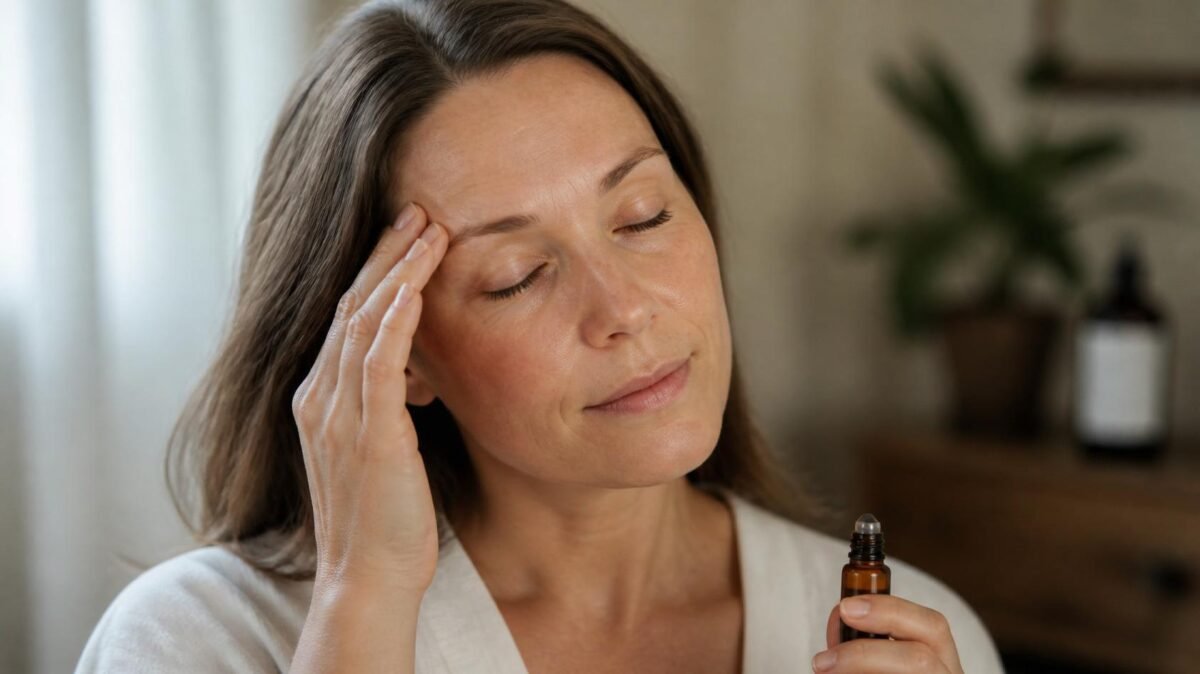
- ✓ The best spots are the temples, forehead hairline, and back of the neck — never near the eyes.
- ✓ Peppermint oil must be diluted in a carrier oil; undiluted oil can burn or irritate the skin.
- ✓ Its menthol works by activating cold receptors that cool the skin, relax muscles, and distract pain.
- ✓ Peppermint is best studied for tension headaches, where it performed as well as a standard painkiller.
- ✓ Keep it away from young children and never let the vapour reach an infant’s face.
Where to Apply Peppermint Oil for Headaches (The 4 Key Spots)

These are the exact places to put diluted peppermint oil, and why each one earns its spot. Match the location to where your pain lives, and you’ll get far more from every drop.
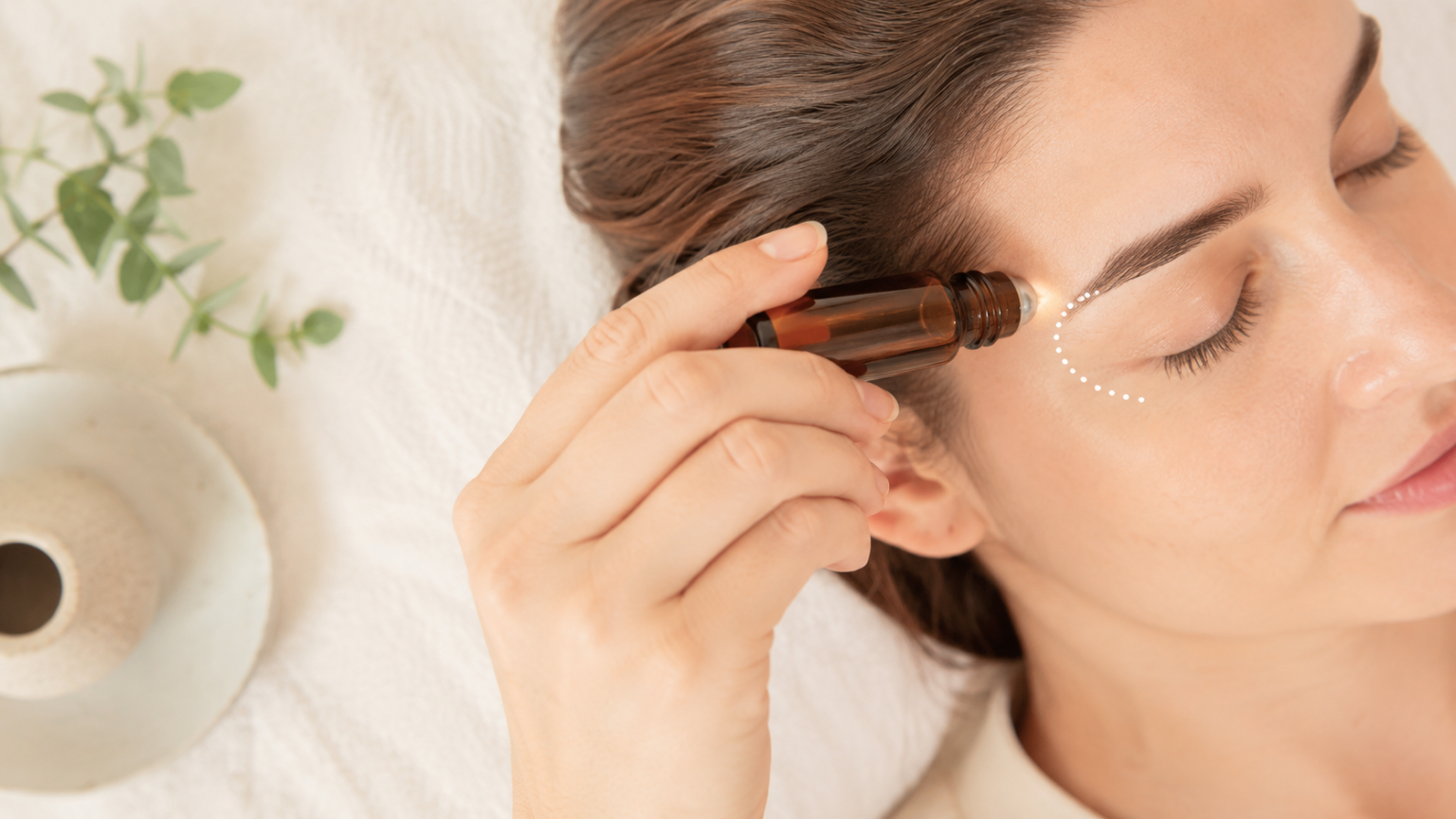
1. The temples. This is the classic spot for a reason — the temples sit right over the pericranial muscles (the muscles wrapping the skull) that tighten during a tension headache. Rub a small amount in slow circles on each temple. Stay a good inch back from the outer corner of your eye.
2. The forehead, along the hairline. Sweep a thin layer across your forehead near the hairline, not down toward the brows. In the clinical studies, the forehead and temples were the exact areas treated, and relief showed up fast.
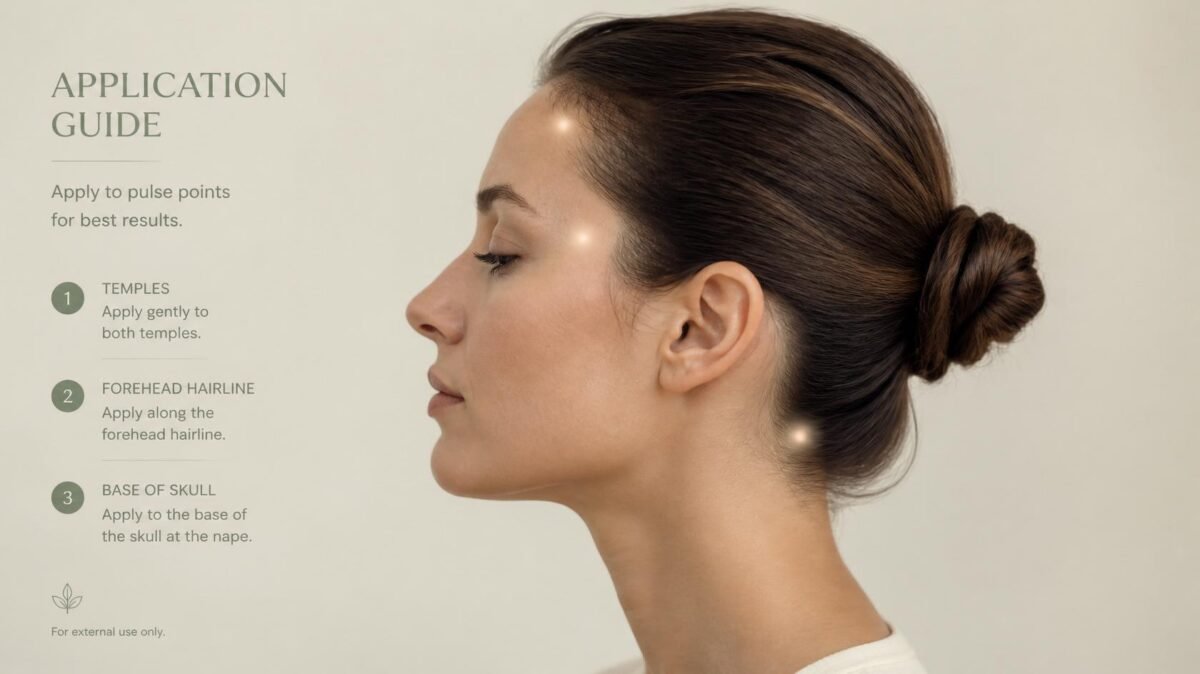
3. The back of the neck and base of the skull. So much tension-headache pain radiates up from tight neck muscles. Massaging diluted peppermint into the nape and the little hollows at the base of your skull hits the problem at its root, not just its symptom.
4. The shoulders and upper trapezius. If your headaches are the “I sat at a desk all day” kind, work a little into the tops of your shoulders too. Releasing that tension often eases the head.

Menthol vapour rises. Even applied correctly to the temples, keep the oil at least an inch from your eyes — the fumes alone can make them water and sting. If any oil gets near your eye, flush with a plain carrier oil (like olive or coconut), never water, which spreads it.
Why Peppermint Oil Works on Headaches
Understanding the mechanism explains why placement and dilution matter so much. The active hero here is menthol, which makes up roughly 30–55% of peppermint essential oil.
When menthol touches your skin, it switches on TRPM8 receptors — the same cold sensors that make a winter breeze feel icy. That triggers three helpful things at once: a cooling sensation that distracts your brain’s pain pathways, a relaxing effect on the tight muscles around your skull, and a measurable increase in blood flow to the forehead. In plain terms, it cools, it loosens, and it redirects the pain signal.
Essential plant oils and headache mechanisms (ScienceDirect).
The evidence for this is unusually strong for a natural remedy. In a rigorously designed German trial, a 10% peppermint oil solution spread across the forehead and temples reduced tension-headache pain as effectively as 1000 mg of acetaminophen (the painkiller sold as Tylenol or paracetamol), with relief beginning within 15 minutes.
Peppermint oil vs. acetaminophen, tension-type headache (PubMed).
A later clinical review confirmed the finding and noted that a standardised 10% peppermint-in-ethanol preparation is even licensed as a recognised treatment for tension-type headache. If you want the wider picture, our guide to essential oils for migraine relief compares peppermint with the other evidence-backed options.
Peppermint oil in acute treatment of tension headache (PubMed).
How to Dilute Peppermint Oil Safely
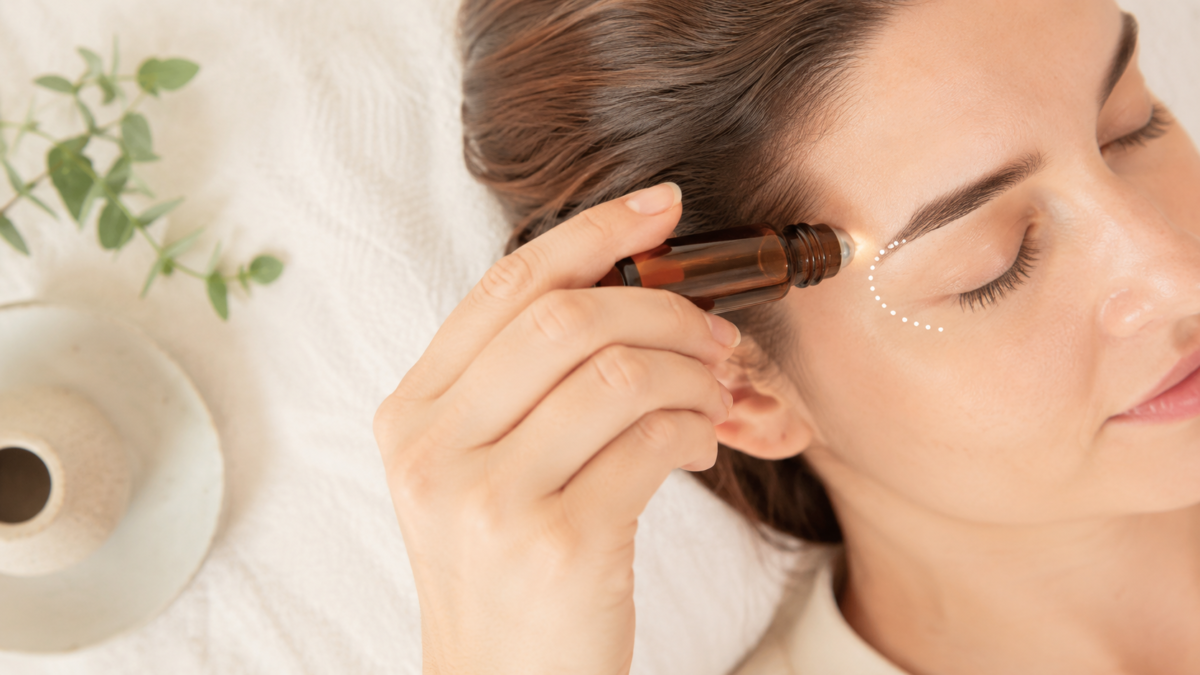
This is the step people skip most, and it’s the one that decides whether peppermint helps or hurts. Essential oils are extremely concentrated — a carrier oil (a plant oil like fractionated coconut, jojoba, or sweet almond that “carries” the essential oil onto your skin) tames that strength so you get relief without a chemical burn.
For adults applying to the head and neck, a 2–3% dilution is the practical sweet spot. In real terms, that’s about 5–6 drops of peppermint oil in a 10 ml (roughly two-teaspoon) roller bottle topped with carrier oil. If your skin is sensitive, start at 1–2% and build up. Never apply peppermint oil neat (undiluted) to your skin for headaches; the temples are thin-skinned and close to the eyes, exactly where you don’t want raw concentration.
Always patch-test a new blend: dab a little on your inner forearm and wait 24 hours. If there’s no redness or itching, it’s safe for your temples. This one habit prevents almost every bad reaction people have with essential oils.
Prefer to skip the mixing? Inhalation is a gentler backup. Put a drop or two on a tissue and breathe it in, or add it to a bowl of hot water and inhale the steam — you still get the cooling, pain-distracting effect without anything touching your skin. For a full breakdown of ratios, storage, and safe use, see our guide to the safe use, storage, and dilution of essential oils.
3 Peppermint Roller Blends That Actually Work
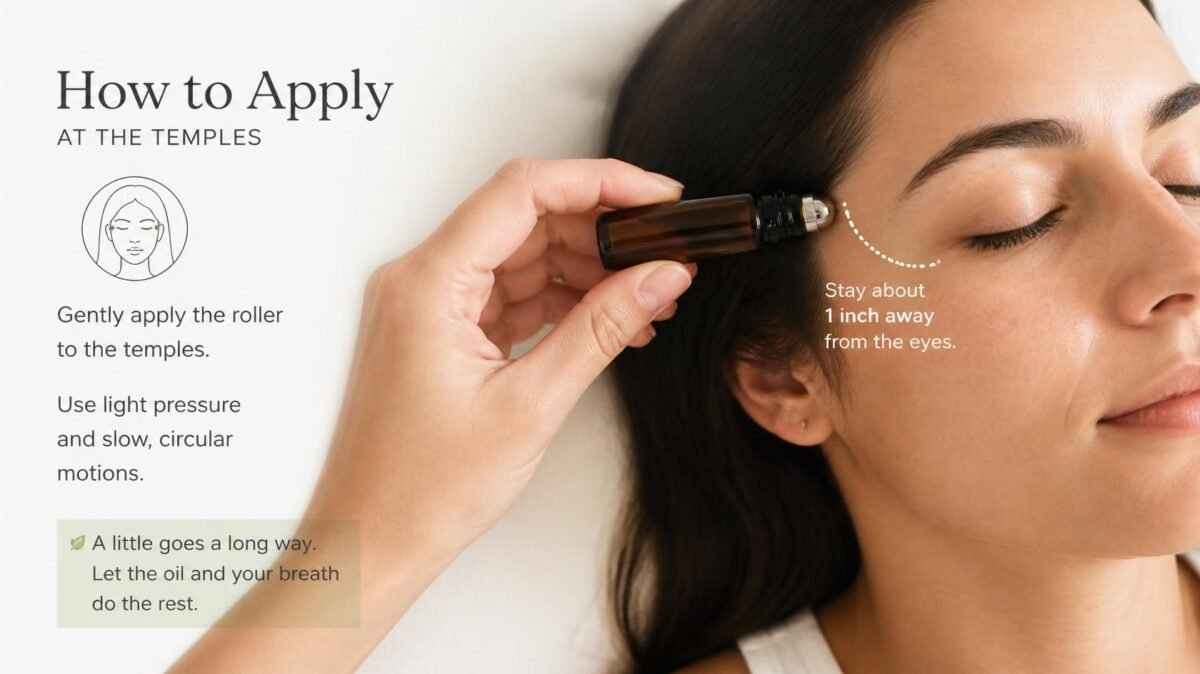
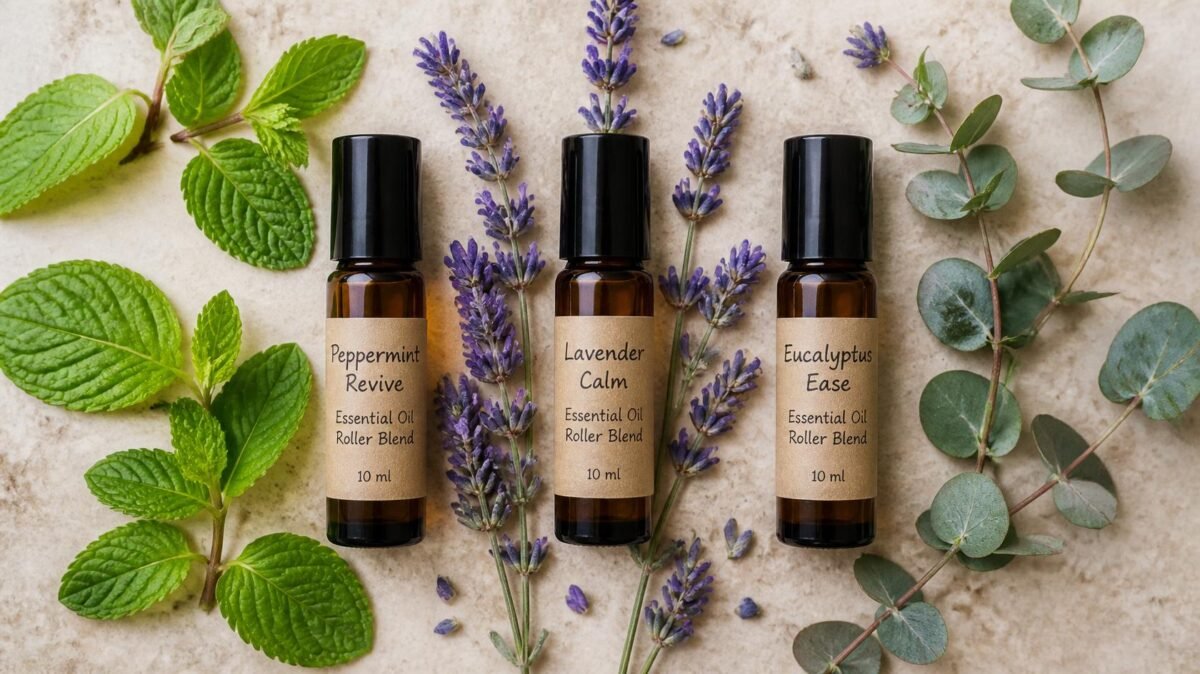
A pre-made roller bottle is the easiest way to apply peppermint oil to the right spots, mess-free, whenever a headache hits. Each of these fills a standard 10 ml roller — add the essential oils first, then top with your carrier oil.
The Classic Tension-Tamer
Best for: everyday tension headaches.
- 5 drops peppermint essential oil
- 10 ml carrier oil (fractionated coconut or jojoba)
Roll onto temples, forehead hairline, and back of neck. Simple, cooling, effective.
The Stress-Melt (Peppermint + Lavender)
Best for: stress-driven headaches and evening use.
- 3 drops peppermint essential oil
- 3 drops lavender essential oil
- 10 ml carrier oil
Lavender’s calming quality pairs beautifully with peppermint’s cooling. See how peppermint and lavender work together for pain for why this combo suits tension that tips into a migraine.
The Sinus-Pressure Blend (Peppermint + Eucalyptus)
Best for: headaches tied to congestion and sinus pressure.
- 3 drops peppermint essential oil
- 2 drops eucalyptus essential oil
- 10 ml carrier oil
Roll across the forehead, temples, and either side of the nose bridge (keeping clear of the eyes) to open things up.
Peppermint vs. Other Essential Oils for Headaches

Peppermint is the most-studied option, but it isn’t the only oil worth knowing — the right pick depends on your headache type. Here’s how the main contenders compare.
| Oil | Best for | How it helps | Apply to |
|---|---|---|---|
| Peppermint | Tension headaches | Cooling menthol relaxes muscles, distracts pain | Temples, forehead, neck |
| Lavender | Migraines, stress headaches | Calms the nervous system; often inhaled | Temples, wrists, or diffused |
| Eucalyptus | Sinus / congestion headaches | Opens airways, eases sinus pressure | Forehead, chest, steam |
| Roman chamomile | Tension with anxiety | Soothing, mildly muscle-relaxing | Temples, neck, or diffused |
The takeaway: reach for peppermint first for a classic tight-band tension headache, and layer in lavender or eucalyptus depending on whether stress or congestion is driving it. Our guide to using essential oils for anxiety and stress relief covers the calming side in more depth, and if congestion is your trigger, see the best essential oils for seasonal allergies.

Which Headache Is Peppermint Oil Best For?
Peppermint isn’t right for every headache, so a quick self-check saves you from expecting relief it can’t deliver. Matching the remedy to the type is what separates people who swear by it from those who shrug and give up too early.
Tension headaches — the sweet spot. These feel like a tight band squeezing around your head, often with sore neck and shoulders, and they’re the most common type by far. This is exactly what peppermint is proven to help, and where you should reach for it first.
Sinus headaches — good, with a partner. If pressure sits behind your forehead and cheekbones alongside congestion, peppermint paired with eucalyptus can ease it by opening the airways.
Migraines — use with caution. Throbbing on one side, light and sound sensitivity, or nausea point to a migraine. Some people find topical menthol helpful, but the strong smell can worsen scent-sensitive migraines, so test gently.
Dehydration or hunger headaches — fix the cause. No oil replaces water or food. If you’ve skipped meals or drinks, address that first and use peppermint as backup.
When you’re unsure, start with the classic tension approach and pay attention to how your head responds. If peppermint reliably helps, it’s almost certainly tension-driven; if it never does, the cause may be something worth exploring with a professional.
Where NOT to Apply Peppermint Oil (Safety First)
Knowing the wrong spots is as important as knowing the right ones, because peppermint’s strength cuts both ways. A few hard limits keep it safe.
Never near the eyes or on the eyelids. This is the number-one rule. Menthol and the eye area do not mix, and even the vapour can cause intense stinging and watering.
Not inside the nostrils or on the lips. These mucous membranes are far too sensitive for direct peppermint oil.
Not on broken or irritated skin. Cuts, rashes, or sunburn will react badly to the concentration.
Keep peppermint oil away from babies and young children. Menthol near the face of an infant or toddler can cause serious breathing problems — the same caution applies to other strong oils, as we cover in is eucalyptus oil safe for pets and kids. The clinically studied preparations are approved only for adults and children aged six and older. If you’re pregnant, breastfeeding, have asthma, or take medication, check with your doctor before using peppermint oil topically.
Your 5-Minute Peppermint Headache Routine

Application works best inside a small ritual, not on its own — stacking a few simple actions turns a decent remedy into a reliable one. Here’s the exact sequence I’d follow the moment a tension headache starts building.
- Roll it on the key spots. Swipe your peppermint roller across both temples, along the forehead hairline, and up the back of the neck. Use slow, firm circles with your fingertips — the massage itself helps release the muscle tension.
- Add gentle pressure. Press and hold the two hollows at the base of your skull for a slow count of ten. This is where the sub-occipital muscles knot up, and combining pressure with the cooling oil doubles the effect.
- Cool and dim. Sit or lie down somewhere quiet and low-lit for a few minutes. A cool compress on the forehead layered over the peppermint amplifies the icy, pain-distracting sensation.
- Breathe and hydrate. Take several slow breaths — the peppermint aroma alone is mildly relaxing — and drink a full glass of water, since dehydration is a sneaky, extremely common headache trigger that no oil can fix.
- Reassess at 15 minutes. Most tension headaches ease noticeably by now. If yours hasn’t budged at all after 30 minutes, it may not be a tension headache, and a conventional pain reliever or a chat with your doctor is the smarter next step.
The whole thing takes about five minutes, and the combination consistently outperforms simply dabbing oil on and carrying on with your day. Treat the oil as the centrepiece of a short reset, not a magic bullet you apply while still hunched over a screen.
Common Mistakes People Make

These are the errors that quietly ruin peppermint’s results — and they’re rarely the obvious ones.
1. Using it undiluted. Slapping neat peppermint oil on your temples for “maximum strength” often backfires with burning and redness — and it’s dangerously close to the eyes. Diluted oil in the right spot works better and safer than raw oil in the wrong one.
2. Applying it too close to the eyes. People aim for the temples and drift inward. Stay an inch out from the eye corner, and rub, don’t let it drip.
3. Expecting it to fix every headache type. Peppermint shines for tension headaches. For a full-blown migraine with light sensitivity and nausea, the strong scent can even feel worse. Match the tool to the headache; our piece on natural alternatives to painkillers for migraines helps you tell them apart.
4. Skipping the neck. Treating only the forehead misses where the tension often originates. The back of the neck and base of the skull are frequently the real source.
5. Buying a poor-quality or fragrance oil. A synthetic “peppermint fragrance oil” contains none of the therapeutic menthol. Use a pure essential oil (look for the botanical name Mentha piperita on the label). Browse our full Essential Oils collection to build a well-rounded, good-quality kit around it.
Frequently Asked Questions
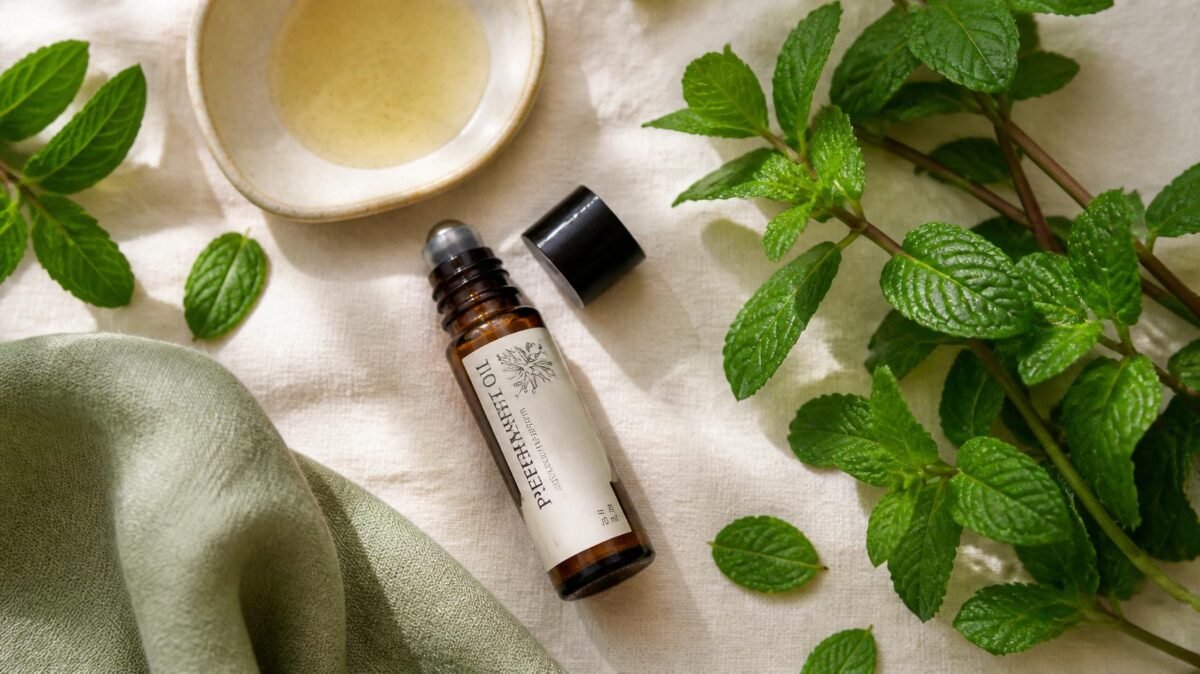
The Bottom Line
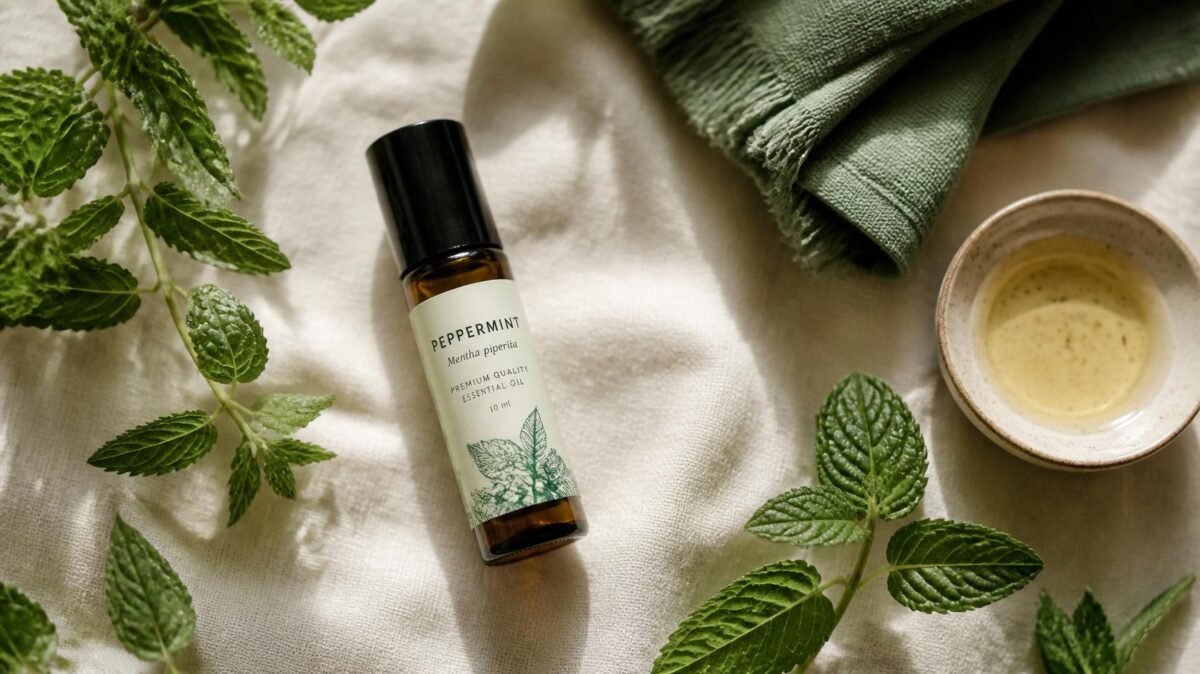
Once you know where to apply peppermint oil for headaches — temples, forehead hairline, and the back of the neck, always diluted and always clear of the eyes — a simple bottle of oil becomes a genuinely useful, fast-acting tool for tension pain. Keep a pre-mixed roller ready so relief is one swipe away, respect the safety limits, and match peppermint to the tension headaches it’s best at. Next time a headache builds, reach for the right spot instead of a random dab, and let the cooling do the work.
This article is for general education and isn’t a substitute for personalised medical advice. Frequent or severe headaches deserve a proper diagnosis — if you’re pregnant, have a health condition, or take medication, talk to your doctor before using peppermint oil.