Quick answer
The natural supplements for stress and anxiety people use most are ashwagandha, L-theanine, magnesium, chamomile and lavender oil capsules. A few have small, early studies behind them, several carry real risks or drug interactions, and none replaces care for an anxiety disorder. Talk to a doctor or pharmacist before you start one, especially if you take medicine.
Key facts
- L-theanine and chamomile are the gentlest options in the studies we reviewed
- Ashwagandha has small stress studies but rare liver injury reports
- Kava has reports of serious liver damage
- St John's wort interacts with many medicines
- Free first steps: sleep, movement, slow breathing and a calm evening routine
Natural supplements for anxiety, such as ashwagandha, L-theanine, magnesium, chamomile and lavender oil capsules, are the products people reach for most when worry and tension take over. The honest picture is mixed: a few have small, early studies behind them, several carry real risks and drug interactions, and none replaces care for an anxiety disorder. In this guide, we explain each one plainly, show what the evidence does and does not say, and give the daily habits that support a calmer mind without a pill.
Natural supplements for anxiety at a glance
This table is the short version. Read the rest before you buy anything, because the cautions matter as much as the benefits.
| Supplement | What studies suggest | Main caution |
|---|---|---|
| Ashwagandha | Small studies on stress | Liver injury reports; thyroid; pregnancy |
| L-theanine | Calm alertness in small studies | Generally mild |
| Magnesium | Low levels linked with stress | Diarrhea; kidney disease |
| Chamomile | Mild calming effect | Daisy-family allergy; blood thinners |
| Lavender oil capsules | Some trials on anxiety | Burping, upset stomach |
| Lemon balm | Calming in small studies | Thyroid medicine |
| Passionflower | Very limited research | Drowsiness |
| Valerian | Mostly studied for sleep | Drowsiness, vivid dreams |
| Saffron | Early studies on mood | Cost; high doses unsafe |
| Kava | Some effect in trials | Serious liver damage reports |
| St John’s wort | Studied for low mood | Interacts with many medicines |
The Natural Calm & Evening Bundle
Calmer mornings, steadier days, easier evenings: 6 natural calm products with a 30-day path that ties them together.
- EbookNatural Calm
- EbookThe Natural Sleep Guide
- EbookMindful Mornings Naturally
- PrintableWind-Down Routine
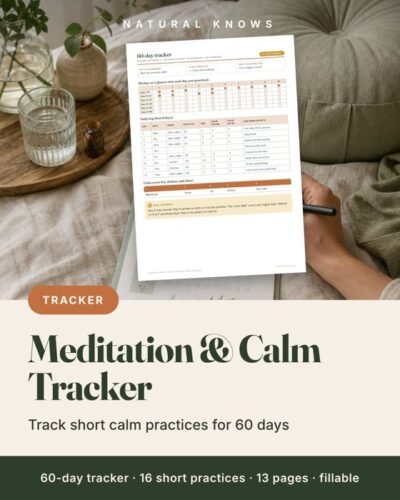
- TrackerMeditation & Calm Tracker
- PrintableBreathing Practice Cards


What natural supplements for anxiety can and cannot do
We want to be honest here, because anxiety is real and worth proper care. A supplement is not regulated like a medicine. So the dose, the purity and even the plant inside a bottle can vary.
| Can | Cannot |
|---|---|
| Give a small calming effect for some people | Replace therapy or prescribed medicine |
| Support sleep, which helps mood | Fix the cause of an anxiety disorder |
| Form part of a calm evening routine | Be assumed safe because it is natural |
In the United States, the National Center for Complementary and Integrative Health explains that ashwagandha has limited evidence and possible liver problems. For magnesium, the Office of Dietary Supplements lists daily needs and upper limits.
Each of the natural supplements for anxiety, explained
Here is what each one is, what we know and what to watch.
Ashwagandha
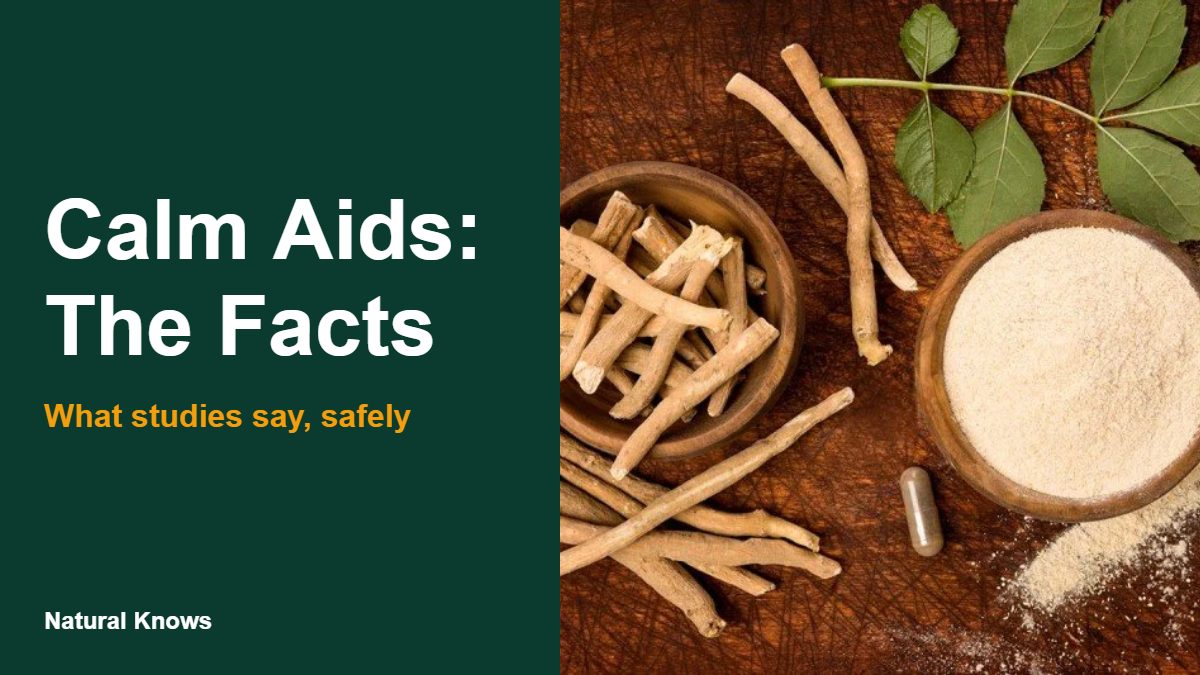
Ashwagandha is a root from Ayurvedic tradition. Small studies suggest it may lower feelings of stress. However, there are reports of liver injury, it may affect thyroid levels, and it is not for pregnancy. Read our full guides to ashwagandha for anxiety and the risks of ashwagandha.
L-theanine
L-theanine is an amino acid found in green and black tea. In small studies, it gave a feeling of calm focus. Moreover, a cup of green tea already contains some, alongside a little caffeine.
Magnesium
Magnesium is a mineral that many people eat too little of. Low levels have been linked with stress and poor sleep. Food comes first: pumpkin seeds, almonds, spinach, beans and whole grains. Our guide to magnesium glycinate explains the forms. Too much from supplements causes diarrhea, and people with kidney disease must ask a doctor first.
Chamomile
Chamomile is a gentle flower tea, and it also comes as an extract. A few studies suggest a mild calming effect. As a tea, it is the simplest place to start. See our guide to the best teas for anxiety.

Lavender oil capsules
Special lavender oil capsules have been studied for anxiety. However, they are not the same as the essential oil in your diffuser. Never swallow essential oils that are not made for that purpose.
Lemon balm, passionflower and valerian
These herbs are often mixed into calm or sleep teas. The research is small and mostly short. They can make you drowsy, so do not combine them with alcohol or sleep medicines, and do not drive after a strong dose.
Saffron
Saffron is a spice that early studies have explored for mood. It is expensive, and large amounts are unsafe. Using it in cooking is the gentle route.
Kava and St John’s wort: handle both with real caution
Kava has been linked with serious liver damage, and several countries have restricted it. St John’s wort interacts with many medicines, including birth control pills, antidepressants and blood thinners. We advise against using either without a doctor.
Who should not take natural supplements for anxiety without a doctor
This list matters more than any benefit above.
- Anyone taking antidepressants, anti-anxiety medicines or sleeping pills.
- Pregnant or breastfeeding women.
- People with liver, kidney or thyroid conditions.
- People on blood thinners, blood pressure or diabetes medicines.
- Anyone before surgery, since some herbs affect bleeding or anesthesia.
- Children and teenagers: this guide is for adults.
A pharmacist can check interactions in a few minutes, and the advice is free.
Free first steps that support a calmer mind
Before you buy any bottle, try these habits for two weeks. They cost nothing, and many have stronger evidence than any supplement.
- Sleep: go to bed and wake up at the same time every day.
- Movement: walk briskly for 20 to 30 minutes most days.
- Breathing: breathe in for 4 counts and out for 6 counts, for 5 minutes, twice a day.
- Caffeine: stop coffee and energy drinks after midday.
- Alcohol: cut back, because it disturbs sleep and raises next-day worry.
- Food: eat regular meals with protein, so your energy stays steady.
- People: talk to someone you trust each day, even briefly.
Our breathing exercises for stress and meditation for anxiety guides walk you through the first two weeks. In addition, our free calm pattern quiz suggests a routine for your type of stress.

A calm evening routine instead of a pill
Evenings are when worry often grows. So a fixed routine helps the mind switch off.
| Time | Step |
|---|---|
| 2 hours before bed | Last screen work; dim the lights |
| 90 minutes before | A warm shower or bath |
| 60 minutes before | Chamomile or lemon balm tea |
| 45 minutes before | Write tomorrow’s three tasks on paper |
| 30 minutes before | Slow breathing or a short body scan |
| Bedtime | Phone outside the bedroom |
If you want this routine done for you, our Natural Calm and Evening Bundle brings a wind-down plan, breathing cards and a calm tracker. For more ideas, read our guide to natural remedies for anxiety.
Food before natural supplements for anxiety
Food is the gentle, safe way to get many of the nutrients found in calm supplements.
| Nutrient | Food sources |
|---|---|
| Magnesium | Pumpkin seeds, almonds, spinach, black beans |
| L-theanine | Green tea, black tea |
| Omega-3 fats | Oily fish, walnuts, ground flaxseed |
| B vitamins | Eggs, whole grains, leafy greens, legumes |
| Complex carbs | Oats, brown rice, sweet potato |

How to read labels on natural supplements for anxiety
If your doctor agrees that a supplement is fine for you, read the label carefully.
- Look for a third-party quality seal on the bottle.
- Check the exact plant name and the part used, such as root or leaf.
- Avoid blends with many herbs and unclear amounts.
- Avoid “proprietary blends” that hide doses.
- Never take more than the label dose.
- Start one product at a time, and stop if you feel unwell.
Vegan-friendly herbal stress relief: what to check
Most herbs in this guide come from plants, but the finished product may not be vegan. The capsule shell, the oil inside a softgel or a coating can come from animals. If you eat plant-based, these quick checks help you pick vegan herbal stress relief products with more confidence.
- Capsule shell: “gelatin” means animal origin. Look for “vegetable capsule”, “HPMC” or “pullulan”.
- Softgels: lavender oil and other oil capsules are often softgels made with gelatin. Plant-based softgels exist, so read the “other ingredients” line.
- Loose tea and tinctures: chamomile, lemon balm and passionflower as dried herb or tea are plant-only by nature. Tinctures may use alcohol or glycerin; both are usually plant-based, but a vegan mark removes the doubt.
- Magnesium and L-theanine: the active part is not animal-derived; the capsule and fillers are what to check.
- A vegan mark: a recognised vegan certification logo on the pack is the simplest check. “Natural” or “herbal” on the label does not mean vegan.
Vegan or not, the safety rules above stay the same: talk to your doctor or pharmacist first, especially if you take other medicines.
When anxiety needs professional help
Please see a doctor or a mental health professional if worry or fear lasts most days for weeks, if you have panic attacks, if anxiety stops you from working, studying or seeing people, or if you use alcohol to cope. Therapy, such as cognitive behavioral therapy, has strong evidence. If you ever feel unsafe or have thoughts of harming yourself, contact emergency services or a crisis line in your country right away.
Keep going
In addition, you can browse every guide in sleep and calm for routines that support rest and a steadier mood.
FAQ: natural supplements for anxiety
What is the most effective natural supplement for anxiety?
No supplement is proven to fix anxiety. Ashwagandha, L-theanine and lavender oil capsules have small studies, but therapy and lifestyle steps have stronger evidence.
Is ashwagandha safe for anxiety?
It has reports of liver injury and may affect the thyroid. Ask a doctor first, and never use it in pregnancy.
You want to fall asleep earlier. Which change helps most?
Does magnesium help with anxiety?
Low magnesium has been linked with stress. Food sources come first; ask a doctor before taking supplements.
Can I take supplements with antidepressants?
Not without your doctor. St John’s wort in particular can interact dangerously with antidepressants.
Is chamomile tea good for anxiety?
Many people find a cup of chamomile calming in the evening. It is a gentle first step, unless you have a daisy-family allergy.
How long do natural supplements take to work?
Studies usually run for weeks. However, results vary, and some products have no proven effect at all.
Are natural supplements regulated?
Not like medicines. Quality and dose can vary, so look for third-party testing and talk to a pharmacist.
Natural still needs amounts and care. Patch test new skin products, keep oils and herbs away from small children, and ask a doctor or pharmacist first if you are pregnant, breastfeeding, take medicines or have a health condition.